
You know the feeling. Your cleanser says “gentle,” your moisturizer says “barrier support,” and your serum says it will make your skin look transformed by next week. Then you turn the bottle around, hit a wall of unfamiliar ingredients, and still end up with skin that feels tight, reactive, or unimpressed.
That's usually the moment people start looking beyond the big shelf brands and toward handmade skincare from independent brands and local makers. Not because it sounds wholesome, but because they want products that feel more considered, more transparent, and more connected to the person who made them.
There's also a bigger shift happening in how people shop. The same person who wants better coffee, better pantry staples, or better wellness products often wants better skincare too. They want to buy directly from the maker, skip the middleman, and understand what they're putting on their body.
This guide is for both sides of that shift. If you're buying, you'll learn how to spot quality and avoid risky shortcuts. If you're making, you'll get the practical foundation you need to formulate and sell responsibly.
Table of Contents
Tired of Skincare That Feels Generic
A lot of mass-market skincare starts to blur together after a while. The packaging looks polished. The claims sound smart. The routine gets longer, but your skin doesn't always get happier.
That's why more shoppers are moving toward independent brands and local makers. They're looking for facial oils with short ingredient lists, balms made for actual dry skin, unscented options that don't hide behind marketing language, and soaps that feel like someone formulated them with a purpose instead of a trend board.
One of the clearest signs that this isn't a fringe habit is market share. Independent beauty brands now control 32% of the $125 billion U.S. beauty and personal care market as of the 52-week period ending November 1, 2025, up from 29% the previous year, according to Beauty Independent's coverage of NIQ market data.
That matters because it changes how you should think about handmade skincare. This isn't about settling for a charming alternative. It's about choosing a category that many shoppers already see as a quality upgrade.
Why generic products fall flat
Sometimes the problem isn't that a product is bad. It's that it was built to work for everyone, which often means it feels specific to no one.
A maker who sells directly can often explain why they chose oat oil over a heavier butter, why they left fragrance out of a formula, or why a scrub was designed for hands and body but not for an inflamed face. That kind of clarity is hard to fake.
Buyers who plan their routines carefully tend to notice the difference between “marketed well” and “made well.”
Why local makers feel easier to trust
When you buy directly from the maker, you can often see the full ingredient list, ask how a product is preserved, and get a plain-English answer from the person who made it. That doesn't guarantee quality by itself, but it gives you something mass retail often doesn't. Context.
And context matters in skincare. Especially when your skin has already told you it's done guessing.
What Really Makes Handmade Skincare Different
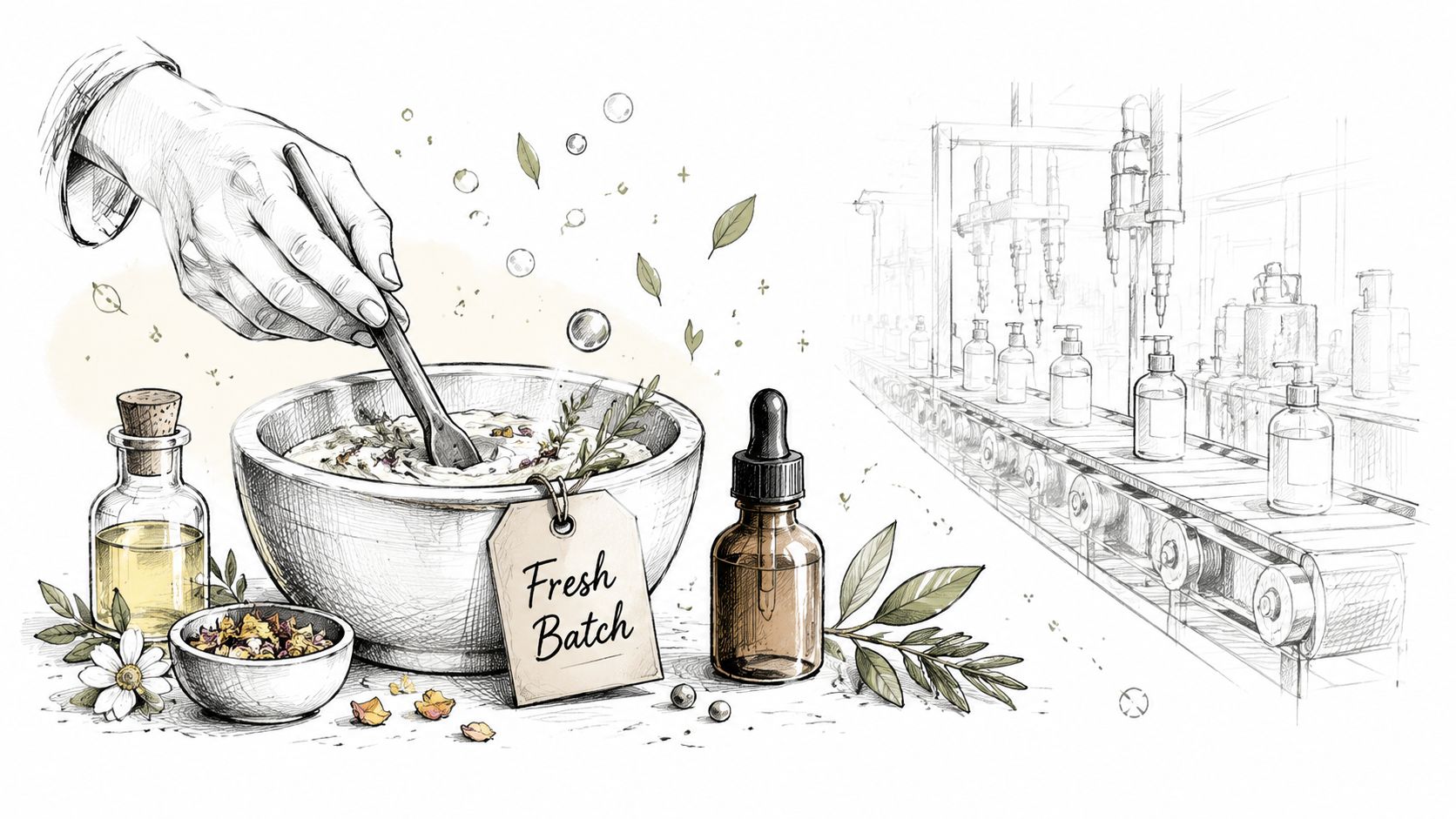
Handmade skincare isn't better just because it comes in a smaller jar or has a softer label design. The main difference is usually in how the formula is handled, from ingredient choice to mixing to how long it sits before it reaches your skin.
Freshness changes the whole formula
Consider food: A meal made with fresh herbs, good oil, and careful timing feels different from something built for long storage and shipping. Skincare works the same way.
According to MA Earth Botanicals on hand-blended versus factory production, hand-blended skincare formulations preserve higher concentrations of natural bioactive compounds, including antioxidants, vitamins, and polyphenols, because they bypass high-heat industrial processing and long-term storage that degrade these actives.
That's a practical point, not just a romantic one. Heat and time can change delicate botanical ingredients. If a maker keeps batches smaller and production cycles tighter, sensitive oils and extracts may reach you in better shape than they would after a long trip through large-scale distribution.
Small batch doesn't mean casual
People sometimes confuse handmade with improvised. Good handmade skincare is the opposite.
A careful maker chooses ingredients for texture, stability, and skin feel. They think about whether a balm should melt quickly or stay firmer in warm weather. They decide whether a mist needs a simpler formula or whether a cream needs a stronger preservation strategy. They watch how an oil serum absorbs, how a butter spreads, and whether the finished product still feels good after repeated use.
Here's a simple way to compare the two approaches:
- Factory-first thinking: built for scale, storage, shipping, and broad appeal.
- Maker-first thinking: built for ingredient character, formula feel, and direct customer feedback.
- Mass formulas: often need to tolerate long timeframes and many retail conditions.
- Handmade formulas: often benefit from shorter production-to-use cycles and more direct reformulation when customers report issues.
Practical rule: Don't confuse “natural” with “effective.” What matters is whether the maker handled the formula well enough for those ingredients to stay useful.
This is why buying from independent brands often feels different on the skin. Not magical. Just more intentional.
How to Read a Label Like an Expert
A label tells you far more than the front of the jar ever will. If you want to buy handmade skincare well, stop reading the promises first and start reading the ingredient panel.
The easiest place to begin is the top of the list. Ingredients listed early usually shape the product most. If a face oil leads with oils you recognize, that gives you one kind of information. If a body butter opens with vague fragrance language and filler-heavy ingredients, that tells you something else.
Start with the first five ingredients
When I read a handmade formula label, I want to know three things quickly.
First, what is doing the primary work here? In a balm, is it rich in butters and plant oils, or is the nice ingredient just a tiny cameo? In a hydrating product, is there a clear water phase and a reason for each supporting ingredient?
Second, can I understand the maker's choices? A short list isn't always better, but a coherent one usually is. If a formula is fragrance-free, barrier-focused, and built around oils like camellia, jojoba, or calendula, that tells a consistent story. You can see that approach in this 4-step fragrance-free skincare set with camellia, tsubaki, jojoba, and calendula, where the positioning makes sense for someone trying to keep a routine simple.
Third, what's left unsaid? If “fragrance” appears with no further context, that isn't always a deal breaker, but it is a sign to slow down and ask more questions.
Handmade Skincare Ingredient Cheat Sheet
| Ingredients to Look For (Green Flags) | Ingredients to Question (Yellow Flags) |
|---|---|
| Cold-pressed oils such as jojoba, camellia, or sunflower when they fit the product type | “Fragrance” with no explanation of whether it's essential oil based, synthetic, or part of an allergen disclosure |
| Botanical butters like shea or cocoa in rinse-off or richer leave-on products | Long ingredient lists that don't seem to match the product's stated purpose |
| Pure hydrosols in facial mists or toning products | Hero ingredients featured on the front but buried low in the list |
| Clear preservative information for water-based products | No obvious preservation approach for creams, lotions, or mists |
| Unscented or fragrance-free positioning when the product is meant for reactive skin | Marketing terms that sound soothing while the formula details stay vague |
A few more habits help:
- Match the formula to the category: A body scrub can be richer and more fragrant than a face product. Don't judge every label by the same standard.
- Watch for specificity: “Calendula extract in sunflower oil” tells you more than “botanical blend.”
- Look for maker restraint: A product doesn't need twenty plant extracts to be good. Sometimes the smartest formula is the one that knows when to stop.
Good labels reduce guesswork. Great labels make it easy to understand why the product exists.
Tips for Safely Buying from Independent Makers
You find a face cream from a small maker with beautiful packaging, a short ingredient list, and claims that sound thoughtful. Before you click buy, the question is simple. Can this person make skincare well and explain it clearly?
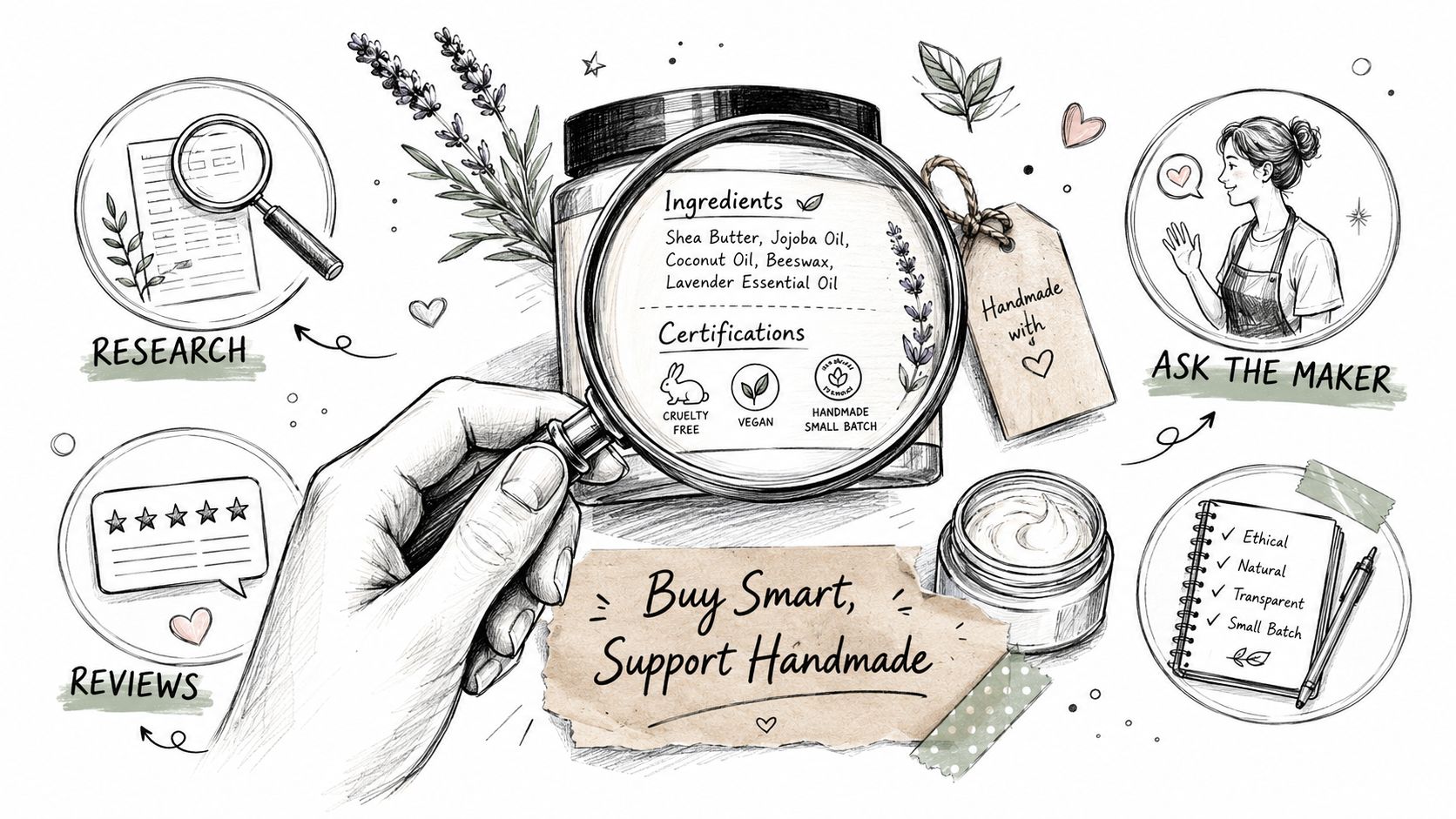
Independent skincare often feels more personal because it usually is. You are closer to the person formulating, filling, and labeling the product. That closeness can be a strength for buyers, and it also means you need a sharper eye than you might use with a mass-market brand.
The FDA states that homemade cosmetics do not require pre-market approval or mandatory contaminant testing, which leaves more of the quality check in the buyer's hands. You can read that directly in the FDA fact sheet for homemade cosmetics.
A good way to evaluate a maker is to treat the product page like a window into their workshop. Clear answers suggest organized process. Vague answers suggest guesswork. In skincare, guesswork is expensive for the buyer and risky for the maker.
Questions worth asking before you buy
Start with products that carry more risk if they are made carelessly, especially creams, lotions, gels, toners, and masks. Water gives skin comfort, but it also gives microbes a place to grow, which is why preservation matters so much.
Ask questions like these:
- How long does this product last after opening? A careful maker should be able to explain shelf life and storage in plain language.
- How is this water-based product preserved? You are looking for a direct answer, not a dodge.
- Can I see the full ingredient list before purchase? That should be easy to provide.
- What skin type was this made for? Good makers formulate with a user in mind instead of claiming every product suits everyone.
- How should I patch test it? A seller who respects skin variability will usually have a clear answer.
For oil-based products, quality still matters, but the questions shift a little. You may want to ask which carrier oils are used and why. If you want a practical reference point, this guide to carrier oil dilution helps explain why oil choice and concentration affect both feel and skin tolerance.
Watch how the maker responds. A thoughtful answer often sounds calm, specific, and boring in the best way. “We use Optiphen in this lotion, recommend using it within six months of opening, and storing it away from heat” tells you far more than “It's all natural, so your skin will love it.”
That difference matters.
For buyers who want to browse small brands in one place, Loyaltie functions as a marketplace where people discover and buy directly from independent brands in the US. You can see that in its independent skincare product collection. The useful part is not hype. It is the chance to compare how different makers present ingredients, directions, and product purpose.
If a maker cannot answer basic safety and labeling questions clearly, keep shopping.
The strongest independent brands usually welcome informed customers. Aspiring makers should notice that too. Good buying standards and good making standards are closely linked. The brands that earn trust usually do so by building it into the formula, the label, and the conversation around the product.
A Starter Guide for Aspiring Makers
A lot of people fall in love with handmade skincare from the customer side first. They try a balm that finally makes sense for their skin, or a scrub that feels thoughtful instead of harsh, and then they start wondering if they could make something of their own.
You can. But the first skill isn't creativity. It's discipline.
Your first job is safety
If you make facial products, pH control matters. According to Formula Botanica's guidance on homemade skincare, facial products typically need a pH in the 4.5 to 5.5 range, and poor adjustment can lead to irritation or unstable emulsions that separate.
That one detail alone should change how you think about formulating. Skincare is not kitchen improv. If you make a lotion or cream, you need accurate weighing, consistent method, and a clean setup every single time.
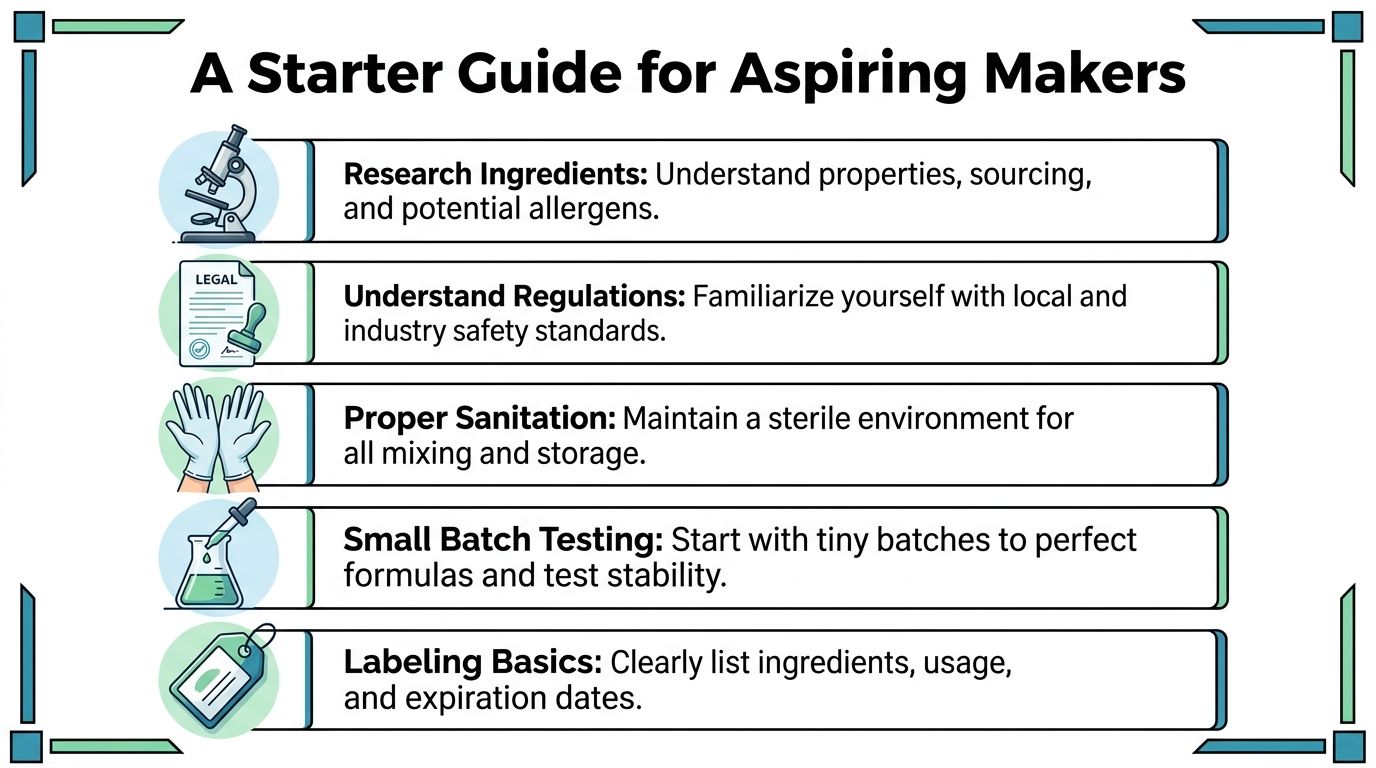
Start with the basics:
- Sanitize tools and containers: Bowls, spatulas, beakers, and jars all need proper cleaning before they touch a batch.
- Measure by weight, not guesswork: “A little extra” is how products become inconsistent.
- Keep batch sizes small at first: It's easier to observe texture, stability, and skin feel when you haven't made too much.
- Record everything: Ingredient percentages, lot details, dates, and changes between versions.
Later, when you explore oils in more depth, a practical resource like this guide to carrier oil dilution can help you think more carefully about how supportive oils behave in skin products.
Learn materials before you chase recipes
Beginners often want a recipe that feels complete. What you need first is ingredient literacy.
Learn what butters contribute to texture. Learn how wax changes glide. Learn why hydrosols behave differently from plain water. Learn which ingredients are there for slip, structure, humectancy, or preservation. Once you understand function, formulas stop looking mysterious.
This is also where product judgment matters. A soothing product doesn't have to be skincare to teach you formulation thinking. For example, Sympathy Gift Box, Candle & Soothing Tea, Keepsake Comfort Gift, Bereavement Condolence Care Package, 1 Box | Glowsip by Loyaltie is a reminder that comfort products work when every element supports the intended experience. In skincare, that same discipline applies. Every ingredient should have a reason to be there.
If you want to study how makers present product ranges and categories, browsing Evolve Botanica's product collection can be useful for seeing how a maker organizes offerings around use and customer need.
A quick visual checklist helps when you're getting started:
Your first successful batch is not the one that smells amazing. It's the one you can explain, repeat, and store safely.
How to Sell Your Creations the Right Way
Making a good product is only half the job. Selling it well means presenting it in a way that tells buyers you're careful, consistent, and worth trusting with their skin.

Trust starts before anyone opens the jar
Your label and product page do a lot of heavy lifting. If they're vague, cluttered, or missing basic details, shoppers notice.
A credible product listing should clearly show:
- What the product is: cleansing balm, body scrub, facial oil, soap, or lotion.
- Who it's for: dry skin, fragrance-sensitive users, body use only, or occasional exfoliation.
- What's in it: a full ingredient list written clearly.
- How to use it: simple instructions that reduce misuse.
- How to store it: especially if temperature or moisture matters.
Often, makers trip themselves up. They write like a fan of their own product instead of a steward of the customer experience. Keep the copy grounded. Describe texture, purpose, and use. Be careful with claims.
Selling well means documenting well
Once you move from hobbyist to seller, systems matter more than inspiration.
Use a simple process:
- Write a repeatable batch record for each formula.
- Photograph the product in clear light with the label visible.
- Use packaging that protects the formula and fits the product type.
- Price with your ingredients, packaging, labor, and testing mindset in view.
- Reorder materials before you're scrambling.
This part isn't glamorous, but it's what makes a maker look dependable instead of accidental.
If you're building a selling workflow, seller resources for independent brands can help you think through setup, presentation, and the operational side of selling online without relying on guesswork.
Your brand voice matters too. Warm is good. Clear is better. The most persuasive makers rarely sound pushy. They sound informed.
Joining the Independent Skincare Movement
A buyer picks up a jar at a weekend market and turns it over, looking for the ingredient list, the use instructions, and some sign that the person who made it understands more than scent and packaging. Across town, a maker is filling the same kind of jar, checking batch notes and asking a different version of the same question: would I trust this in someone else's hands?
That shared standard is what gives the independent skincare movement its strength.
People are drawn to handmade skincare because it feels closer to the source. You can often learn who made the product, why they chose the formula, and how they expect it to be used. For buyers, that creates room for better questions and better choices. For makers, it raises the expectation that every formula should be stable, clearly labeled, and made with care.
The connection between those two groups matters more than trends. Buyers who look past vague claims and ask about ingredients, storage, shelf life, and product purpose help shape the market. They reward the makers who treat formulation like both a craft and a responsibility. In turn, careful makers help buyers understand what quality looks like, one well-made product at a time.
That is how trust grows.
For aspiring makers, this also means seeing your workspace as part of the formula. A lotion made with skill can still be undermined by poor handling conditions, contaminated tools, or an unsuitable production area. If you are building a dedicated setup, guidance on proper ventilation for cosmetic labs can help you assess the environment where your products are made.
For buyers who want an easier way to find independent brands, Loyaltie offers a marketplace where people can browse products from US makers directly.
The movement works best when both sides raise the standard together. Buyers stop settling for pretty labels and fuzzy promises. Makers stop treating safety, documentation, and clarity as optional extras. The result is a healthier skincare culture built on informed choices, direct connection, and products that earn trust from the first read of the label to the last use of the jar.