
You're probably standing in a store aisle, scrolling your phone, or staring at a dozen browser tabs thinking the same thing a lot of adults think about gifts for 12 year old kids: everything feels either too little-kid, too grown-up, or too generic.
At 12, a kid can still love games, stickers, hoodies, and hands-on projects. But they also care a lot more about taste, identity, and whether a gift feels like them. That's why the old “just grab something from the toy aisle” approach often misses.
A better way is to buy for the person they're becoming. Not just their age. And often, the most memorable options come from independent brands and local makers who create things with more character, better materials, and a story a kid can connect with.
Table of Contents
That Awkward Age for Gifting
Twelve is such a funny age to shop for. One week they're still laughing at silly desk toys and decorating a water bottle. The next week they have opinions about skincare, room decor, music, hoodies, and what looks “babyish.”
That's what makes gift buying feel tricky. You aren't shopping for a little kid anymore, but you're not buying for a teen with fully settled tastes either. You're shopping for someone in the middle of a real shift.
There's also a reason stores keep pushing so many options at this age. The global toy market was valued at approximately USD 112 billion in 2023, and children aged 9–12 represented 36% of sales. Within this group, households with 12-year-olds were often at the higher end of the spending curve, averaging around $210 per child annually on toys and entertainment, according to this market summary reference.
The problem isn't that they're hard to please
The problem is that many gifts are aimed at age, not identity.
A 12-year-old might say they “don't want toys,” but that usually doesn't mean they want something boring. It means they want something that feels more personal. Maybe it's a project they can show off, something for their room, a wearable item that matches their style, or a hobby tool that says, “I see what you're into.”
They're not rejecting gifts. They're rejecting gifts that feel chosen by habit.
That's why this age can indeed be fun to shop for once you stop asking, “What toy should I buy?” and start asking, “What would make them feel understood?”
What usually works better
Instead of defaulting to mass-produced picks, try gifts that do one of these:
- Reflect a real interest like drawing, gaming, dance, cooking, collecting, or sports
- Give them some control like customizing, building, decorating, or choosing how to use it
- Feel a little more distinct than the same big-box item everyone else gets
That shift matters. A thoughtful sticker for a favorite tumbler, a hoodie in the right style, a hands-on kit, or a room item with personality can land better than a pile of random stuff.
Thinking Like a 12 Year Old
If you want better gifts for 12 year old kids, it helps to think less like a shopper and more like a teacher or parent watching a child change in real time.
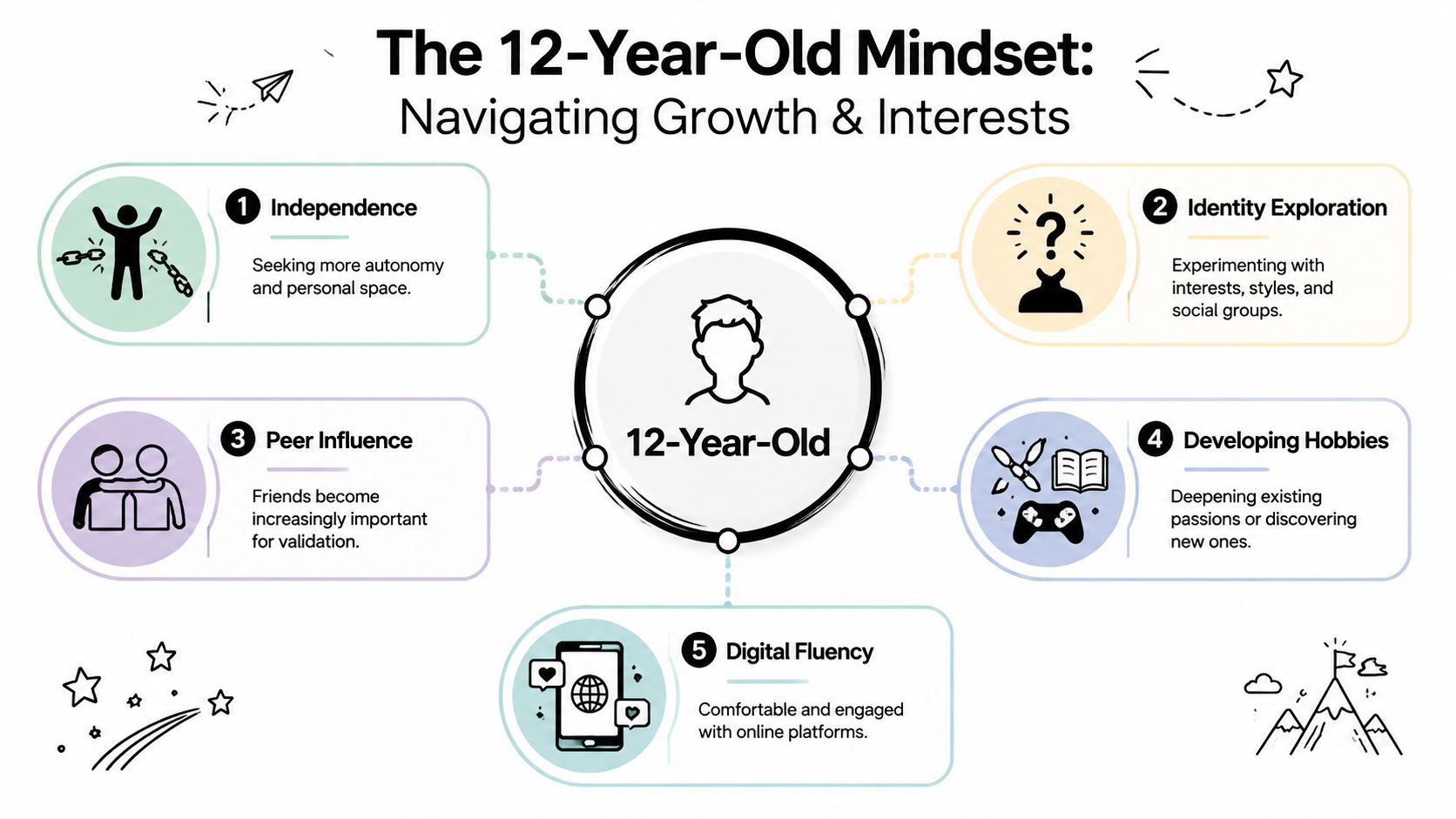
At this age, kids are testing boundaries in small ways all day long. They want more say over what they wear, what they display, how they spend time, and what counts as “their thing.” That doesn't mean they've become impossible. It means autonomy has started to matter.
They want ownership, not just stuff
Think of a 12-year-old as someone building a first draft of a personal brand. Not in a business sense. In a kid sense.
They're asking themselves: What do I like? What's my style? What do my friends notice? What makes me interesting? A gift works well when it helps answer one of those questions in a healthy way.
Research in pediatric psychology found that gifts seen as skill-building, socially shareable, or customizable can raise perceived social worth by 30–40% among 11–13 year olds compared with mass-produced alternatives, as noted in this research reference on screen-free tween gift ideas.
That sounds technical, but in plain language it means this: kids often value a gift more when they can do something with it, personalize it, or show it to someone.
A simple example is decor or accessories they can place on their own things. A set of fun decals can become a way to claim a water bottle, laptop sleeve, or notebook as theirs. Something like holographic vinyl stickers with a sparkly 3D pattern can work well for a kid who likes visual expression because the gift isn't only the object. It's the act of choosing where it goes and what it says about them.
You see the same logic in a product like Waterproof Vinyl Ballet Slippers Sticker, Removable Dishwasher-Safe Decal, 4x4 in, For Water Bottles & Tumblers | Chika Paper Studio by Loyaltie. It adds ballet-core charm without much commitment, and it's removable, waterproof, and dishwasher-safe for tumblers, water bottles, and more.
They're building a public version of themselves
At 12, private interests and public identity start blending together. A kid may love a hobby partly because they enjoy it and partly because it helps them connect with a friend group.
That's why “cool” and “useful” often need to live in the same gift.
Practical rule: If a gift lets them make, customize, collect, wear, or display something, it usually has more staying power than something passive.
Try using this quick lens when you evaluate an idea:
| Question | Why it matters |
|---|---|
| Can they make it their own? | Personal control matters at this age |
| Can they use it with friends or talk about it? | Social connection shapes what feels exciting |
| Does it fit who they are right now? | Relevance beats age labels |
| Will it still feel good after the first day? | Lasting use matters more than a quick reaction |
Gift Categories That Match Their Passions
A long list of random products usually makes gift shopping harder. It helps more to start with the kind of kid you're buying for.
A useful clue here is that a 2022 Pew Research Center survey found about 67% of 12-year-olds in the U.S. received at least one tech-adjacent gift, while a separate EU report found 41% of parents prioritized educational or skill-building gifts, which shows how much this age group wants both fun and growth, according to this gift trend reference for ages 11 to 14.
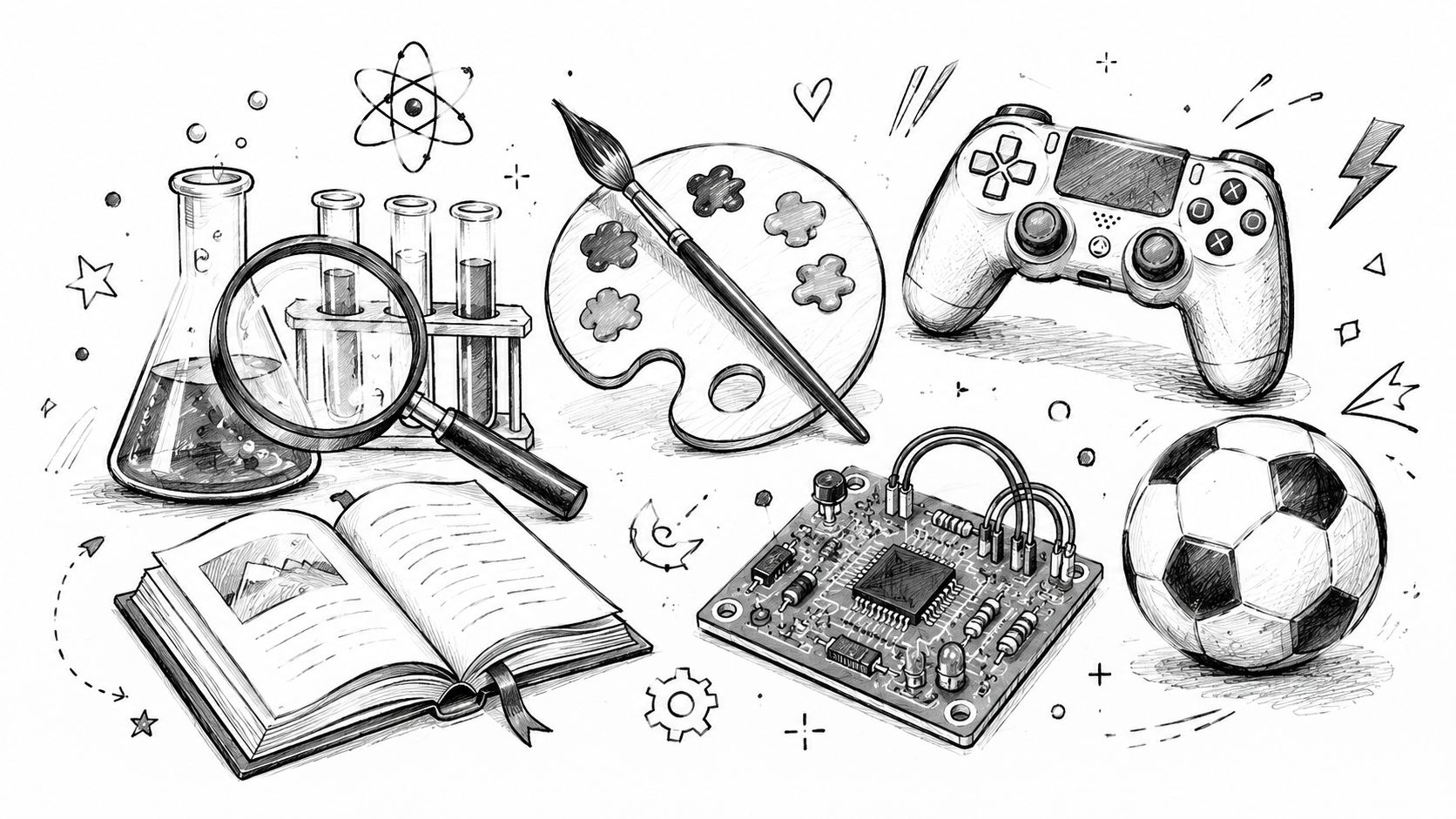
The Creator
This is the kid who likes to make things visible. They may draw, decorate, bake, film mini videos, customize notebooks, or rearrange their room every two weeks.
Good gifts here include art tools, DIY kits, room decor pieces, beginner craft projects, and items they can personalize. Look for things with an output, not just an activity. A finished bracelet, painted object, poster wall, or custom bottle often matters more than a generic craft box.
If your child tends younger in interests and still loves science play, this guide to toys that spark curiosity in 10-year-olds can help you spot ideas that still work for a 12-year-old who likes making and experimenting.
The Thinker
Some 12-year-olds want challenge more than trend. They like strategy games, advanced building sets, coding-style activities, brain teasers, logic puzzles, and projects with steps.
For them, a great gift says, “I know you like figuring things out.”
A thoughtful version of this category might include:
- Build-and-display projects that result in something worth keeping
- Puzzle games with replay value so it doesn't become a one-day novelty
- Hands-on science tools that feel real, not watered down
- Hobby gear for chess, drawing, electronics, or design
After they've had a chance to explore a few options, this kind of visual inspiration can help you compare what fits their style of play and learning.
The Stylist
This category gets overlooked, especially for adults who still think of gifts mainly as toys.
A lot of 12-year-olds take their self-presentation seriously. That can mean hoodies, patches, room fragrance, bags, lip balm, nail care, or decor that helps a bedroom feel more like their own space. The appeal isn't vanity. It's self-definition.
A soft, wearable staple can work well if it fits their actual taste. For example, a kids pullover fleece hoodie in a ring-spun cotton blend makes sense for the kid who wants comfort but also wants a look that doesn't feel childish.
The Explorer
This kid wants movement, novelty, and a reason to leave the house. They may love local classes, sports accessories, beginner cooking tools, garden kits, field journals, or tickets tied to a hobby.
Some kids don't want more stuff. They want a better way to spend time.
For this group, think in combinations. A local workshop plus a small physical item often works beautifully. A cooking class with an apron. An art lesson with a sketchbook. A nature outing with a field notebook and a decent water bottle.
Find Better Gifts from Independent Makers
Big-box shopping is convenient, but it often gives you the same answer for every kid. The same hoodie. The same gadget. The same generic set in different packaging.
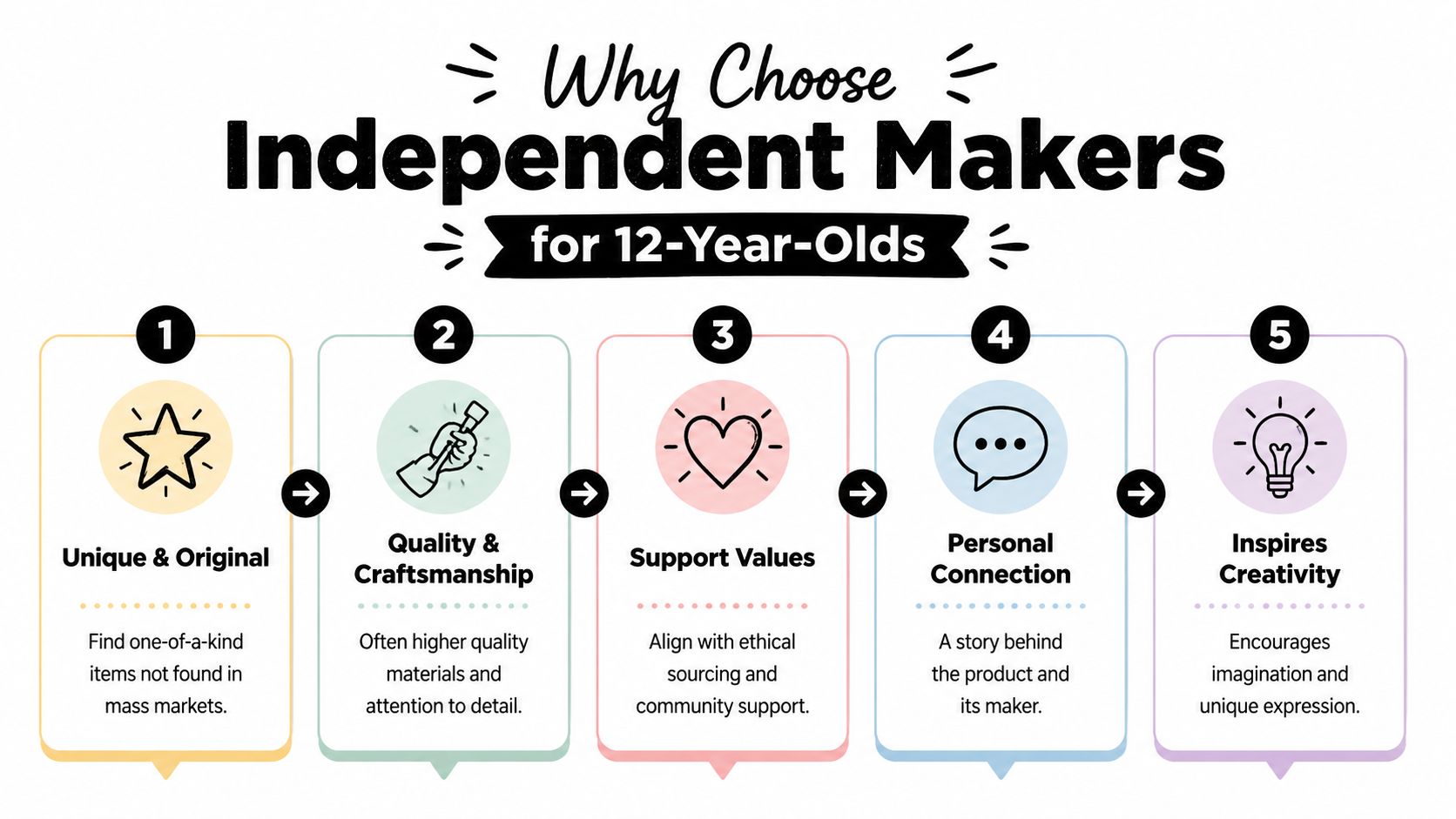
That's the core reason independent brands and local makers are worth your attention. They tend to offer items with more point of view. Better design choices. More personality. Less sameness.
Why direct-from-maker gifts land differently
Research shows that tweens and young teens are putting more of their discretionary spending toward personalized or limited-run products that reflect who they are, while many gift guides still default to generic branded merchandise, according to this reference on non-toy gift ideas for children.
That matters because a 12-year-old often notices the difference between “someone bought me a thing” and “someone picked this because it fits me.”
A gift from an independent maker often gives you one or more of these advantages:
- More distinct style so it doesn't look like everyone else's
- A stronger story because there's a real maker or brand behind it
- Better fit for niche interests like dance, gaming setups, room decor, journaling, or beginner wellness
- No middleman when you buy directly from the maker
That story piece is bigger than adults sometimes realize. A kid likes being able to say where something came from, why it's different, or why they chose to use it.
Where food, wellness, and lifestyle gifts can fit
This is also where many adults miss good options. Not every gift for a 12-year-old has to be a toy, game, or gadget.
Some tweens are curious about routines. They like trying a face wash, organizing a desk, making smoothies, decorating a space, or having a room spray or personal care item that feels a little more grown. You do need to keep safety and age-appropriateness in mind, especially with skincare or scented products, but the category itself can make sense.
You can also think beyond the child alone and build a gift around shared use. A parent-child hot cocoa setup from an independent food brand. A cooking ingredient kit. A cozy room bundle with a mug, stickers, and a notebook. These feel less disposable than many mass-market toys.
One practical way to browse this kind of mix is Present Day Goods on Loyaltie, which is a marketplace where people discover and buy directly from the best independent brands in the US. That kind of setup helps when you want gifts with more character across everyday categories like paper goods, lifestyle items, food, wellness, and similar products.
A memorable gift doesn't have to be expensive or dramatic. It has to feel chosen.
Your Practical Gift Buying Checklist
By the time you've narrowed down a direction, the last step is deciding whether the gift fits this child, this family, and this moment.
A simple checklist keeps you from buying something that sounds good in theory but lands flat in real life.
A quick filter before you buy
Use these five checks before you hit purchase:
- Check current interests: Don't buy for who they were last year. Buy for what they talk about now, wear now, watch now, or collect now.
- Check the family's comfort level: This matters with tech accessories, skincare, fragrance, food products, and anything with ingredients or battery use.
- Check how independent the gift is: Can they use it mostly on their own, or does it require a parent to set up, supervise, refill, or troubleshoot constantly?
- Check for room in their life: A huge item can become stress if they have no place to keep it.
- Check whether it invites use: The best gift often has a clear next step. Open it, wear it, stick it, build it, use it tonight.
If you're unsure between two ideas, choose the one that gives the child more agency.
Questions that get real clues
Direct questions often produce useless answers like “I don't know” or “money.” Gentle questions work better because they let kids reveal themselves without feeling tested.
Try a few like these in normal conversation:
- What's something you've seen a friend use lately that seemed cool?
- What's on your desk, dresser, or backpack right now that feels the most like you?
- If you could get better at one hobby this year, what would it be?
- What do you wish your room had more of?
- What do you always end up borrowing from someone else?
- What's one thing you'd put on your water bottle, wall, or bag if you could design it yourself?
A quiet clue: Listen for repeated mentions, not dramatic statements. Kids often tell you what they want in passing.
You can also ask parents practical questions without spoiling the surprise. Does the child have allergies? Are they into scent-free products? Do they already have too much room clutter? Are there categories the family prefers to avoid?
That kind of detective work is often what separates a decent gift from one they keep using.
Present Your Gift to Make It Memorable
A thoughtful gift feels even better when the reveal has some care behind it. At 12, kids notice effort. Not in a formal way. In a social way. They can tell when something was tossed in a bag at the last minute and when someone actually thought about the experience.
Match the reveal to the gift
A few easy examples work well:
- For an experience gift: Put the ticket, class note, or printed invitation inside something related, like a sketchbook for an art class or a mug for a baking lesson.
- For a style gift: Wrap it with one small extra, like stickers, a note, or tissue in their favorite color.
- For a hobby gift: Group the main item with one tool or accessory so it feels complete right away.
That last part matters. A gift with an immediate “I can use this now” feeling creates momentum.
Don't skip the note
A handwritten note can do something the gift itself can't. It tells the child what you see in them.
You might write, “I picked this because you've got your own style,” or “You always make things more creative,” or “I love how curious you are.” Short is fine. Specific is better.
If you want to tuck in a card with personality, this kind of option works nicely:
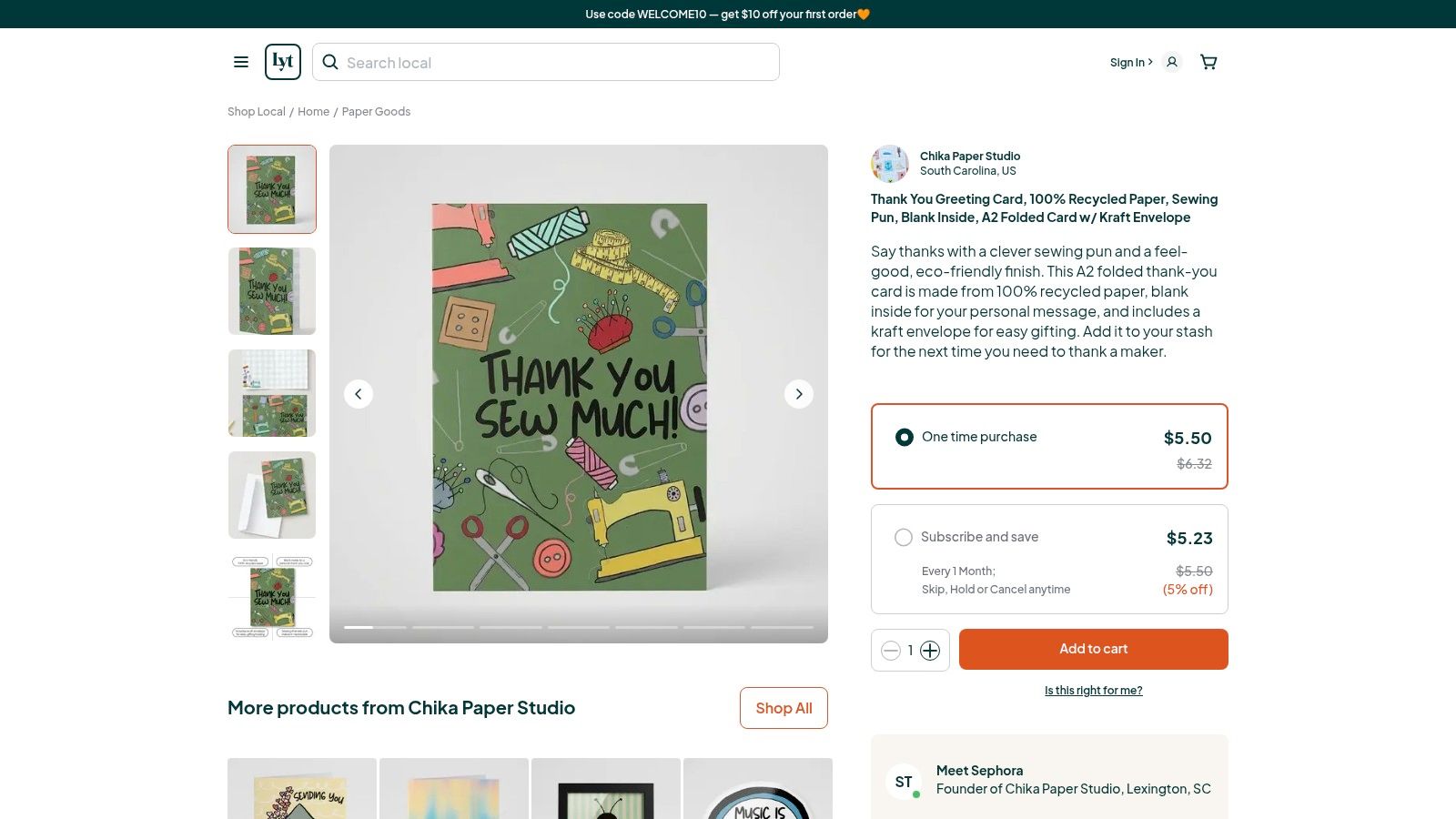
A good card doesn't need to be overly sentimental. It just needs to sound real.
“I saw this and thought of you” is often enough, as long as it's true.
The Best Gift Sees Who They Are Becoming
The best gifts for 12 year old kids usually aren't the loudest, trendiest, or most expensive ones. They're the gifts that show a child you notice them. Their interests. Their style. Their new independence. The little ways they're starting to become more themselves.
That's why buying beyond the big-box default can help so much. You're more likely to find something with texture, personality, and a clear point of view when you look at independent brands and local makers. And there are a lot of them to discover. In the United States, local and regional food systems alone account for over 105,000 farms and 23,000 distributors, which supports a wide network of independent brands selling directly to consumers online, according to this U.S. local food systems reference.
That bigger ecosystem matters for shoppers too. It means you're not limited to the same shelf of generic products. You can find paper goods, food items, wellness products, skincare, coffee, and everyday lifestyle gifts made by real people, often with better detail and more identity built in.
If you remember one thing, let it be this: a 12-year-old doesn't need a perfect gift. They need a gift that feels like it was chosen with some care and some understanding.
And when you buy directly from the maker, that's often easier to do.
If you want a simpler way to find gifts with more personality, Loyaltie is a marketplace where people discover and buy directly from the best independent brands in the US. It's a practical place to look when you want something more thoughtful than mass-produced default options.