
You've probably seen this happen. Someone buys your coffee beans, face oil, dog treats, or pantry staple once, loves it, and then disappears into the chaos of everyday shopping. They didn't stop liking what you make. They just got busy, forgot to reorder, or went back to the easiest option.
That's the primary job of a loyalty program for independent brands. Not to feel clever. Not to copy a giant retailer. Just to give people a reason to come back, stay engaged, and keep discovering better products made by real people.
For local makers, the good news is you don't need a big-budget app or a complicated rewards system. The strongest gamified loyalty programs often use simple mechanics people instantly understand: collect, achieve, complete, earn, repeat. If you sell products people buy again and again, this can work especially well in categories like coffee, skincare, food, supplements, wellness, and pet products.
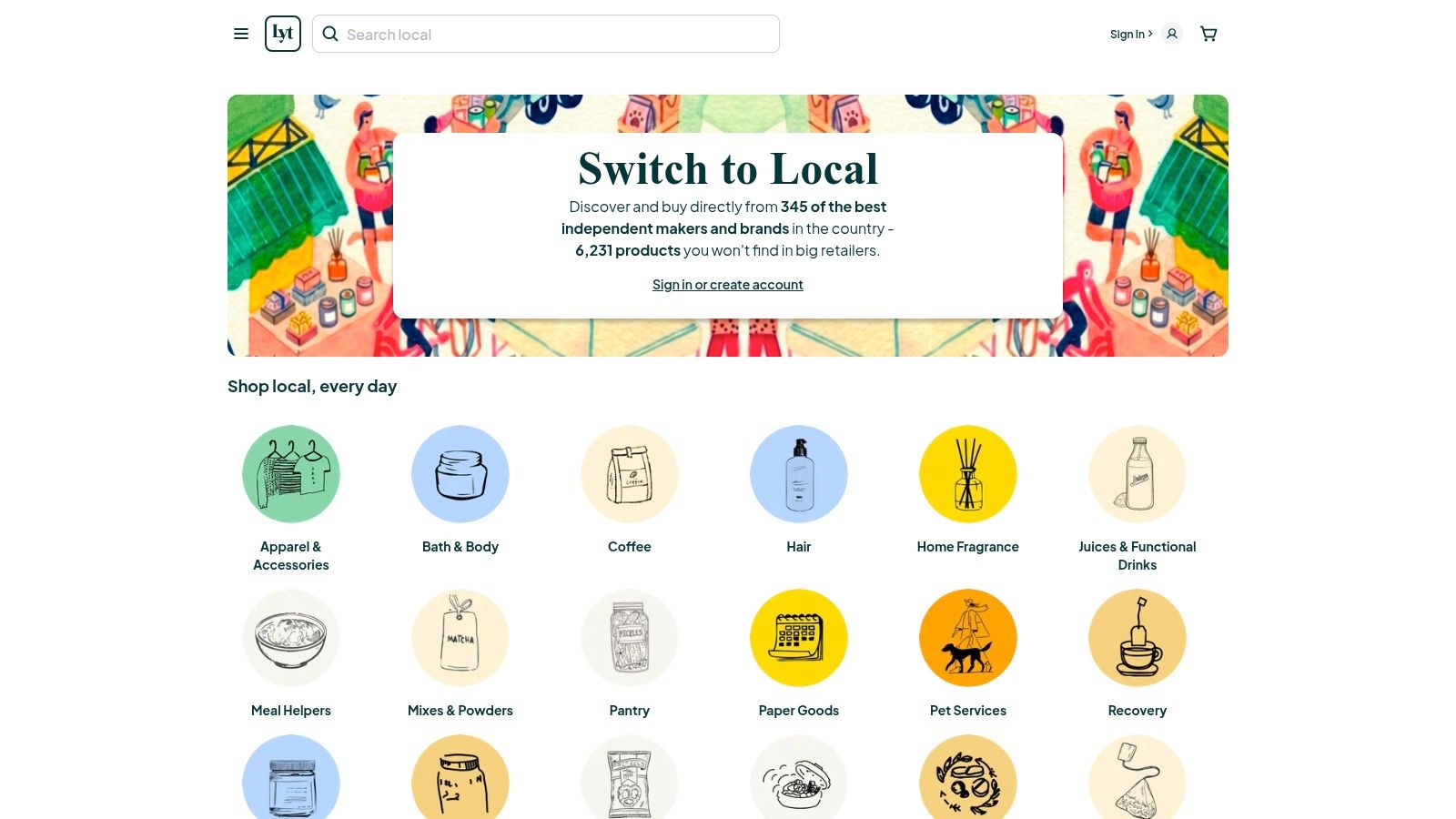
Shoppers are already looking for better alternatives to mass-produced goods. Many now discover and buy directly from the maker through platforms like Loyaltie, a marketplace where people discover and buy directly from the best independent brands in the US. A smart loyalty setup helps turn that first order into a habit.
Table of Contents
- Pick mechanics customers understand in seconds
- Low-cost gamification ideas you can actually run
- Match the mechanic to the way people buy
Why Your Customers Want to Play Not Just Pay
A customer buys a bag of beans at your Saturday market stall, loves it, and means to order again. Then Monday gets busy, another brand runs a discount, and your bag slips out of mind.
That is the main problem for many indie brands. The first sale often comes from product quality, packaging, or a good in-person conversation. Repeat sales come from habit. Gamified loyalty programs help build that habit by giving people a small reason to come back before they forget you.
For a local coffee roaster, that might be a tasting challenge across different origins. For a skincare maker, it could be a simple streak for reordering on time or trying a matching routine. The point is not to turn shopping into an app game. The point is to add a sense of progress to a product people already enjoy using.
Analysts and operators who study loyalty keep coming back to the same idea: progress changes behavior. Quikly's insights on gamification explain how small moments of urgency and completion can pull customers back into the buying cycle. For small brands, that matters more than flashy tech.
The emotional part matters
Independent brands have an advantage here. Customers usually buy from you for a reason beyond price. They like the maker story, the curation, the values, or the feeling that they found something with more personality than the mass-market option.
A simple game mechanic can strengthen that connection if it matches the product.
Keep the game tied to what customers already want to explore or repeat. If it feels bolted on, it will feel like marketing.
A coffee brand can reward customers for trying three roast profiles. A soap or skincare brand can give a bonus sample after a second or third order in the same routine. A pet brand can reward customers for building a full care set over time. These are low-cost ideas, and they fit how people already shop.
Simple beats flashy
Big retailers can afford apps, prize pools, and custom development. A solo founder usually cannot, and does not need to.
The best early program is easy to explain in one sentence, easy to track, and cheap to fulfill. That is why many small brands start with simple progress markers, order milestones, or product exploration challenges using a lightweight gamified loyalty setup for small ecommerce brands.
Keep it clear. Keep it tied to the product. Keep the reward worth the effort.
Customers do not need a complicated system. They need a reason to remember you, return, and feel like coming back gets them somewhere.
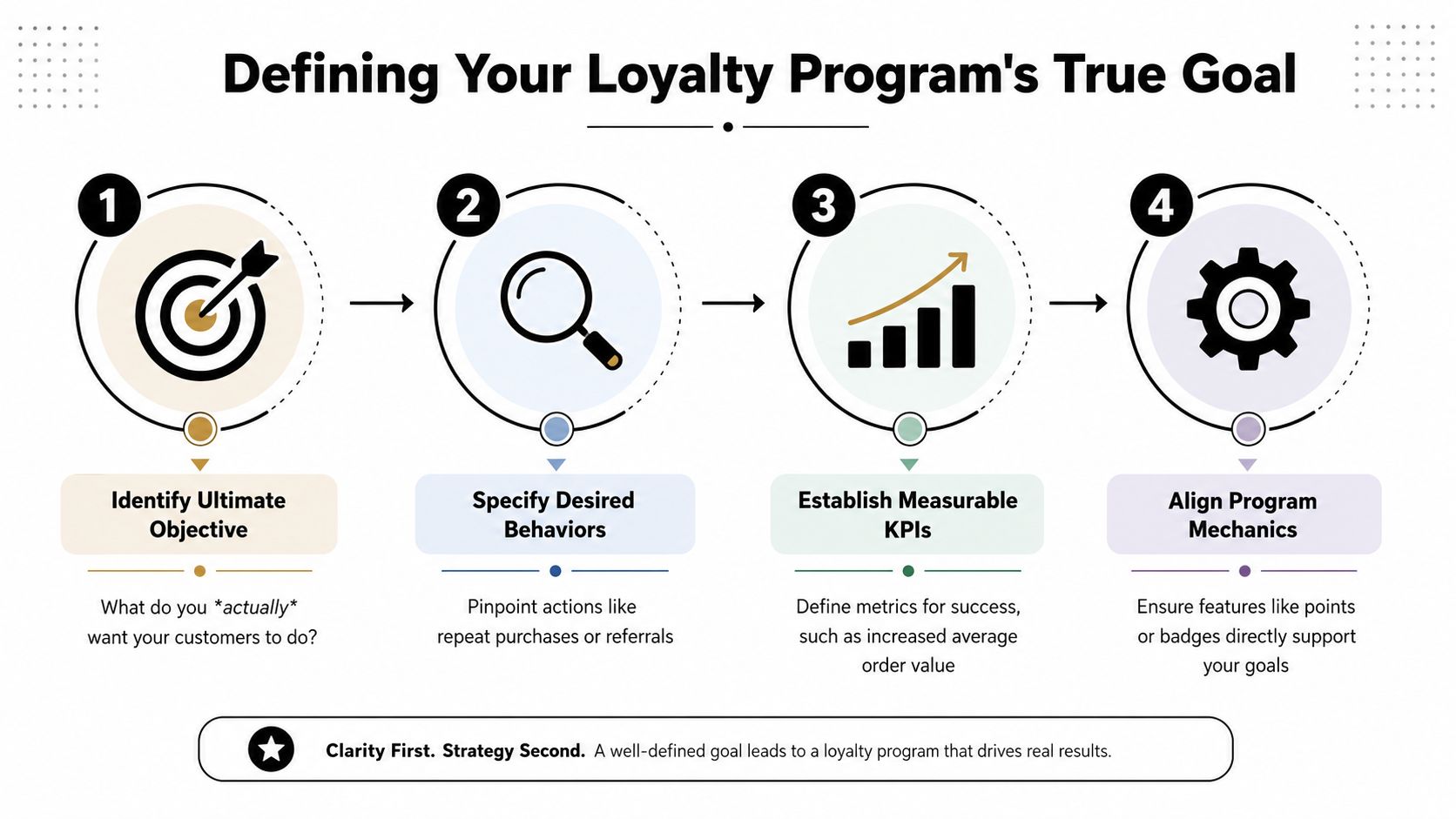
First Define the Goal of the Game
If you start with badges, you'll probably build the wrong program.
The first step is deciding what you want customers to do more often. Experts recommend a GAME framework: Goals, Actions, Mechanics, Evaluation, where businesses first define authentic brand-aligned goals and then identify the specific high-value customer actions to incentivize, like writing a review or making a repeat purchase, as explained in Oracle's framework for gamification in loyalty programs.
Start with one business problem
Pick one of these first:
- Repeat orders are weak. People love the product but forget to come back.
- Customers buy one item but don't explore the range. They order one roast, one serum, or one snack and never try anything else.
- You need more proof from real buyers. Reviews, UGC, and referrals are too thin.
- People browse but don't build a habit. They need a reason to interact between purchases.
That first choice keeps you from building a scattered program.
A coffee brand that wants more repeat orders should not lead with a complicated referral contest. A skincare maker trying to move customers from one hero product into a routine shouldn't build a generic punch card with no product logic behind it.
Map actions before mechanics
Once the goal is clear, write down the customer action that supports it.
If your goal is more reorders, the action might be “place a second order within a set window.” If your goal is product discovery, the action might be “try three distinct products.” If your goal is better social proof, the action could be “leave a review with a photo.”
That's where many makers overcomplicate things. They ask, “What game should I build?” The better question is, “What behavior do I want to encourage?”
Practical rule: Reward actions that already make sense for your product. Don't bribe people into weird behavior just because a game mechanic sounds fun.
A good example is a sampler. Single Origin Coffee Sampler, Brazil Colombia Ethiopia, Flavor Discovery Pack, 6 x 2oz Bags (12oz Total) | Cozy Notes Coffee Co by Loyaltie fits naturally with a discovery goal because it lets a customer explore six single-origin coffees and find a daily favorite without committing to full bags. That kind of product works well with a “try, rate, gain access to your next reorder perk” flow.
Here's a simple way to pressure-test your plan:
Goal
Increase repeat purchase frequency, encourage reviews, or help buyers try more of your catalog.Action
Pick one or two trackable actions. Reorder. Review. Try a second category. Refer a friend.Mechanic
Only now choose the game layer. Streak, badge, challenge, digital punch card, or milestone reward.Evaluation
Decide what success looks like before launch. More second orders? More completed product journeys? Better retention among people who join?
If the action is fuzzy, the whole program gets fuzzy. If the action is sharp, even a simple mechanic feels useful.
Choose Your Game Simple Mechanics for Indie Brands
A customer buys your coffee twice, likes it, then forgets to come back for a month. Another customer tries one serum, means to build a routine, then gets distracted. Good mechanics give those customers a clear next step without adding work you cannot maintain.
For indie brands, simple usually performs better.
If you roast, pour, blend, or pack the product yourself, the loyalty program has to fit inside a real week of order fulfillment, customer messages, and restocks. The goal is not to build a mini app. The goal is to make repeat buying feel satisfying and easy to follow.
Pick mechanics customers understand in seconds
Customers should know how the program works almost immediately. If they need a FAQ, the mechanic is too complicated.
A few formats tend to work well for local makers:
- Digital punch cards for products with a steady reorder pattern
- Streaks for routine-based items people buy on schedule
- Discovery challenges for shoppers who like trying new flavors, scents, or formats
- Badges or milestones for simple progress markers like a second order, first review, or first bundle
The weak options are usually the flashy ones. Public leaderboards can feel awkward for everyday products. Too many tiers create confusion. Complex rules turn a small perk into admin work.
If a customer cannot repeat the rules back after one read, simplify the mechanic.
Low-cost gamification ideas you can actually run
| Mechanic | Goal It Supports | Example for a Local Maker |
|---|---|---|
| Digital punch card | Repeat purchase | Buy five bags of coffee over time, get a bonus sample on the next order |
| Reorder streak | Habit building | Reorder your face oil on schedule three times in a row, get a travel-size add-on |
| Product discovery challenge | Category exploration | Try three different seasonal roasts, then get early access to the next release |
| Review badge | Social proof | Leave a review after your second purchase and earn a “trusted taster” or “routine builder” badge |
| Maker collection badge | Catalog depth | Try one item from each category such as coffee, pantry, and treats to complete a local maker set |
| Milestone reward | Second-order conversion | Place a second order and get a small gift reserved for returning customers |
Match the mechanic to the way people buy
Start with buying rhythm, not novelty.
Coffee, tea, supplements, and pet essentials often suit punch cards or streaks because customers already reorder them. Skincare usually works better with milestones tied to routine building or category completion. Specialty food brands often get better results from tasting paths because shoppers want to sample before settling into favorites.
A few practical examples:
Coffee roaster
“Try three origins, receive a surprise sample with your next reorder.”Skincare maker
“Build your routine with cleanser, serum, and moisturizer, then get early access to the next drop.”Pet brand
“Reorder your dog's essentials consistently and get a bonus treat in the next box.”
Jewelry, accessories, and giftable products can also use collection mechanics well. A shop like Juelz Beadz on Loyaltie is a good example of a catalog where repeat buyers may enjoy completing a themed set or reaching a small milestone tied to a new release.
One caution. Do not copy game systems built for major retail brands with full product teams and custom apps. A solo maker does better with one mechanic, one reward path, and a basic way to track progress. If you sell products with a story or limited runs, ideas from crowdfunding can help too. This guide for Kickstarter creators is useful for thinking about reward structure without overbuilding the program.
The best mechanic is the one you can explain fast, run cheaply, and keep consistent for six months. That is what makes it feel real to customers.
Craft Rewards People Genuinely Want
A weak reward makes the whole program feel fake.
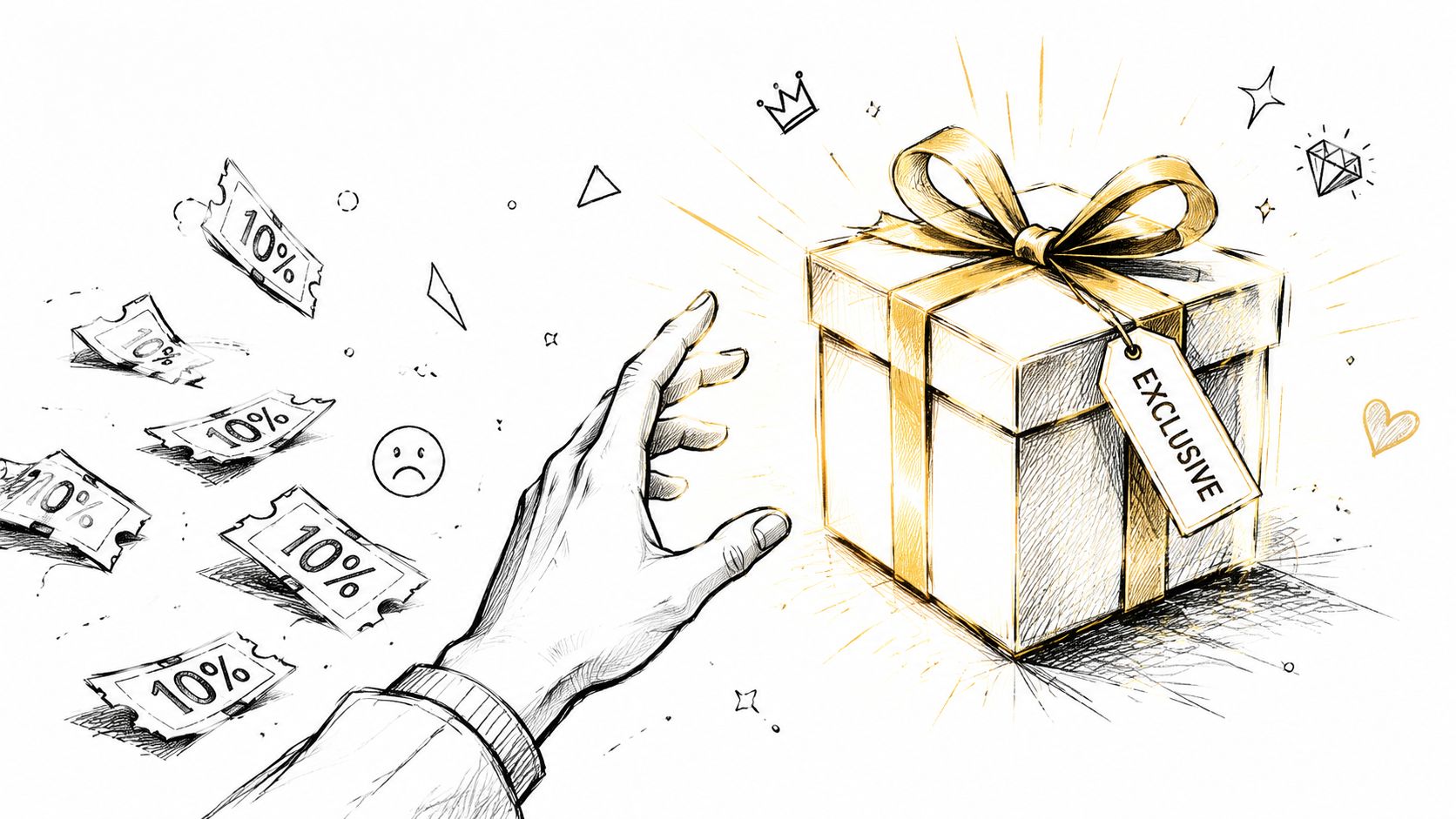
If the prize is forgettable, customers won't care how clever the mechanic is. That's why the best rewards for independent brands usually aren't generic discounts. They feel connected to the product, the maker, or the experience of buying something better than the usual store-shelf option.
Why discounts get ignored
Shoppers will pay for quality when they find a local brand they love. Consumers are willing to spend an extra $150 per month to ensure their favorite local shops thrive, according to Finance & Commerce's reporting on local shopping behavior. That tells you something important. Your reward doesn't need to be the cheapest possible offer. It needs to feel worth earning.
That's especially true when people buy directly from the maker because they want something more thoughtful than mass-produced alternatives.
A flat discount can still have a place. It just shouldn't be your only idea.
Rewards that feel personal
Better reward options often fall into a few buckets:
- Early access to a new roast, scent, flavor, or seasonal batch
- Small bonus products that let customers try something new without risk
- Exclusive bundles reserved for returning customers
- Access rewards like a maker Q&A, tasting note guide, or behind-the-scenes content
- Choice-based rewards where the customer picks from a few relevant perks
These work because they feel specific. They reflect your brand instead of copying generic ecommerce habits.
For inspiration on how reward structures can shape behavior, even outside ecommerce, this guide for Kickstarter creators is useful because it shows how people respond to reward ladders, exclusivity, and clear value.
The reward should sound like something a customer would want even if there were no game attached.
A jewelry buyer might respond to access. A skincare buyer might love a mini version of a companion product. A coffee customer might value first pick on a limited roast more than a small percentage off.
Here's a simple filter to use before adding any reward:
Does it fit the reason people buy from you?
If your appeal is quality and discovery, the reward should reinforce that.Can you deliver it without stress?
A reward that creates packing chaos or customer service confusion isn't a good reward.Will the customer remember it?
“Saved a little money” fades fast. “Got access to something special” sticks.
A good example of a reward that feels product-connected is giving returning customers access to a curated maker page like Juelz Beadz on Loyaltie, where discovery itself becomes part of the value. That works better than turning everything into a coupon treadmill.
A short video can also help you think about rewards as experiences, not just transactions.
When rewards feel special, your loyalty program stops feeling like marketing. It starts feeling like belonging.
Launch Learn and See What Works
The first version doesn't need to be perfect. It needs to be clear.
Most loyalty programs stall because the maker tries to build the final version before learning anything. A cleaner approach is to launch one simple mechanic, explain it plainly, and watch how customers respond.
Keep the launch small and clear
Start with one message customers can understand right away. For example:
- Try three coffees, earn a bonus sample
- Reorder your skincare routine consistently, earn a mini
- Complete your first two orders, gain early access
Then put that message in the places customers already look:
- your product page
- your cart or checkout note
- your order confirmation email
- your post-purchase email
- your account area if you have one
Don't bury the program in six rules and a landing page nobody reads. The launch should feel like an invitation, not paperwork.
If you want ideas for testing small launches without overcommitting, these marketing experiments for 2026 growth offer a useful mindset. The helpful part isn't the year. It's the habit of testing one clear idea at a time.
Track the few numbers that matter
A lot of founders get overwhelmed. You do not need a giant dashboard.
In 2024, lowering customer churn is a top priority for 49% of loyalty experts, as noted in Open Loyalty's loyalty program statistics roundup. For a local maker, that means the practical metrics are the ones tied to repeat behavior.
Watch these first:
Participation rate
Are customers joining or using the program at all?Purchase frequency
Are members buying more often than non-members?Retention
Are people who engage with the program sticking around longer?
Watch behavior, not vanity. A lot of sign-ups with no repeat orders usually means the mechanic sounded nice but didn't change anything.
You can track this with basic reporting, order tags, or the tools built into your selling setup. If you need operational help, seller resources from Loyaltie are one place to look for guidance on selling online without overbuilding your stack.
Give the program enough time to collect signal. Then make one change at a time. Swap the reward. Shorten the path. Clarify the message. Remove a confusing step. That's how good gamified loyalty programs get better.
Common Pitfalls and How to Sidestep Them
Most loyalty problems aren't caused by bad intentions. They come from building too much, too soon, and then leaving it alone.
That's costly because the audience for independent brands is valuable. Millennials make 158 purchases annually from independent businesses, spending an average of $19,173 per year locally, which is 4.7 times more than Baby Boomers, according to OnDeck's local shopping statistics. If you give that buyer a good reason to stay close to your brand, the relationship can compound over time.
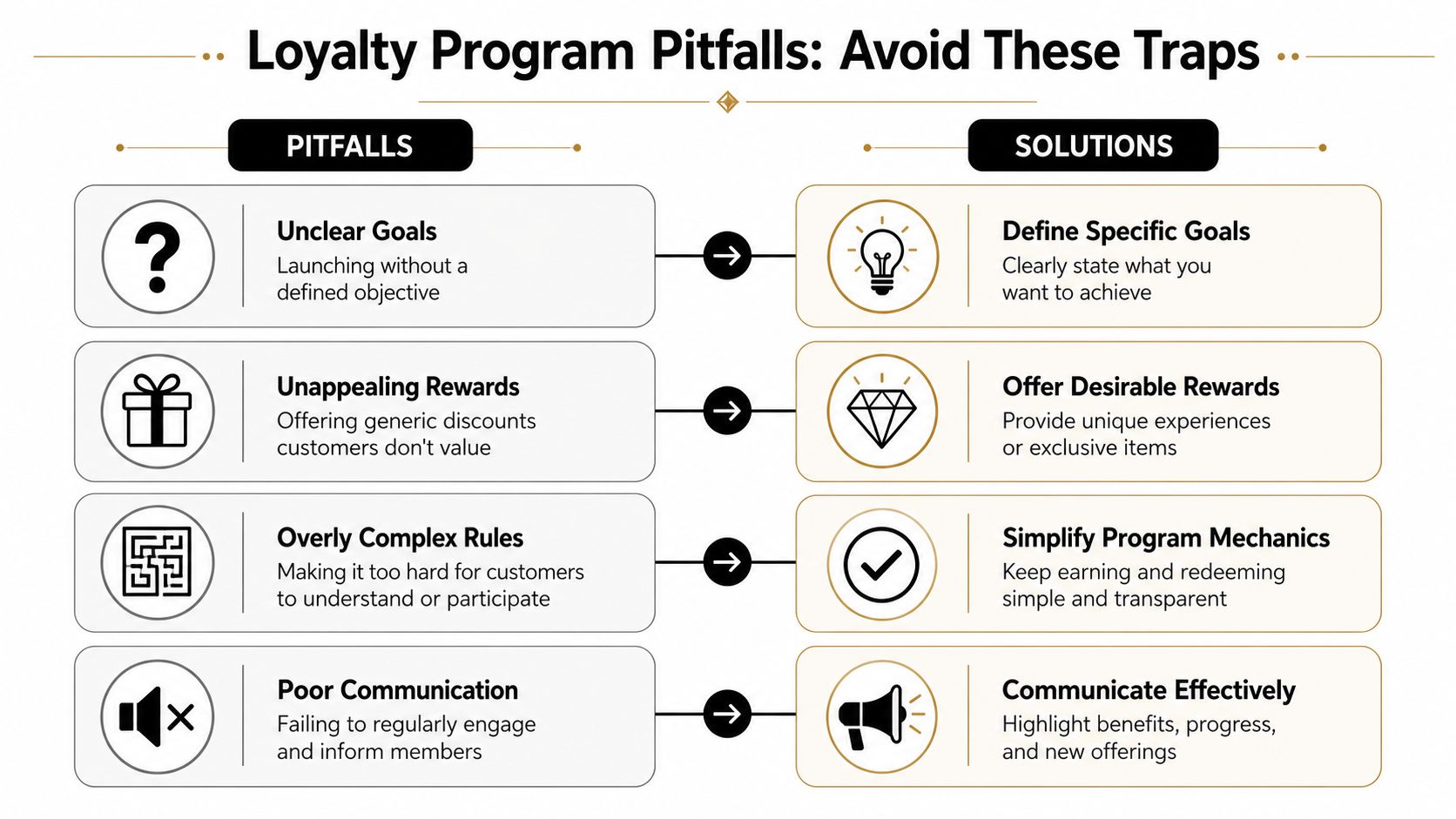
Do this not that
Start with one goal, not five
Don't launch a program that tries to increase reviews, referrals, repeat orders, product discovery, and social sharing all at once. Pick the one behavior that matters most right now.Keep the rules short
Don't make customers decode your system. “Buy three, earn one” beats a paragraph of conditions every time.Reward meaningful actions
Don't hand out points for random clicks. Reward second orders, product exploration, reviews, and habits that matter.Make the reward fit the brand
Don't default to generic discounts if your customers buy from you for quality, ingredients, flavor, or personal connection.Refresh the program
Don't set it and forget it. Seasonal challenges, new badges, and occasional reward updates keep the experience from going stale.
A loyalty program should feel like part of your brand experience, not a layer pasted on top of it.
One more trap is copying giant retailer tactics. Big companies can run complex reward systems because they have teams, apps, and budgets. Local makers usually win by being clearer, warmer, and more product-specific.
If you sell coffee, let people discover roasts. If you sell skincare, help them build a routine. If you sell pantry goods, guide them through flavor exploration. The game should feel like a better way to buy, not a distraction from the product itself.
If you want a simpler way to discover and buy directly from the best independent brands in the US, explore Loyaltie. It's a marketplace built around local makers, better everyday products, and a no-middleman shopping experience that makes repeat buying feel easy.