


You're standing in the kitchen with your phone in one hand and a half-finished drink in the other, scrolling past a hundred shiny options that all promise focus, calm, hydration, recovery, or better sleep. Most of them blur together fast. The trick is to stop asking, “What's trendy?” and start asking, “What problem is this drink supposed to solve, and can I trust the label?”
Functional drinks online can be useful, but they're also easy to overbuy. The category is big, crowded, and full of products that look smarter on the front panel than they are on the back. If you want the better stuff, you need label literacy, claim skepticism, and a quick way to spot independent makers worth a reorder.
Table of Contents
- Energy and focus drinks
- Hydration and electrolyte drinks
- Calm, sleep, and recovery drinks
- Coffee alternatives and yerba mate
- Kombucha, prebiotic sodas, and protein recovery drinks
What Functional Drinks Actually Are
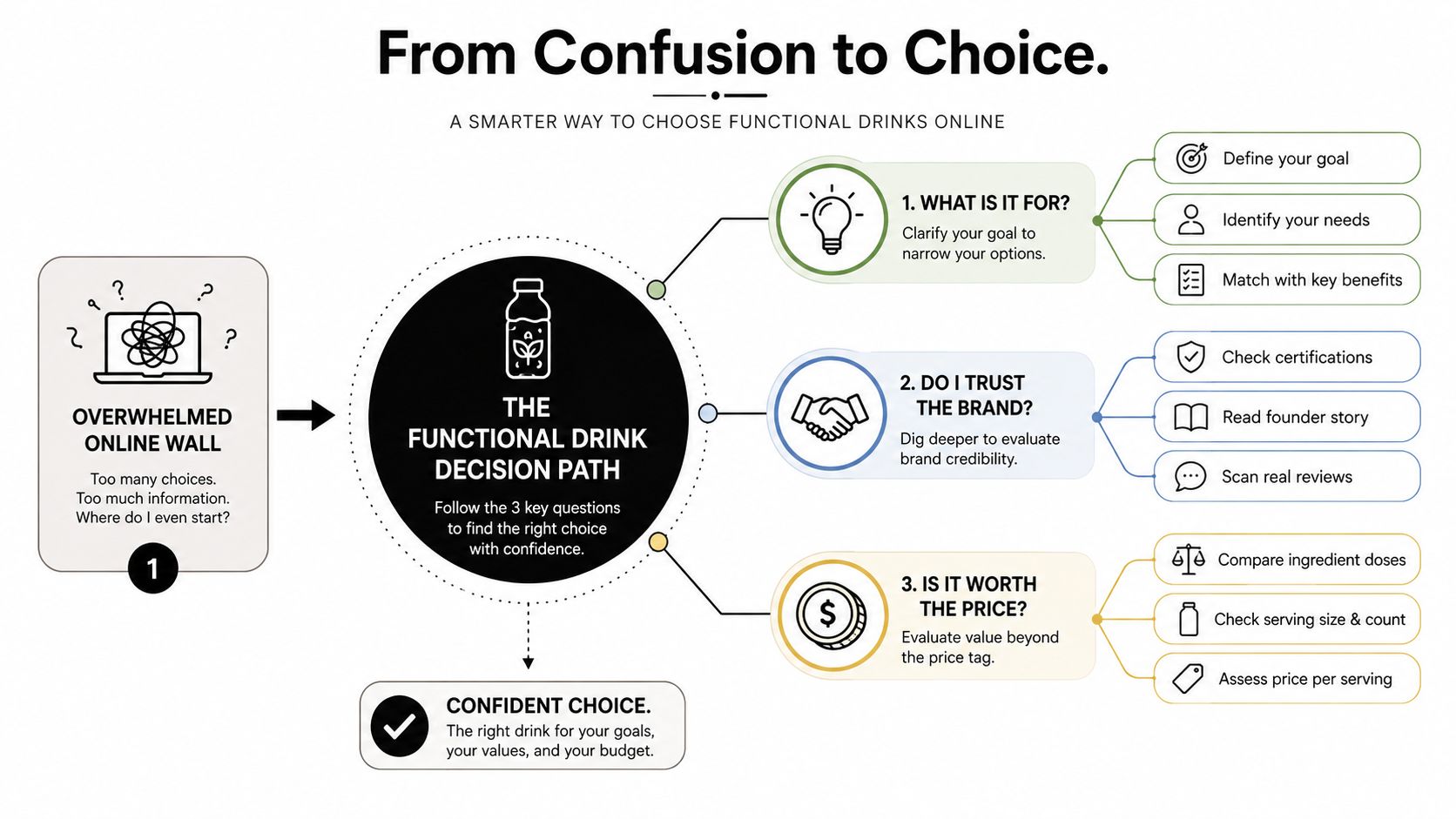
You know the feeling. You're staring at a wall of cans and bottles online, and half of them claim to help with focus, the other half claim to help you “reset,” and all of them look like they belong in the same cart. Functional drinks are drinks built around a job. They still hydrate you, but they're formulated to add a specific effect, like calm, energy, recovery, sleep support, or sharper focus.
That's why they sit in a different lane from plain water, soda, or juice. A juice might taste good, a soda might scratch the carbonation itch, but a functional drink is trying to do something more specific with the ingredients inside the bottle. The whole category lives or dies on whether that promise makes sense once you turn the package around.
A lot of confusion comes from the fact that some drinks are basically snacks in liquid form, while others are closer to a targeted formula. The difference is intent. If the product is just flavored and branded around wellness, it's not the same thing as a drink with an actual use case and a formulation that supports it.
Read the job first
When you shop functional drinks online, start with the job. Ask whether you want something for hydration, energy, calm, sleep, or recovery. If the answer is fuzzy, the product page will be fuzzy too.
Practical rule: if the drink can't answer “what is this for?” in one clear sentence, keep moving.
That's the lens to use for the rest of this guide. It keeps you from buying a clever label when what you needed was a drink that fit your day.
The Main Types You'll Find When You Shop Online
Most online shelves break down into a handful of formats, and you don't need a giant taxonomy to shop them well. You need a clean map of the categories you're likely to see.
Energy and focus drinks
These are the most obvious entry point, and they're still the category most consumers recognize first. The U.S. consumer picture backs that up, with 42% of respondents in one February 2023 survey having bought energy drinks in the last three months, and energy drinks and sports drinks ranking as the most purchased functional drinks in that survey Statista's functional drinks overview. These products usually lean on caffeine, sometimes paired with amino acids, B vitamins, or other “focus” ingredients.
Hydration and electrolyte drinks
These are the practical workhorses. They're the ones you reach for after travel, a long workday, a workout, or any day when plain water isn't enough. If you want a simple example of that lane, take a look at this electrolyte hydration juice from Loyaltie, which is built around an obvious use case instead of a vague wellness cloud.
Calm, sleep, and recovery drinks
These are the bottles people buy when they're trying to unwind at night, soften a stressful afternoon, or recover from a long stretch of stimulation. If you want a useful context piece on the broader “relaxation drink” lane, Colorado Cultures has a recovery guide that shows how some buyers think about the category when they're looking for a very specific wind-down effect.
Coffee alternatives and yerba mate
These appeal to people who want energy without another cup of coffee. Yerba mate, tea-based blends, and similar formats usually sit here. They're often chosen for smoother stimulation, different flavor profiles, or just a break from the same old caffeine routine.
Kombucha, prebiotic sodas, and protein recovery drinks
This cluster is less about a sharp “buzz” and more about digestion, gut-friendly positioning, or post-workout support. The category gets broad fast, so the label matters more than the buzzwords. For a shift-work-friendly format in the same world, nootropic pouches for shift work show how some makers package functional support for a very specific daily rhythm.
The easiest way to browse all of this is to ask whether the drink is meant to replace a habit, support a moment, or solve a problem. That one question cuts through most of the noise.
Ingredients Worth Trusting and Ones to Watch Out For
The front of a bottle sells the story. The back tells you whether the drink earns a repeat purchase.

Start with ingredients that do a clear job. Electrolytes, natural caffeine, and plainly named vitamins make sense when the drink is sold for hydration or energy. A caffeine and L-theanine pairing can be a reasonable focus formula. Electrolytes can support hydration. Vitamins can fit the use case if the label shows the dose instead of hiding behind a feel-good headline.
The best labels are boring in the right way. You can read them fast, and they tell you exactly what you're paying for.
Watch the buzzwords
The ingredient lists that deserve suspicion are packed with proprietary blends and vague functional language. If the brand hides dosages behind a blend name, you cannot tell whether there is enough of anything to matter. That is not transparency. It is a sales costume.
Artificial sweeteners deserve a close look too, especially in drinks that sell themselves as clean or natural. Some buyers do not care. Others do. Either way, you should know they are there before you order, not after the aftertaste shows up.
Practical rule: if the product claims a function, the dose should be easy to find. If you have to hunt for it, that is already a warning sign.
A quick label check saves time. Scan the ingredient list, look for the active dose, and see what the sweetener story is before you get distracted by the front panel. That is how you avoid paying for branding instead of formulation. It also helps to remember that a functional drink can still be a weak buy if the base water is poor, which is why some shoppers care about quality filters by Ring Hot Water when they want cleaner hydration at home.
If you want a broader technical lens, functional beverages are often regulated as foods in major markets such as the U.S., which pushes brands toward nutrition labeling and tighter documentation around shelf life and claims Inventory Ready's functional beverage guide. That matters because a drink can look polished and still be thin on the paperwork side. It also helps to compare claims against the format itself, whether you are reading a can, a pouch, or a more targeted product like Loyaltie's caffeine energy oral strips with green tea caffeine, L-theanine, and vitamin B12.
How to Evaluate Functional Drinks Online Before You Buy
A product page should answer your questions fast. If it doesn't, that's not a mystery, it's a cue to keep browsing.
Check the listing like a buyer, not a fan
Start with the label image. You want to see the ingredient panel clearly, not a cropped glam shot with no details. If the brand doesn't show you what's inside, assume the marketing team is doing more work than the formulation team.
Next, look for third-party testing, certifications, or any real quality signal the maker is willing to show. Disciplined brands separate themselves from the hype machines here. If the seller has batch codes, stability information, or other quality documentation, that's a better sign than a giant claim banner.
Freshness and shipping matter more than people admit
Functional drinks are not just a formula, they're a product that has to survive the trip. For drinks sold online, shelf life and packaging are part of the product experience. If the beverage depends on active ingredients staying intact, shipping conditions and storage information matter as much as the formulation. That's exactly why regulatory specs in some markets can get very specific about end-of-life counts and content thresholds, because the finished drink has to remain compliant and functional when it reaches the buyer the functional beverage standard in the technical reference.
If a brand is vague about freshness, that's a problem. If it can't explain how it ships, stores, or handles damage, that's another one. And if the listing makes a big promise but gives you no clue about returns or replacements, you're carrying the risk instead of the seller.
The best online drink listings don't just sell a feeling. They show you the evidence behind the feeling.
If you want a cleaner version of this kind of shopping experience, it's worth looking at a marketplace that helps you buy directly from makers instead of bouncing through random resellers. A platform like Loyaltie can make that easier when the listing is complete and the seller is visible.
Where Functional Drinks Fit in a Real Routine
The mistake is treating functional drinks like they're supposed to fix your whole day. They're not. They're useful when they support a routine you already have.
A hydration drink can make sense on a long workday or after travel. A coffee alternative can help if you want stimulation without another mug of the same thing. A calm or sleep drink might fit into an evening wind-down, especially if you're trying to replace a more chaotic habit with something more deliberate. That's the lane functional drinks belong in, support, not salvation.
Don't stack everything
People get into trouble when they pile on multiple functional drinks and expect each one to do a separate job. That's how you end up over-caffeinated, under-slept, and still annoyed. If your food, sleep, and stress basics are off, no bottle is going to clean that up for you.
Functional drinks make the most sense when they're used with intent. Choose one that fits the moment, not one that sounds impressive. If your day needs hydration, buy hydration. If it needs calm, buy calm. If it needs caffeine, pick a clean energy option and stop there.
Good rule of thumb: a functional drink should make a routine easier to keep, not give you a reason to ignore the routine itself.
That's also why the category works better for repeat use when the product has a clear job and a taste you'll come back to. Novelty wears off fast. Utility doesn't.
Finding Independent Makers Worth Buying Directly From
Buying directly from the maker usually gets you closer to the truth. You cut out a few layers between the drink and the person who made it, and that usually means better product detail, clearer sourcing, and less marketing fluff.
That matters with functional drinks because the difference between a decent idea and a bottle you reorder often lives in the label. Independent brands tend to explain their process more plainly. They're also easier to judge when you can see the founder story, the ingredient story, and how they talk about the product without a giant retail gloss over it.
How to find the good ones
Look in places where makers are visible, not buried. Local markets are an obvious start. Social media helps if you're willing to read past the ads. Maker directories are useful too, especially when you want to compare who explains what's in the bottle and who just repeats the same buzzwords.
Curated marketplaces can be even better if you want to discover and buy directly from independent brands without sorting through endless reseller noise. Loyaltie, a curated marketplace for independent brands fits that job, and Loyaltie's Drink Guachipupa shop is a straightforward example of how a curated storefront can make the buying decision cleaner. You get a tighter view of the brand, the product, and the claims, which makes label reading a lot easier.
The practical move is simple. Try one maker at a time. Don't buy six brands before you know which one earns a second order. Build a short list of two or three drinks you'd keep in rotation, then stop chasing every new label that shows up in your feed.
Two Listings Worth Looking At
Sometimes the clearest way to judge a category is to look at two products that do the basics well.
| Product | Format | Functional Angle | What to Notice in the Listing |
|---|---|---|---|
| Sparkling Vitamin Water, Real Juice & Blue Agave, Vitamins + Electrolytes, Variety Pack, 12-Pack | Sparkling vitamin water | Hydration plus vitamins and electrolytes | The ingredient story is easy to read, and the use case is obvious. Look for how the brand balances flavor, fizz, and function without pretending it's something it isn't. |
| BEBA YERBA | Yerba mate drink | Smooth energy and an alternative to coffee | Notice whether the listing explains the caffeine source, the flavor profile, and the kind of daily moment it fits. Good yerba mate products usually don't need to overpromise. |
The sparkling vitamin water is a useful example because it doesn't try to be mysterious. It sounds like something you'd drink on a normal day, which is the point. The yerba mate listing is worth a look for the same reason, it frames itself around a real use case, not a fantasy of becoming a different person after one can.
That's the standard I'd use on every listing. If a drink can describe itself clearly, it usually respects the buyer's time too.
Your Quick Checklist and a Note for Sellers
Before you click buy, run the same check every time.
- Read the back first: The ingredient list tells you more than the front panel ever will.
- Look for active doses: If the useful ingredient isn't clearly dosed, treat the claim as soft.
- Prefer real sweetener stories: Know whether the drink uses juice, cane sugar, agave, or a sweetener you'd choose on purpose.
- Check freshness and shipping: A bottle that can't survive the trip isn't a good buy, no matter how good the label looks.
- Favor makers who explain their process: Transparent sourcing and clear quality language beat vague wellness copy.
- Try one new brand at a time: You'll learn what you like faster, and you won't waste money on a cart full of maybes.
If you're a maker, that same checklist is the one your listing should answer. Put the label image where people can see it. Show the use case in plain language. Explain what makes the drink different without hiding behind lifestyle copy. Buyers don't need more hype. They need enough clarity to trust you twice.
For freshness, don't guess. Look for batch information or a clear date if the product uses one. For reorder decisions, ask whether the drink solves a real moment in your day or just scratches a curiosity itch. For shipping damage, buy from sellers who spell out how they handle it before you're stuck with a broken bottle and a dead inbox.
If you're buying from a local maker instead of a national brand, the difference is usually in the relationship and the information, not just the logo. You get a clearer line to the people behind the drink, and that usually makes the whole experience easier to trust.
If you want a cleaner way to discover functional drinks online without sorting through a lot of polished nonsense, start with Loyaltie. It's a marketplace where you can discover and buy directly from independent brands, which makes it easier to compare labels, find makers you trust, and reorder the ones that fit your routine.