
The popular advice is simple: make your first order discount deeper, and more people will buy. That can lift the first checkout, but it can also fill your customer list with shoppers who were only waiting for a bargain. For an independent brand selling coffee, skincare, wellness products, food, supplements, or pet products, the better question is whether the offer brings in people who'll buy again at a healthy margin.
A welcome offer is more than a coupon. It's a signal about what your product is worth, what kind of buyer you want, and whether the first purchase should stand alone or lead naturally to a reorder. The strongest strategy often combines a modest incentive with a product choice that makes the value obvious.
Table of Contents
Why Most First Order Discounts Attract the Wrong Buyers
Deeper discounts don't automatically create better customers. They create a stronger reason to act today, which is useful, but that reason may disappear as soon as the code expires. A shopper who chooses an independent skincare maker because the product solves a real need may become a loyal buyer. A shopper who chooses only because the price dropped may leave as soon as another brand offers a larger reduction.
The acquisition data makes the trade-off clear. Across 5,106 live percent-off new-customer codes, the median first-order promotion was 10% as of August 23, 2026, and 45.8% of codes were exactly 10% off. Only 13.8% reached 25% off or deeper, according to SimplyCodes' first-order discount depth study. That pattern suggests that many online retailers use a moderate offer to reduce hesitation without treating the first purchase as a loss-leading event.
The first purchase sets the cohort's direction
A discount can win the order while weakening the customer relationship. Long-run customer value data illustrates why the product and offer structure matter together. In a 2026 analysis, customers whose first transaction was a bundle reached 127% of baseline lifetime value, while customers acquired through a single-item discount reached 68% of baseline LTV, as reported in the analysis of customer LTV by first transaction.
That difference changes how you should judge a welcome offer. A single jar of supplements at a reduced price may produce a satisfying conversion report, but a carefully built starter set can help the buyer understand the range, find a favorite, and have a reason to reorder. The discount still plays a role, but the first product experience carries more of the retention burden.
Practical rule: Don't optimize the first order for the cheapest possible checkout. Optimize it for the next purchase you want the customer to make.
Independent brands can accidentally train good prospects to wait. If every new visitor sees a dramatic code, regular prices start to look negotiable. That's especially risky when you sell products made with carefully chosen ingredients, local production, or direct maker relationships. Your offer should lower the first barrier, not undermine the value story.
For shoppers, a marketplace such as Loyaltie can make discovery easier. People can find independent brands and buy directly from makers without treating price as the only reason to try something new. For sellers, the useful mindset is to attract a buyer who appreciates the product enough to return without needing the same incentive every time.
Choosing the Right Offer Structure for Your Brand
Start with the product, not the popup. A first order discount for fresh coffee shouldn't be designed the same way as one for face serum, dog treats, or a multi-product wellness range. Ask what a new customer needs to understand before they can buy confidently, then make the offer support that decision.
The most practical framework has four steps.
Match the incentive to the buying friction
A percentage discount is easy to understand and works well when product prices vary across a catalog. A dollar-off offer can feel more tangible for a lower-priced product, but it needs a sensible minimum purchase so the reduction doesn't consume the order's contribution margin. Free shipping can be more persuasive than a percentage reduction when delivery cost is the main source of hesitation.
A bundle-led offer is often the strongest choice when customers benefit from variety or need time to discover a favorite. For example, a coffee maker could present several roasts together, while a skincare brand could pair a cleanser with a moisturizer rather than discounting one item in isolation.
| Offer Type | Typical Depth | Margin Impact | Repeat Purchase Signal |
|---|---|---|---|
| Percentage off | 10% to 15% is a practical starting range | Predictable, but scales with basket value | Moderate, unless tied to a replenishable product |
| Dollar off | Set against a minimum purchase | Easier to cap, but can be heavy on small carts | Moderate, stronger when it encourages a fuller first basket |
| Free shipping | Delivery cost rather than product price | Protects displayed product pricing, but absorbs fulfillment cost | Moderate, especially when shipping is the main objection |
| Bundle offer | Varies by product set | Can protect unit economics through a larger basket | Strong, because the customer experiences more of the range |
Recent ecommerce guidance points to 10% to 15% as a practical sweet spot, with deeper offers risking margin erosion without a proportional lift, as discussed in WisePops' guide to discount popups. Discount-led popups have converted better than non-discount popups in the cited datasets, including 7.45% versus 4.60% in one analysis and 2.4% versus 1.7% across 1.24 billion displays in another, so the incentive can help. The mistake is treating that top-of-funnel result as proof that the deepest offer is best.
Use the first order to create a habit
For replenishable products, build the offer around the expected second purchase. A modest reduction on a two-product starter set may work better than a large reduction on one item because the customer gets more information from the first delivery. For products bought less often, free shipping or a dollar-off threshold may be more sensible than pushing extra units.
Eligibility needs equal care. Restrict the code to a customer's first order, define whether it applies to sale items, and decide whether it can combine with other promotions. If you're also managing coupons for in-person services or local events, this guide to driving bookings with Square coupons offers useful context on keeping coupon rules clear.
For independent sellers looking to reach local audiences, Sell on Loyaltie is one route to put products in front of shoppers who already want direct relationships with makers. The platform should complement, not replace, a clear offer strategy.
Setting Up Your Welcome Offer Without Breaking the Checkout
A good offer can still fail if the code appears to work but disappears at checkout, applies to the wrong customer, or stacks with every other promotion. Set up the logic before you write the popup copy.
Build the eligibility logic first
Use customer order history as the primary rule. A cookie can help recognize a returning browser, but it shouldn't be your only safeguard because shoppers can clear cookies or use another device. The storefront should validate whether the account or email has placed an order, then reject the offer when the customer no longer qualifies.
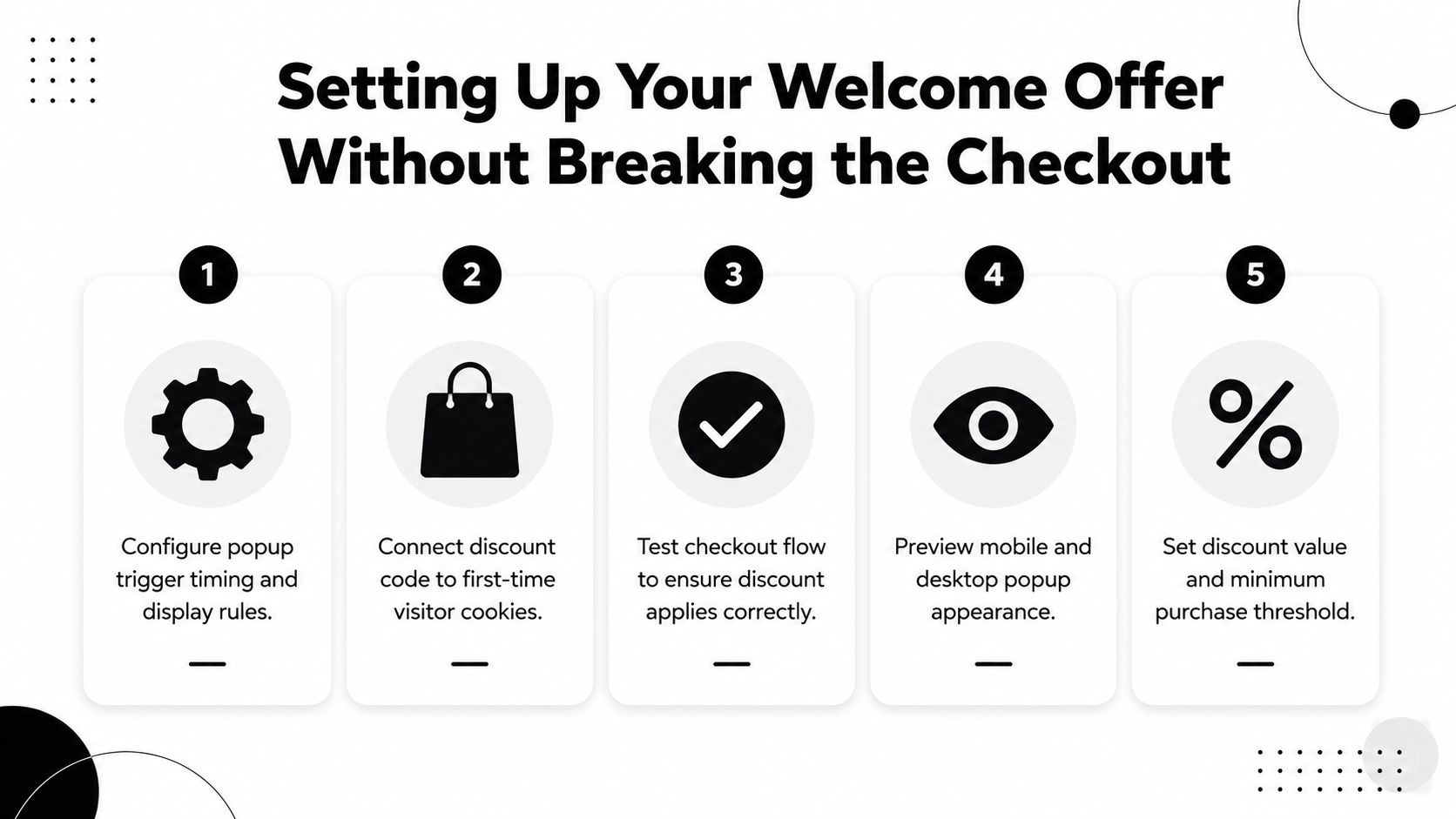
A practical setup looks like this:
- Choose the trigger. Display the popup after a visitor has had time to browse, or use exit intent when the shopper is about to leave. Don't interrupt product discovery immediately.
- Define the audience. Exclude customers with a completed order, people who already used the code, and visitors who've dismissed the offer if repeated displays would feel intrusive.
- Set the code rules. Make the code single-use, limit it to eligible products, and decide whether a minimum spend applies.
- Block unintended stacking. Test the code alongside sale pricing, free-shipping thresholds, referral rewards, and seasonal campaigns. The checkout should apply only the combinations you've approved.
- Test every device. Check the full journey on mobile and desktop, including signup, code delivery, cart, payment, and confirmation.
Write the terms in plain language. State the exact reduction, minimum purchase if there is one, eligible products, expiry policy, whether it applies to marketplace purchases, and whether it combines with other offers. Clear rules prevent the common frustration of a customer entering a code that fails without explanation.
For the follow-up email, a short welcome sequence should explain the product before pushing another sale. The examples in Ecommerce Boost's guide to high-converting welcome email sequences can help shape the flow, but your own maker story, usage instructions, ingredients, and reorder guidance should carry the message.
This setup also matters when customers discover a product through a marketplace. If a shopper finds a local granola maker through Loyaltie's seller resources, the offer and eligibility rules should still be understandable before the buyer reaches payment.
Measuring What Matters After the First Purchase
Signup rate can make a weak offer look successful. Review customers who used the first order discount separately from those who paid full price, then compare their behavior after the initial transaction. The structure of the offer matters here: a single discounted item may attract deal hunters, while a starter bundle can create a better first experience and a clearer path to repeat purchase.
Use identical measurement windows for each cohort. Compare 30, 60, 90, and 90 to 180 days, an approach also emphasized in Rework's guidance on first-time customer offers.
Read the customer beyond the first conversion
For products sold through plans or regular delivery, first-renewal rate provides an early quality signal. In the verified subscription dataset supplied for this analysis, offers under 20% were associated with a 64.7% first-renewal rate and a $39.72 median first order. Discounts from 20% to 40% were associated with 62.9% renewal and a $33.05 median first order, while discounts of 90% or more were associated with 53.4% renewal and a $0.02 median first order.
These figures are directional, not a discount template. A steep reduction can raise initial conversion while attracting customers who never planned to pay the regular price. Free shipping, a modest item discount, or a bundle can protect the price signal differently, so compare offer structures rather than judging depth alone.
Use a practical scorecard:
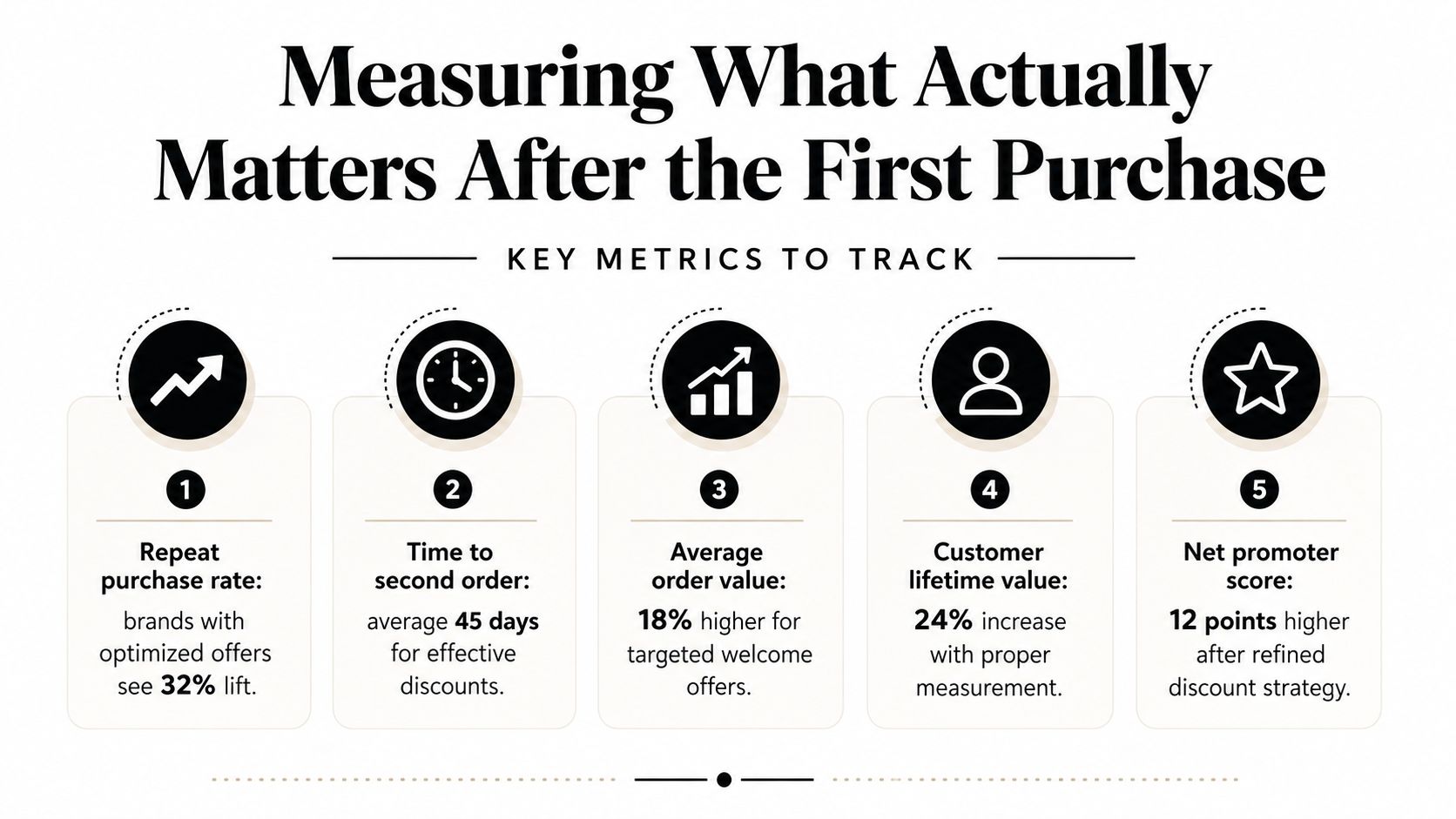
- Cohort LTV: Include product revenue, discount cost, fulfillment, refunds, and acquisition cost, not gross sales alone.
- Repeat purchase rate: Compare discounted and non-discounted buyers in the same category and time window.
- Time to second order: Check whether the first purchase leads to a reorder without another promotion.
- First-renewal rate: For regular delivery, measure how many customers remain after the initial incentive.
- Basket quality: Review bundle adoption, average items per order, and margin by first-purchase type.
The broader framework in key post-purchase metrics for ecommerce can help organize the review. Judge the offer by the value it creates after acquisition. Test one variable at a time, such as 10% against 15%, or a single item against a starter bundle. Keep the audience and eligibility rules stable, so the result shows whether the offer changed customer behavior rather than changing who saw it.
Common Mistakes That Quietly Erode Your Margins
A wellness brand once responds to a weak popup by increasing the reduction. Signups improve, but the owner still can't explain why repeat orders remain thin. The issue isn't always the incentive. Product benefits may be unclear, reviews may be buried, or the customer may not know how to use the product after delivery.
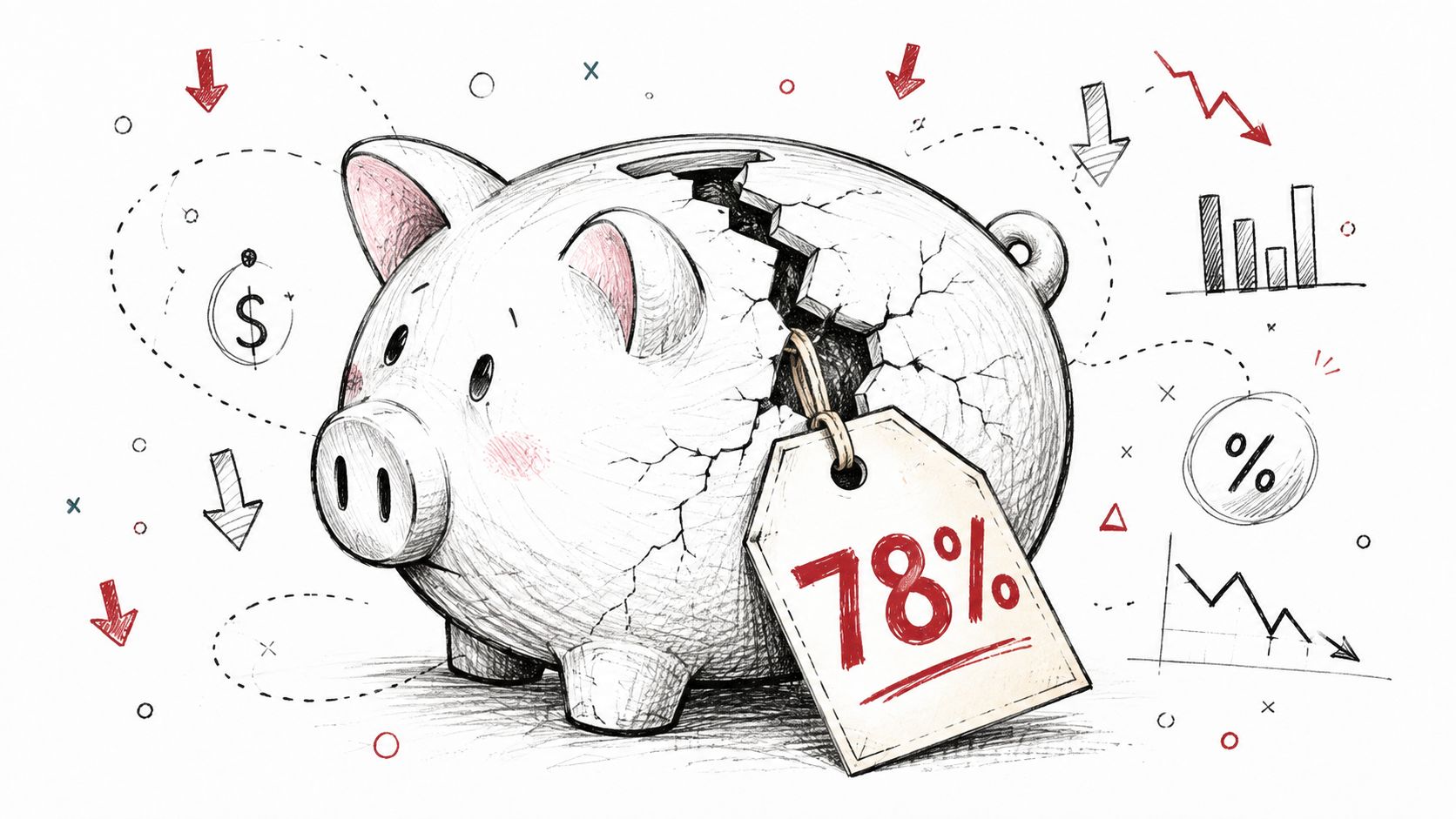
The fix is to inspect the buying experience before cutting the price again. Put ingredients, sourcing, usage, delivery expectations, and maker information close to the purchase decision. A customer who understands why a product costs what it costs needs less financial persuasion.
Three quiet leaks to audit
The code stacks with everything. A customer combines the welcome code with a sale price and free shipping, turning an acceptable acquisition cost into a loss. Set explicit exclusions and run test carts that include every active promotion.
The offer applies to the wrong products. A high-cost item, gift card, or low-margin bestseller may receive the same reduction as a product designed for acquisition. Create an eligible-product list, then check it whenever the catalog changes.
The team celebrates signups while ignoring second orders. A popup can collect many email addresses without producing profitable customers. Compare discount-acquired cohorts with organic buyers over the post-purchase windows described earlier, and pause any offer that lifts registration while weakening repeat behavior.
A fourth mistake appears in local commerce. The seller copies a national retailer's discount even though the product has a different cost structure and a much more personal value proposition. Independent brands don't need to imitate mass-market pricing. They can explain the product's quality, make the first purchase easier through a bundle, and use a restrained offer that protects the relationship.
The best welcome offer removes uncertainty. It shouldn't hide a weak product page or teach customers that your regular price is temporary.
Finally, don't make the code mysterious. Say whether it's limited to one first order, whether it can be reused, and why it may fail. Transparency protects trust, especially when shoppers are buying directly from a maker they've only just discovered.
Your Launch Checklist and When to Adjust the Offer
Treat your first order discount as a living part of the customer journey, not a permanent setting. Before launch, confirm that the offer fits the product margin, supports a sensible first basket, and has rules your checkout can enforce.
Use this checklist:
- Offer design: Choose percentage off, dollar off, free shipping, or a bundle based on the buying friction.
- Customer quality: Define what a successful second purchase should look like before you launch.
- Eligibility: Limit the offer to first orders and decide how accounts, cookies, marketplace buyers, and prior purchasers are handled.
- Checkout protection: Test stacking, sale exclusions, minimum spend, mobile display, and code delivery.
- Measurement: Separate discounted cohorts from other buyers and review repeat purchase behavior through the relevant windows.
- Review rhythm: Check early conversion and margin first, then review retention and LTV as the cohort matures.
- Next step: Move satisfied customers toward regular delivery or a natural reorder reminder instead of offering another permanent discount.
Adjust the structure when customers buy once but don't return, when the offer attracts baskets too small to cover acquisition costs, or when shoppers regularly wait for a code. Reduce depth, change the product set, test free shipping, or retire the discount in favor of better education and stronger product merchandising. Keep the version that brings in buyers who value the product after the first order.
Loyaltie is a marketplace where people discover and buy directly from the best independent brands in the US, including makers of everyday food, wellness, beauty, and pet products. Visit Loyaltie to find better products made by real people, shop with no middleman, and choose a first purchase you'll want to reorder.