You know that moment when your cart is full of things you need. Coffee, soap, supplements, dog treats, maybe a skincare refill. Then you pause because the product page feels slippery. Nice photos, vague promises, no real clue who made it, where it came from, or whether the whole thing is just polished branding.
That hesitation is useful. Keep it.
Ethical shopping online isn't about becoming a perfect person with a spreadsheet and a moral scorecard. It's about buying better everyday stuff from real people, with less nonsense in the middle. When you buy directly from the maker or from a marketplace built around independent brands, you usually get a clearer story, a more thoughtful product, and a shopping experience that doesn't feel like gambling.
Table of Contents
What Ethical Shopping Actually Means Today
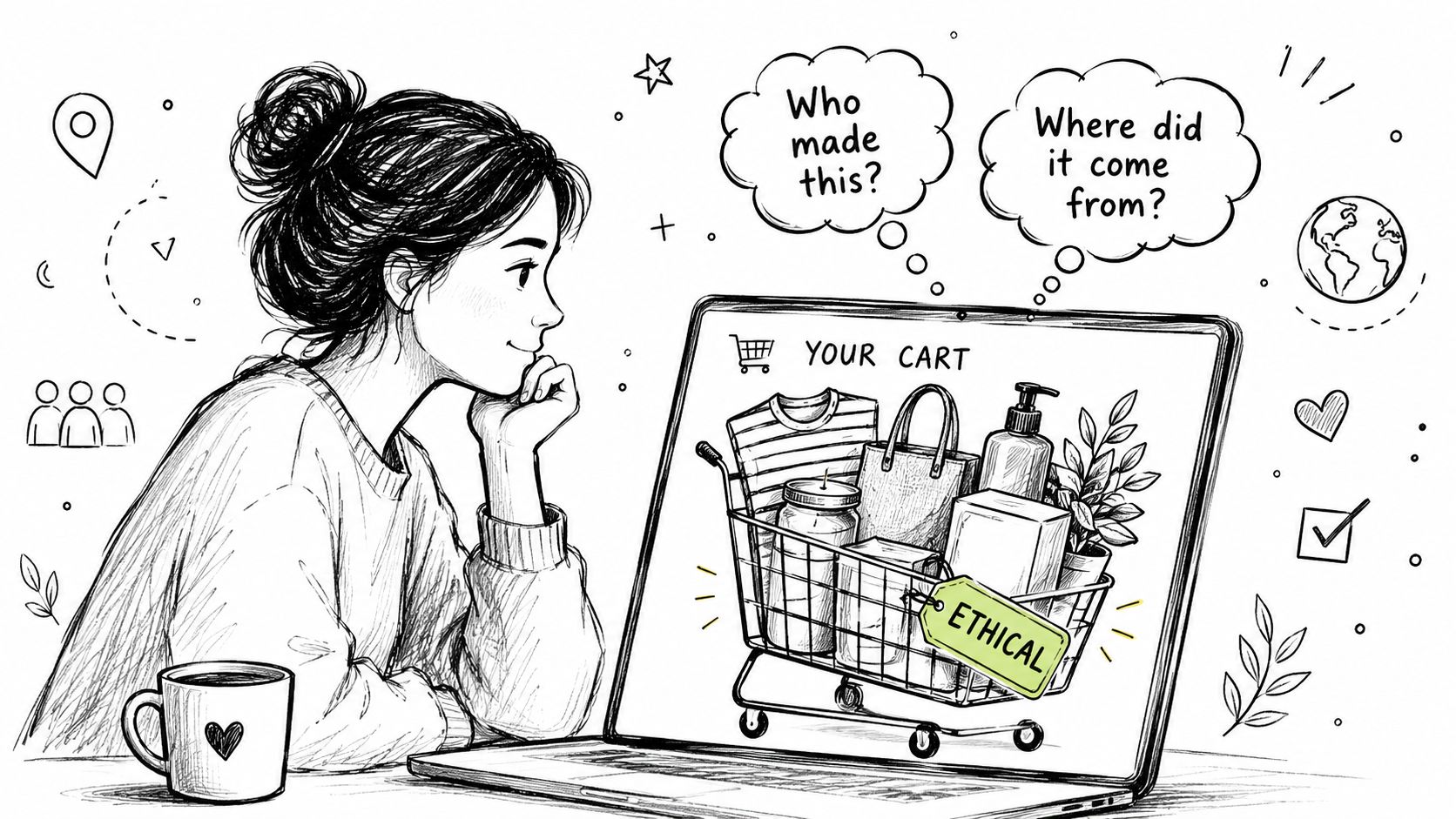
Start with the cart question
Ethical shopping online starts with one basic filter. Would you still feel good about this purchase if you knew exactly how it was made, packed, and shipped?
If the answer is no, skip it. If the answer is maybe, keep reading the page. If the brand makes it easy to understand who they are and how they work, that's a strong sign you're dealing with people who respect your money and your attention.
This shift is already massive. The ethical retail market is projected to reach USD 544.11 billion by 2032, with online sales accounting for nearly 45% of that, according to Credence Research's ethical retail market report. That isn't a niche hobby. It's a broad change in how people shop, especially younger buyers who want everyday purchases to line up with their standards.
Ethical doesn't have to mean complicated. It means you stop buying blind.
Think upgrade, not sacrifice
A lot of people hear "ethical" and assume they need to settle for fewer options, higher friction, and guilt wrapped in brown paper. I think that's backwards.
Buying from independent brands and local makers is often a quality move first. Your coffee is fresher. Your body care feels more considered. Your pantry staples don't read like they were invented in a boardroom. You get products shaped by someone's actual choices, not whatever survives six layers of mass retail compromise.
That also means paying attention to categories you buy repeatedly. Coffee, wellness, skincare, food, supplements, pet products. These are the easiest places to upgrade because they already live in your routine.
A good mental model is bespoke. Not because you need to dress like you're in a period drama, but because the logic is the same. Better materials, more intention, closer fit. If you want a clean example of that mindset, Dandylion Style bespoke garments explain why buying with care usually leads to something better, not just something more "ethical."
Define What Matters Most to You
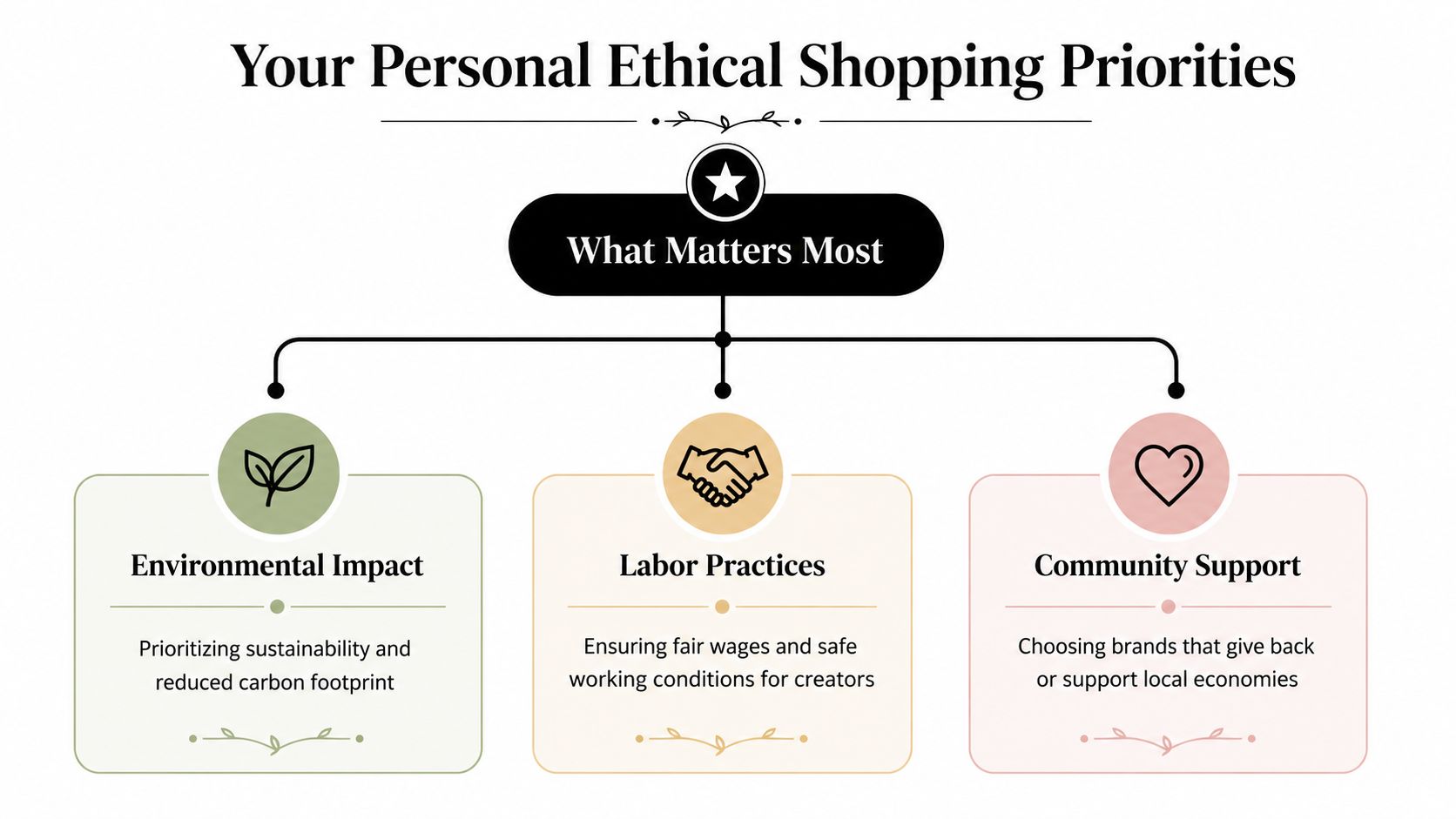
Trying to care about everything at once is how people quit. You don't need a perfect standard. You need your standard.
Pick two standards and stop there
Globally, 62% of people actively seek out sustainable products, and 55% are willing to pay more for them, as noted in these environmentally conscious consumer statistics. That's useful, but it doesn't tell you what you care about most.
So choose two priorities. Not five.
You might care most about:
- Ingredients and materials if you buy skincare, supplements, tea, or pet products regularly.
- Labor and maker visibility if you want to know who's behind the brand.
- Local economic impact if you prefer products made closer to home.
- Animal welfare if cruelty-free standards shape most of your purchases.
- Packaging and waste if excess shipping trash drives you nuts.
Once you've picked your two, shopping gets easier fast. You stop falling for broad feel-good language and start looking for specifics that match your standards.
A simple way to choose
Use the category you're already buying and pair it with the value you won't compromise on.
| Everyday category | Good first priority | Strong second priority |
|---|---|---|
| Coffee | Local sourcing or roasting transparency | Low-waste shipping |
| Skincare | Ingredient clarity | Refillable or minimal packaging |
| Supplements | Manufacturing transparency | Direct-from-maker buying |
| Pet products | Ingredient sourcing | Durable, low-waste packaging |
| Pantry food | Local production | Clear labor and sourcing story |
If you're stuck, start with this question: what would annoy you more, hidden ingredients or hidden labor practices? Your answer tells you where to focus.
Practical rule: Pick the issue you'll actually check every time you shop. That's better than claiming five values and following through on none.
You can also study one real maker page and see what details jump out at you. A shop like Chika Paper Studio on Loyaltie is a useful reminder that buying directly from the maker often gives you more context than a giant retail listing ever will.
Your Guide to Discovering Independent Makers
Finding better alternatives doesn't require secret access. You just need better filters than "top rated" and "best seller."
Where to look first
Start with search phrases that sound like a person, not a catalog. Search the product plus the relationship you want.
Examples:
- local coffee roaster buy directly from the maker
- US skincare independent brand olive oil soap
- wellness products made in USA direct
- pet treats local maker no middleman
- small batch supplements direct from maker
Those searches pull you out of the giant retail loop and closer to real brand sites. They also tend to surface shops that care enough to explain what they do.
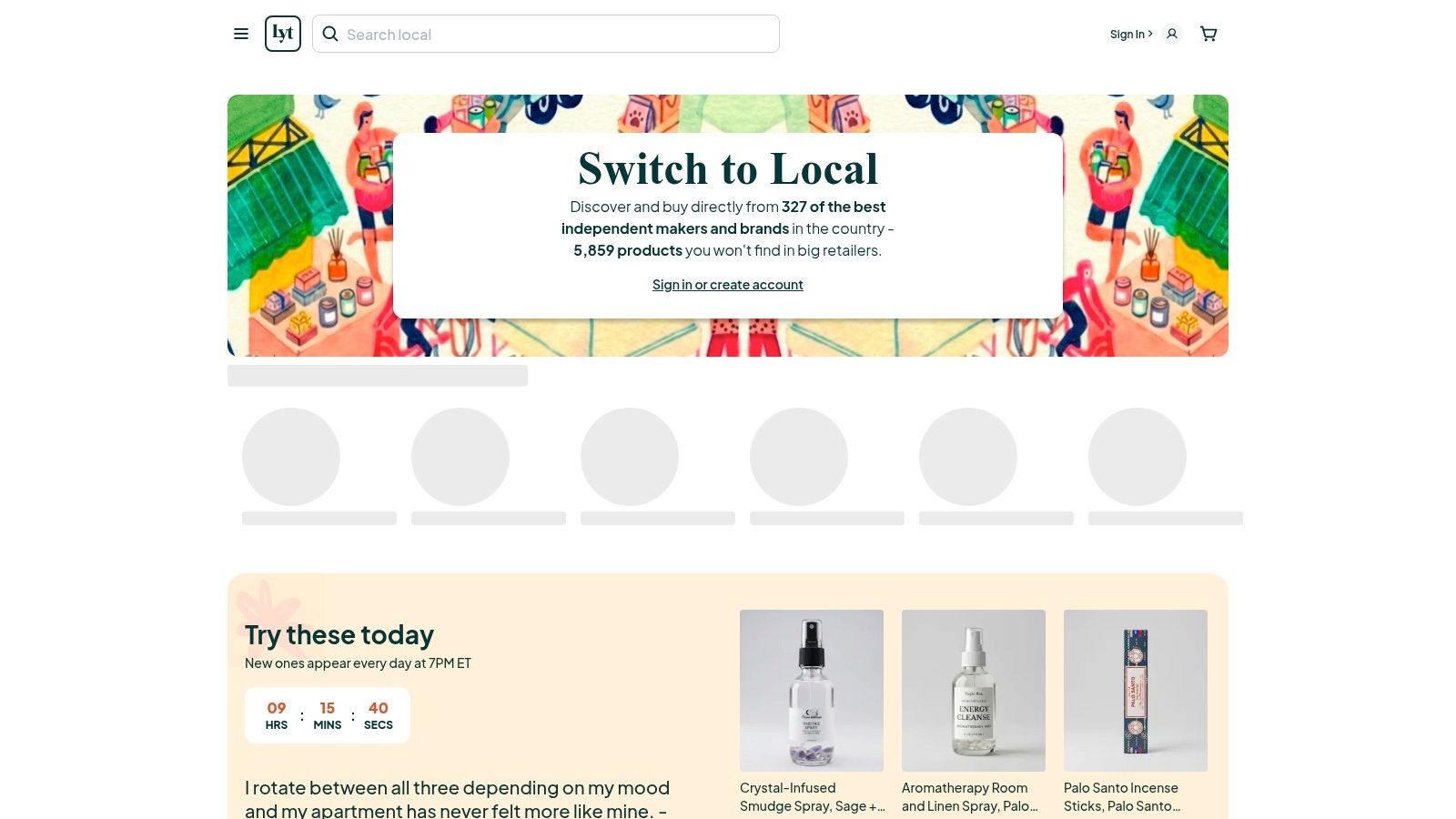
Then check curated marketplaces. One useful option is Loyaltie, a marketplace where people discover and buy directly from the best independent brands in the US. That's helpful when you want everyday categories in one place without defaulting to mass-produced options.
For every $1 spent at an independent retailer, $0.71 stays in the local community, according to 2026 independent retailer data compiled by Amra & Elma. That's not a charity argument. It's proof that no-middleman commerce keeps more value close to where products are made and sold.
How to tell if discovery is worth your time
Don't waste an hour browsing a brand that tells you nothing. Check these signals in under two minutes:
- Real product range: Are they focused on a category they seem to understand, or are they selling random trend items?
- Maker presence: Is there a founder, team, workshop, or location mentioned anywhere?
- Useful descriptions: Do they explain ingredients, process, sourcing, or intended use in plain English?
- Repeat-buy logic: Can you picture yourself reordering this coffee, soap, snack, or supplement because it fits your life?
A direct example helps. If you're curious how independent shops present products with personality instead of generic copy, this short walkthrough is worth a look:
A lot of the best finds happen when you stop shopping by retailer and start shopping by need. Need a better morning coffee. A better bar soap. A cleaner pantry refill. That's how independent brands become your default, not just an occasional detour.
How to Vet Brands Like a Pro
Most product pages are designed to push you toward price, convenience, and urgency. That's not an accident.
Read the About page like a skeptic
Online shopping is often built to make people prioritize price over values. With 59% of consumers only buying from responsible companies when those efforts are clear, transparency becomes the whole game, as reported in this Phys.org piece on online shopping and ethical choices.
So stop reading brand pages like a fan and read them like an editor.
A solid About page usually answers at least a few basic questions:
- Who makes this?
- Where are they based?
- Why this category?
- What do they say about ingredients, materials, or sourcing?
- Do they sound like humans or like ad copy?
If the page is all mission, no substance, move on.
What transparency actually looks like
You don't need a stack of certifications to trust a brand. Certifications can help, but plenty of independent brands are doing careful work without collecting every badge.
Look for details like these instead:
- Specific ingredient language instead of "clean" or "natural" with no explanation.
- Clear sourcing notes that tell you where materials come from, even if it's brief.
- Honest limitations such as small-batch production, seasonal availability, or slower fulfillment.
- Consistent story across pages so the About page, product page, and FAQ don't contradict each other.
Here's a fast vetting framework I use:
- Read the About page.
- Read one product page all the way through.
- Check shipping and returns.
- Look for packaging details.
- Decide whether the brand is showing its work.
If a brand wants your trust, it should make basic facts easy to find.
For another grounded take on what buying with intention looks like, Pandemonium Millinery's ethical shopping guide is a useful read. It keeps the focus where it belongs, on real makers, transparency, and buying with more care.
Look Beyond the Product to Packaging and Shipping
An ethically made product can still arrive in a mess of waste. A lot of shoppers miss that because they stop evaluating the purchase once the item itself looks good.
The box matters more than most people think
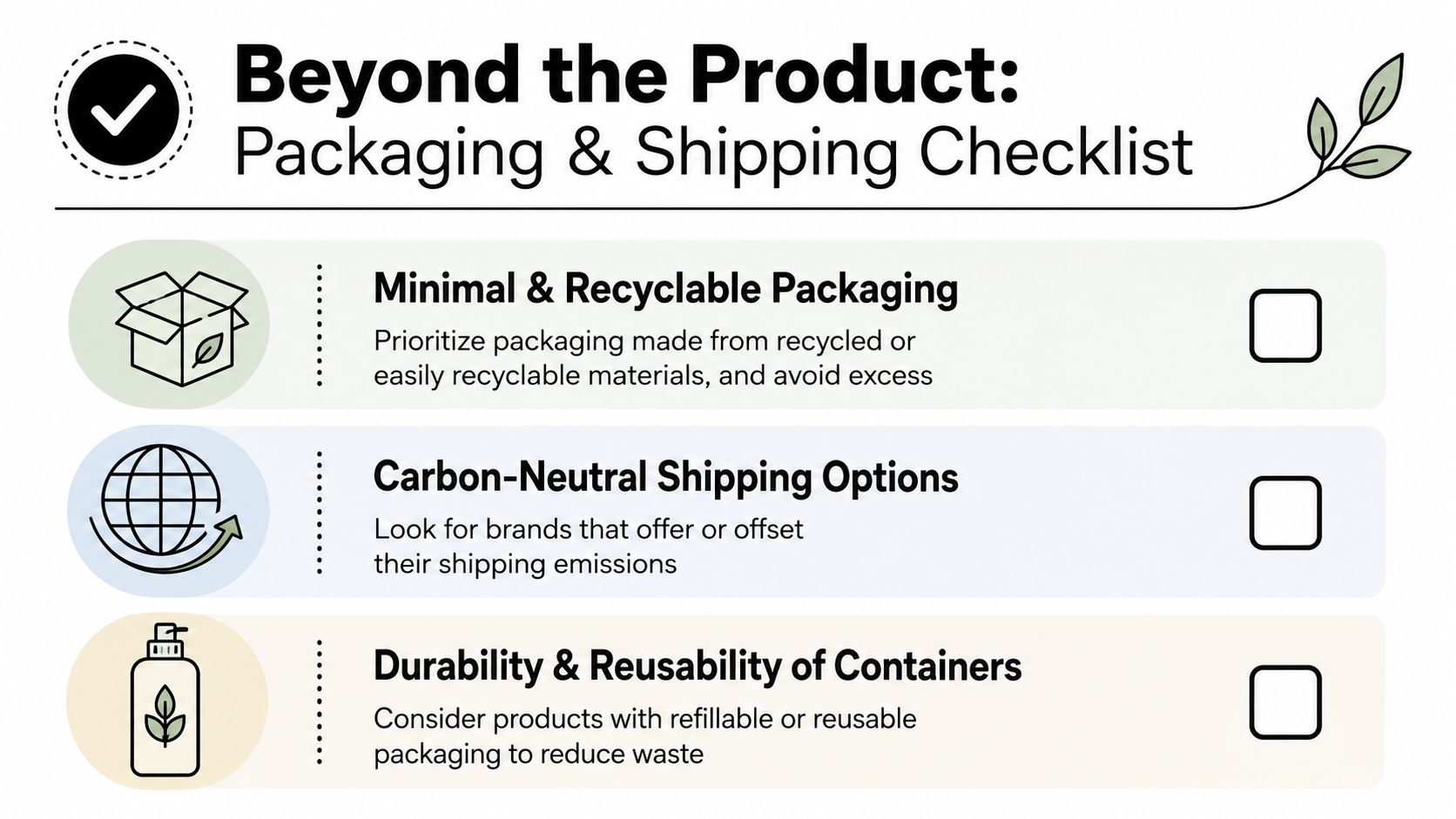
Around 40% of the carbon footprint of online retail comes from packaging and delivery logistics, not the product itself, according to Ethical Consumer's guide to ethical online shopping. If you're serious about ethical shopping online, you can't ignore the last mile.
So check the shipping habits, not just the ingredient list.
A few things I look for right away:
- Packaging language with actual meaning such as recyclable paper mailers, refill pouches, glass containers, or minimal void fill.
- Shipping options that don't scream urgency because ultra-fast delivery usually works against consolidation and waste reduction.
- Refill or reuse potential when the product category makes sense for it.
- One-order discipline from you because five tiny impulse orders create a problem no brand policy can fix.
For everyday habits, small swaps matter. If coffee pods are part of your routine, reusable K-cups to reduce waste are a practical example of how convenience doesn't have to create extra trash.
Questions worth asking before you buy
If a brand doesn't publish shipping details, ask. A short message is enough.
Try these:
- What packaging materials do you use for this order?
- Do you offer plastic-free or lower-waste packing options?
- Can multiple items ship together?
- Do you use refillable, reusable, or easily recyclable containers?
You learn a lot from the reply. A thoughtful answer usually tells you the maker has considered the full process, not just the sale.
A product can be simple and still fit that standard. For example, Eucalyptus & Aloe Bar Soap, Shea Butter & Olive Oil, Spa-Fresh Cleanse, 4.8 oz Handmade Body Bar | Jask Beauty by Loyaltie is described as a 4.8 oz handmade bar with a fresh eucalyptus-style aroma and a rich lather from olive oil. That's the kind of everyday item where it makes sense to also check how it's packed and shipped, especially if you're replacing plastic-heavy bath products.
If you want another example of an independent brand page to inspect for those details, Evolve Botanica on Loyaltie is the kind of listing worth reviewing with a packaging checklist in mind.
The product is only half the purchase. The other half is how it gets to you.
Making Ethical Shopping Your New Normal
You don't need a total lifestyle reset. You need one better repeat purchase.
Build one better buying habit
Pick something you already reorder without thinking. Coffee. Body soap. Supplements. Snack bars. Pet treats. Then replace just that one item with an independent brand or local maker you can buy directly from.
That's how this sticks.
The win isn't moral perfection. The win is building a shopping routine that gives you better products, clearer information, and fewer mystery purchases from giant sellers who tell you almost nothing. You end up with things you like using, made by people you can identify.
Keep your standards simple:
- Know what matters most to you.
- Vet the brand, not just the product photo.
- Check packaging and shipping before you check out.
- Reorder the products that prove themselves.
Ethical shopping online works best when it feels normal. No big performance. No guilt spiral. Just better buys, made with more care, from people doing real work.
If you're ready to make one smarter switch, start with Loyaltie, a marketplace where people discover and buy directly from independent brands and local makers across the US. It's a straightforward way to find everyday products with a clearer story and no middleman.