
You know the feeling. You need coffee, face wash, vitamins, maybe a better snack for your dog, and you open the same giant shopping sites you always use. The choices blur together. The labels all sound good. The photos look polished. But nothing feels especially personal, and it's hard to tell what's well made, what's just packaged nicely, and what's better for the planet.
That's why more people are looking for a different kind of place to shop. Not a random collection of products, but a marketplace that helps you buy directly from real makers, with less guesswork and more trust. An eco-friendly marketplace can be part of that shift, but only if you know how to tell the genuine article from green-colored marketing.
Table of Contents
Tired of the Same Old Stuff? There's a Better Way to Shop
A lot of everyday shopping feels strangely flat. You reorder the same beans, the same body lotion, the same pantry staples, and maybe they're fine. But “fine” isn't why you started looking in the first place.
Usually, you're after something more specific than a product category. You want coffee that tastes like someone cared how it was sourced and roasted. You want skincare with ingredients you can understand. You want household goods that don't feel disposable two weeks after they arrive.
That search can get messy fast. Some brands talk about being natural. Others say low waste, ethical, clean, conscious, local, or green. Many of those words sound close enough that shoppers lump them together, even though they don't mean the same thing.
Buying better starts when you stop treating all “good” labels as interchangeable.
The good news is that you're not chasing a fringe idea. Sustainable products now account for 25.4% of branded CPG sales and generated 44% of all CPG growth from 2013 to 2025, according to NYU Stern's Sustainable Market Share Index. That tells you something important. People aren't only buying on convenience anymore. They're actively choosing products that feel more aligned with how they want to live.
Why this matters for everyday shopping
If you buy coffee, supplements, soap, pet products, or pantry basics online, this shift matters because those are exactly the kinds of categories where quality, ingredients, and trust shape the experience.
An eco-friendly marketplace, at its best, gives you a better way to shop for those everyday things. Not because every product has a leaf on the label. Because the platform helps you get closer to the maker, understand what you're buying, and avoid the anonymous feeling of mass-market retail.
What you're really looking for
You're likely not trying to become a perfect shopper. You probably just want to make a few better choices without turning every order into a research project.
That's where the right framework helps. Once you know what to look for, an eco-friendly marketplace stops being a vague feel-good phrase and starts becoming a useful filter for finding products you'll want to reorder.
What Exactly Is an Eco-Friendly Marketplace
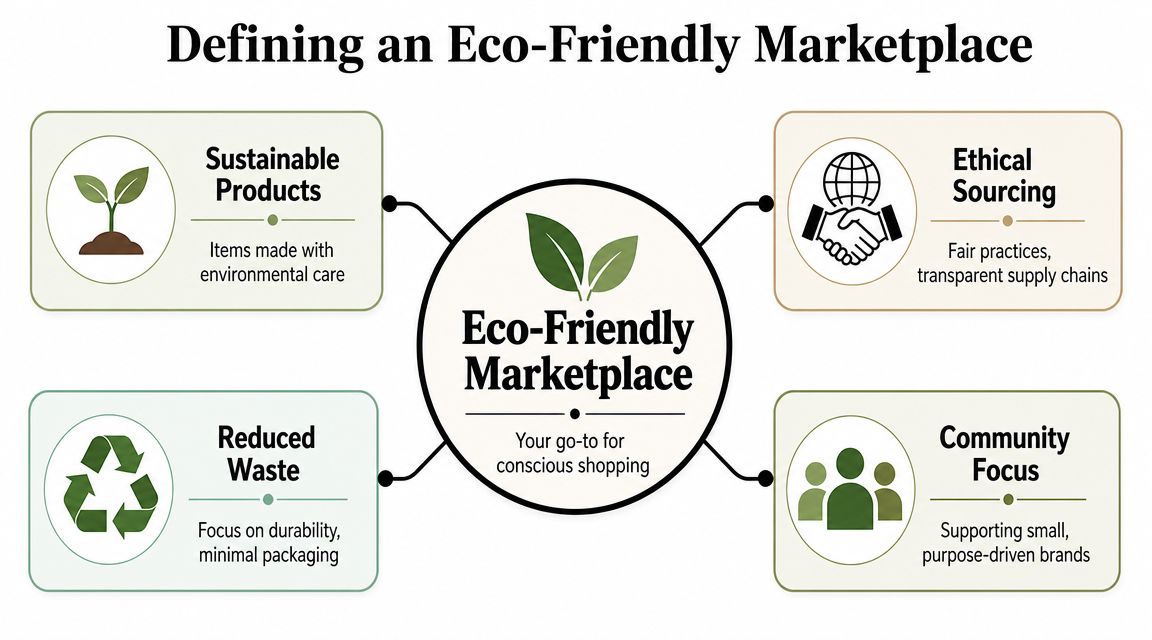
An eco-friendly marketplace works like a curated online shop where the platform does some of the sorting for you. Instead of asking you to hunt through thousands of vague listings, it brings together brands and makers that give clearer information about how their products are made, what they're made from, and why they may create less waste over time.
The experience resembles a farmers market, but for everyday life. You are not only buying an item. You are getting more context about the person or business behind it, the materials involved, and whether the product was built to be used again, refilled, composted, or kept for a long time.
That distinction matters because “eco-friendly” can sound broader than it is. A good marketplace is not a magic stamp that makes every product perfect. It is better to treat it like a filter. It helps you find options that deserve a closer look, then gives you enough detail to judge them with your own standards.
A simple example is Single Origin Nicaragua Coffee Beans, 100% Arabica, Medium Roast, Low Acidity Smooth Cup, Whole Bean, 12 oz Bag | Three Avocados by Loyaltie. The useful part is the specificity. You can see that it is single-origin coffee made from 100% Arabica beans, described as a sweet, low-acid medium roast with a balanced, fruity finish, available for $22.99.
The same goes for simple household items. A listing for a stainless steel reusable drinking straw set with cleaning brush tells you more than “green kitchen swap.” It gives you a material, a repeated use case, and a clearer picture of how the product fits into daily life.
What makes it feel better to shop this way
Part of the appeal is trust. Part is practicality.
A strong eco-friendly marketplace usually makes a few things easier to notice:
- Clearer product facts so you can check ingredients, materials, origin, or care instructions without opening ten tabs.
- Real seller identity because the brand or maker is visible, not buried behind a generic storefront.
- Useful signals about waste and longevity such as refill formats, reusable materials, repairability, or durable construction.
- More thoughtful discovery that feels closer to browsing a carefully chosen local shop than scrolling through bulk listings.
This is also where a little critical thinking helps. A marketplace can support better shopping habits without claiming every item is the most sustainable option in every case. That tension is worth keeping in view, especially if you care about buying local and reducing impact. Sometimes those goals overlap. Sometimes they do not.
If you want to see how mission-driven platforms are structured in practice, these marketplace success stories are a useful reference point. They show how curation and seller standards can shape a buying experience that feels more trustworthy.
How to Spot a Genuinely Green Marketplace
A lot of marketplaces know shoppers want sustainable options. That doesn't mean they make those options easy to verify.
The most helpful rule here is simple. Look for proof, not just promises. The U.S. EPA's greener purchasing guidance centers on reducing climate impacts and improving health outcomes, which gets to the core shopper question: how do I know? That gap is where greenwashing slips in.
Look for proof, not just promises
When a marketplace says products are eco-friendly, don't stop at the headline. Check how the claim is supported.
Some platforms rely on vague language like conscious, earth-friendly, or clean. Those words may reflect good intentions, but they don't tell you much on their own. A better marketplace gives you enough information to evaluate the product without guessing.
Practical rule: If the platform makes big sustainability claims but gives tiny product details, slow down.
Here are a few signs that a marketplace is doing the work:
- Seller vetting is visible. The platform explains how brands are reviewed, what information sellers must provide, or what kinds of claims are allowed.
- Product pages contain specifics. You can see ingredients, material type, origin details, or packaging notes instead of broad feel-good phrases.
- Claims are narrow and clear. “Reusable stainless steel straw” is easier to trust than “planet-saving essential.”
- Tradeoffs aren't hidden. The marketplace acknowledges that one product might be better on packaging while another may be stronger on durability or sourcing.
That kind of detail matters whether you're buying soap or drinkware. A product like this reusable stainless steel straw set is easier to assess because the claim is concrete. You can judge the material and intended use without decoding vague branding language.
Marketplace Vetting Checklist
| Area to Check | Question to Ask | What to Look For |
|---|---|---|
| Seller review | How does the marketplace approve brands? | A clear application or standards page, not just open listings for anyone |
| Product claims | Are environmental claims explained product by product? | Specific facts about ingredients, materials, sourcing, or packaging |
| Certifications | Are any badges explained? | The marketplace tells you what a certification covers, not just that a badge exists |
| Transparency | Can you tell who makes the product? | Brand story, maker identity, and contact or about details |
| Packaging | Does the platform mention waste reduction clearly? | Reusable, refillable, minimal, or recyclable packaging details when relevant |
| Longevity | Is the product built to last or be reused? | Durable materials, repairable parts, or repeat-use design |
| Search and filters | Can you shop by meaningful attributes? | Filters for material, ingredient standards, certifications, or product type |
| Honesty | Does the copy overpromise? | Calm, specific language instead of sweeping “save the planet” claims |
What usually confuses shoppers
One common mistake is treating all green badges as equal. They aren't. Some certifications cover emissions, others cover forestry, others focus on material sourcing or chemical exposure. If a marketplace piles all of them into one big “eco” bucket, it becomes harder to compare products in a useful way.
Another mistake is assuming a polished brand story equals a trustworthy sustainability claim. Storytelling helps, but evidence matters more. The strongest marketplaces combine the two.
The Local Question Is Buying Nearby Always Better
Buying from nearby makers often feels like the obvious sustainability win. Sometimes it is. Sometimes it isn't.
That's where people get tripped up. “Local” can describe distance, but sustainability is broader than distance. It also includes how something was made, what it's made from, how long it lasts, what kind of packaging it uses, and what happens when you're done with it.
Local can be great, but it's not the whole story
A nearby product with excessive packaging or poor materials isn't automatically the better option just because it came from closer to home. On the other hand, a product shipped from farther away may still be the more responsible choice if it's made with stronger standards, better materials, and a longer useful life.
That tension is often missing from marketplace advice. As this discussion of eco-friendly marketplace planning points out, a more useful question is not limited to whether something is local, but which local products are meaningfully better, and why.
The smartest shoppers don't ask only “How far did this travel?” They ask “What am I actually rewarding with this purchase?”
A better question to ask
Try using this mental shortcut when you compare products:
- Start with the product itself. Is it durable, reusable, thoughtfully sourced, or made with ingredients you'd choose?
- Then look at packaging. Is the waste level reasonable for the category?
- Then consider distance and fulfillment. Nearby can be a plus, but it's one factor, not the whole score.
- Finally, think about use. A product you'll use happily for a long time usually beats one that only sounds virtuous on the label.
This isn't about making shopping harder. It's about making it more honest. You don't need to solve every environmental tradeoff on every order. You just need a better lens than “local equals good” and “not local equals bad.”
That shift helps you buy with more confidence, especially when you're comparing coffee, pantry goods, skincare, or household basics from independent brands across the US.
For Makers Joining an Eco-Friendly Platform
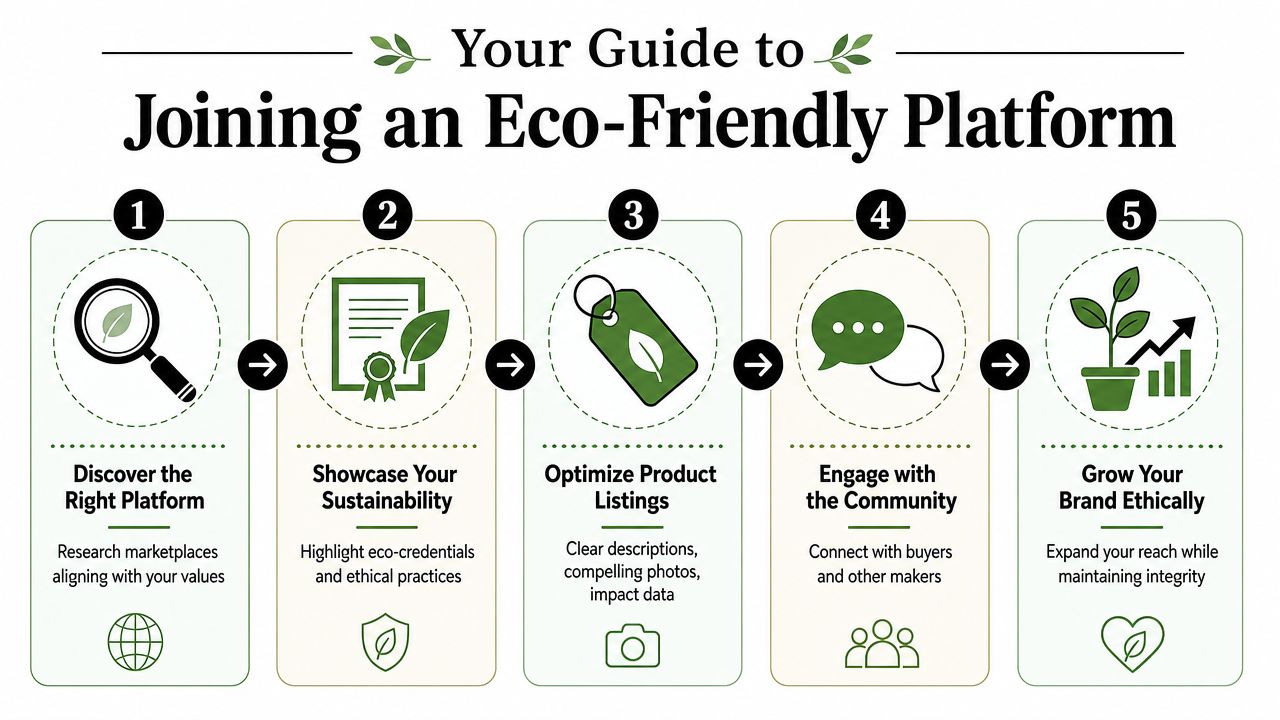
If you're a maker, this kind of marketplace works best when you can explain your product clearly and back it up. You don't need a perfect sustainability story. You do need a truthful one.
That matters even more as marketplaces move toward structured product data. EU guidance around eco-friendly products points toward the upcoming digital product passport, which is expected to begin with textiles and electronics from 2027 and encode details like composition, origin, repair options, end-of-life treatment, and environmental performance through QR-linked records, as outlined in EU consumer guidance on eco-friendly products. The bigger takeaway is simple. Future-proof selling depends on product-level facts, not broad claims.
Bring your proof with your story
Good marketplace listings start before the listing page. Gather the basic evidence that supports what you say about your product.
That might include:
- Material and ingredient information so buyers can understand what the product is made from
- Origin details for key components if that's part of your value
- Packaging notes that explain how you reduce waste, if applicable
- Care, reuse, or end-of-life guidance so customers know how to get the most from the product
If your brand works in food or agriculture, it also helps to understand why shoppers care about local sourcing in the first place. This article on how to boost your health with local food is a useful example of the kind of buyer motivation your listing can speak to, as long as you keep your own claims grounded and specific.
What a strong marketplace listing includes
A strong listing doesn't try to sound noble. It helps the buyer decide.
Say what the product is, who it's for, and what facts support the claim. That's much more convincing than eco adjectives stacked on top of each other.
If you're exploring where to sell, Sell on Loyaltie is one example of a marketplace path for brands that want to reach people looking to buy directly from the maker. The practical advantage is fit. On a values-aligned platform, your product doesn't have to compete only on price or ad volume.
The brands that do well in these spaces usually make buying easy. Clear photos. Plain-language product descriptions. Honest shipping expectations. And claims that match the evidence.
Find Your New Favorite Things on Loyaltie
The fun part of all this is that better buying doesn't have to feel like homework. Once you know how to vet a marketplace, you can spend less time decoding labels and more time finding things you'll be excited to use.
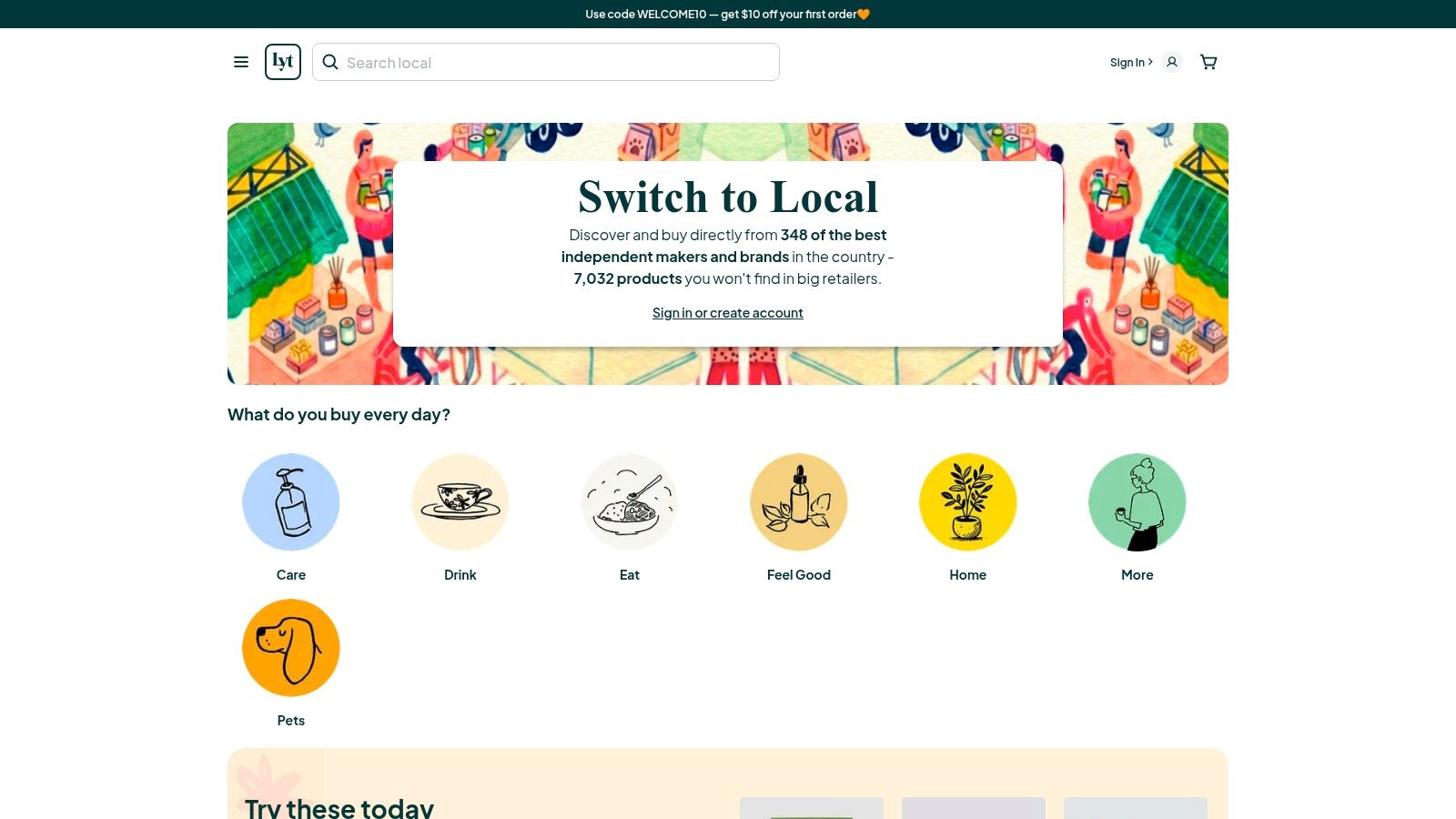
A useful eco-friendly marketplace should make discovery feel more human. You should be able to browse products from independent brands, compare them with context, and feel like you're buying something chosen by a real person, not pushed by a giant retail machine.
What better buying looks like in real life
Maybe that means finding a coffee you look forward to every morning. Maybe it means swapping a generic household item for one you can reuse. Maybe it means buying skincare, snacks, supplements, or pet products from makers who tell you what's inside and why it's there.
That's the appeal of Loyaltie, a marketplace where people discover and buy directly from the best independent brands in the US. It puts the focus where many shoppers want it now: on product quality, maker transparency, and a more direct path between the person who made the item and the person using it.
The demand behind that kind of shopping is real. 78% of consumers consider sustainability an important shopping factor, and 55% say they're willing to pay more for eco-friendly brands, according to green consumer statistics compiled by Uswitch.
If you want a quick feel for the platform before browsing, this short video gives helpful context.
The bigger win isn't checking a moral box. It's ending up with products that feel more considered, more useful, and more worth bringing into your daily routine. That's why eco-friendly marketplace shopping works best when it's grounded in quality first, then backed by clear proof.
If you're ready to find everyday products from real people instead of the same recycled mass-market options, explore Loyaltie and see what you discover next.