


You're probably staring at December with two competing visions. In one, you spend Christmas morning washing roasting pans, checking oven times, and wondering why gravy always turns into a last-minute emergency. In the better one, your kitchen stays calm, the table still feels generous, and the meal comes from someone who knows how to make food you're excited to serve.
That second version is why Christmas meal to go keeps getting more appealing. Not because you've “given up” on hosting. Because you've gotten smarter about it. A good holiday meal bought directly from a local maker can feel more personal than a bland chain-store package, and it can save your energy for the part of Christmas you care about.
Table of Contents
- Picture a Calmer Christmas This Year
- Start where real makers already sell
- Vet the seller like you're hiring for an important job
- Read the menu like a host, not a hungry browser
- Order enough without turning your fridge into storage
- Christmas Meal Ordering Timeline
- Is a Christmas meal to go less special than cooking from scratch?
- What if I have guests with allergies or dietary restrictions?
- How do I know if the seller is trustworthy?
- Should I choose delivery or pickup?
- Is it worth paying more than a grocery store holiday kit?
Picture a Calmer Christmas This Year
I've done the chaotic version. The turkey takes longer than expected. The potatoes go cold while you answer the door. Someone asks where the serving spoon is, and you're standing there with flour on your sweater pretending everything is under control.
A Christmas meal to go solves the right problem. It doesn't remove warmth or tradition. It removes the messy, stressful parts that nobody misses. You still set the table, pour the drinks, light the candles, and hear the first happy silence when everyone starts eating. You just stop acting as the exhausted kitchen manager of your own holiday.
That shift isn't niche anymore. The UK food-to-go market grew 26% in the last year alone, with projections showing a nearly 40% increase by 2028 compared to 2019 levels, according to AHDB's food-to-go market analysis. I read that as a clear sign that people are choosing convenience because they want more quality time, not because they've lowered their standards.
A calm host sets the tone for the whole table. Food matters. So does the person serving it.
The best version of this isn't a mass-produced holiday kit. It's ordering from an independent maker who cooks with a point of view. Someone whose stuffing, pie, cranberry sauce, or glazed ham tastes like it came from a real kitchen because it did. If you're building out the full holiday mood, a thoughtful extra like this festive gourmet gift selection can also help cover the host gift or guest-room welcome basket without another errand.
A lot of people start by looking at restaurants. I think that's too narrow. You'll often find better options when you browse sellers who already offer direct ordering, like local meal options from independent makers, where the appeal is simple: better food, made by real people, with no middleman muddying the experience.
Find and Vet Your Local Meal Maker
The meal lives or dies on the maker you choose. A beautiful menu means nothing if the seller is vague, disorganized, or hard to reach. I'd rather order from a focused local kitchen with a short menu and clear answers than a flashy business with generic photos and copy-paste descriptions.
Start where real makers already sell
Start with places where independent brands already present their products clearly. That can mean neighborhood recommendation groups, farmers' markets, local food communities, and direct-order marketplaces. One factual example is Nourish Meal Delivery on Loyaltie, which shows the kind of direct-from-the-maker setup that makes vetting easier because you can inspect the listing itself before you commit.
This broader shift is already baked into how people shop. Consumers say they're willing to spend an extra $150 per month to support neighborhood stores because they value the quality and community connection, according to Forbes reporting on a Faire survey. That matters here. You are not paying for a moral lesson. You're paying for food with more care behind it.
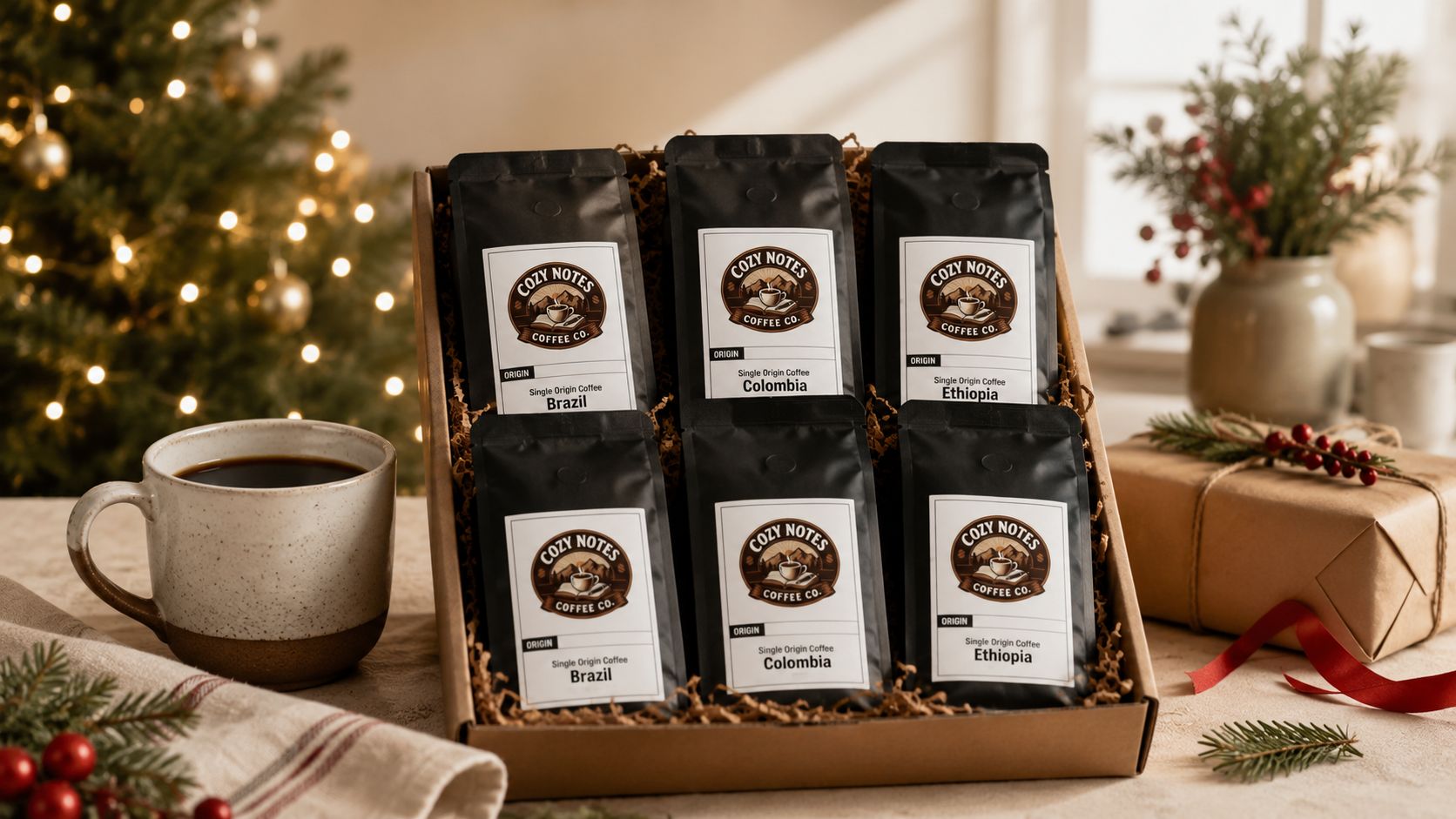
One useful clue is whether a seller also handles other everyday products with the same clarity. For example, the Single Origin Coffee Sampler, Brazil Colombia Ethiopia, Flavor Discovery Pack, 6 x 2oz Bags (12oz Total) | Cozy Notes Coffee Co by Loyaltie is described plainly: six single-origin coffees, small packs, a way to explore daily options without committing to full bags. That kind of straightforward presentation is what you want from a food seller too.
Vet the seller like you're hiring for an important job
You don't need a dramatic investigation. You need a short, sharp checklist.
- Look for actual food photos. Not generic holiday imagery. You want trays, pies, sauces, sides, labels, and plating that look like the seller's real work.
- Read for specificity. “Turkey dinner” tells you almost nothing. “Smoked turkey breast with sage stuffing, roasted carrots, and separate gravy” tells you the maker has thought through service.
- Check whether the menu is focused. A giant holiday menu can be a warning sign. The best makers usually know what they're good at and stay there.
- Message them once. Ask one practical question and one quality question. Their reply will tell you a lot.
- Trust speed and clarity. If someone takes forever to answer basic logistics in December, that won't improve closer to Christmas.
Practical rule: If a seller can't explain pickup, packaging, and reheating in plain English, don't hand them your holiday.
I also pay attention to tone. Good makers sound calm. They don't oversell. They don't dodge. They answer like people who've done this before.
Here's the exact kind of message I'd send:
- Logistics first. “Will the meal be delivered hot, chilled, or frozen?”
- Menu confidence. “Which items hold up best if served an hour after pickup?”
- Ingredient clarity. “Do you provide a full ingredient list for allergy checking?”
- Service detail. “Do the dishes come in oven-safe containers or should I transfer them?”
Those four questions tell you nearly everything. If the seller answers them clearly, you're probably dealing with someone worth trusting.
Plan Your Order From Menu to Portions
Ordering a Christmas meal to go gets easier when you stop browsing like a customer and start planning like a host. Your job isn't to order everything that sounds good. Your job is to build a table that eats well, reheats well, and leaves you feeling prepared instead of overloaded.
Read the menu like a host, not a hungry browser
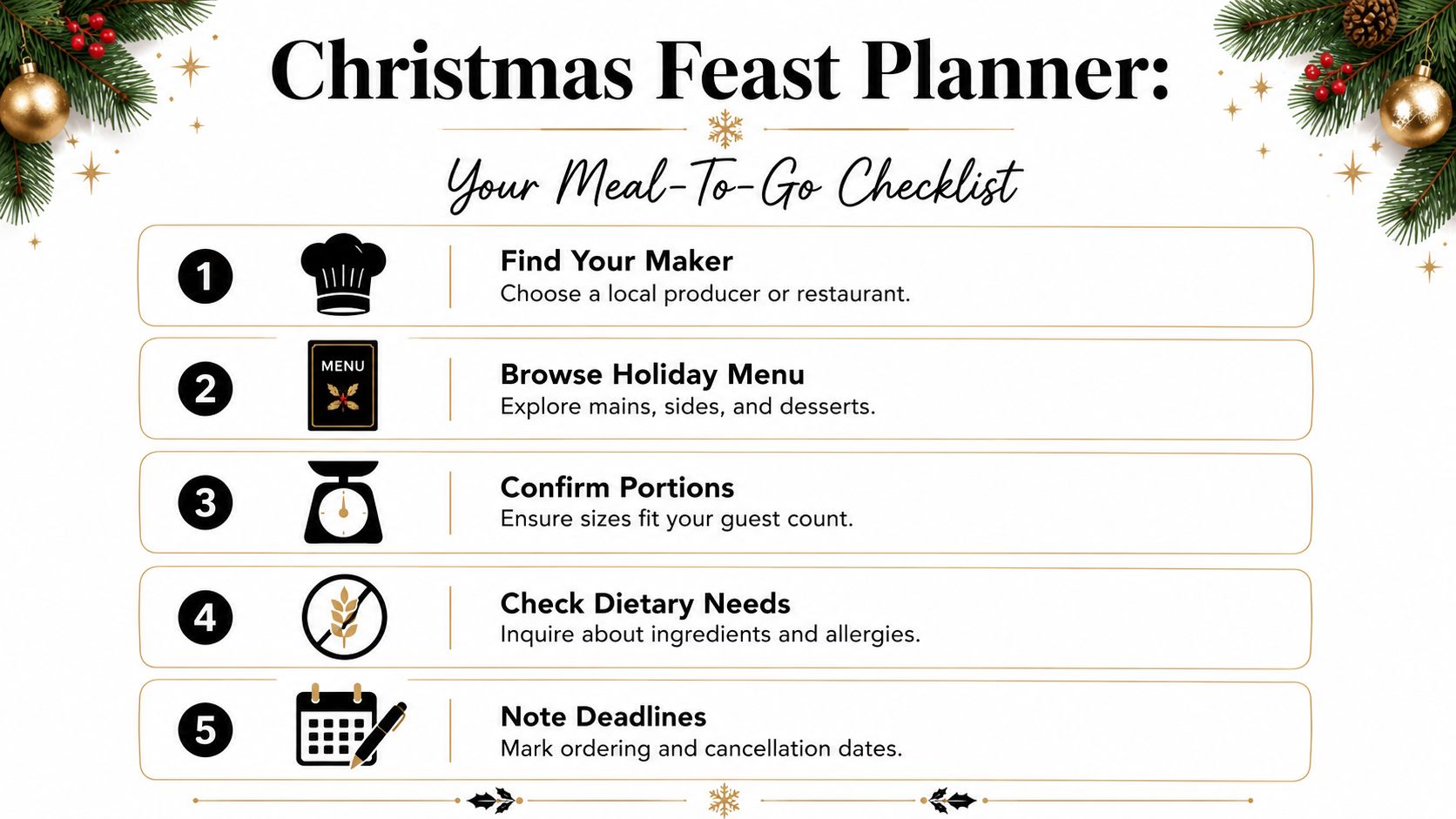
Start with the main dish, then build outward. Pick one anchor protein, then add sides that create contrast. If you've got a rich ham, add bright vegetables and a sharper sauce. If turkey is the center, choose one creamy side, one crisp side, and one dish with sweetness.
Pricing matters too. The average cost of a home-cooked Christmas dinner for four rose to £32.57, a 6.5% increase from the previous year, and gravy prices surged by 13%, according to Finance Monthly's summary of festive food costs. That's why a complete holiday order can be solid value. You lock in the cost, skip the extra shopping, and stop losing time to ingredient hunting.
If your table includes a cheese board or snack spread before dinner, something with a sweet, savory edge helps bridge the meal. I like using an ideal vegan cheese pairing as part of the pre-dinner setup because it gives the first course some intention instead of feeling like random grazing.
Order enough without turning your fridge into storage
People often get sloppy. They either under-order because they panic about price, or over-order because every side looks festive.
Use this simple host logic:
- For smaller gatherings: Choose one main, three sides, one sauce, and one dessert.
- For mixed eaters: Add one extra side that works for nearly everyone, such as roasted vegetables or potatoes.
- For picky guests: Don't solve that with volume. Solve it with familiarity. Order classic flavors.
- For leftovers: Aim for a little extra of the main and gravy, not triple quantities of every side.
Order for appetite, not fantasy. Most holiday tables need less variety and better execution.
Dietary needs deserve a second look before checkout. If someone needs gluten-free, dairy-free, vegetarian, or vegan options, ask whether those dishes are made separately and labeled clearly. Don't assume a menu symbol tells the whole story.
Christmas Meal Ordering Timeline
A good holiday order happens on a calendar, not in a panic. Use this planning window.
| Task | Recommended Date |
|---|---|
| Start researching makers and menus | Early November |
| Narrow down your top choice and ask questions | Mid November |
| Place your final order | First or second week of December |
| Review menu details and guest needs | One week before Christmas |
| Confirm pickup or delivery time | One week before Christmas |
That timeline gives the maker room to plan and gives you room to fix mistakes before they become expensive.
Manage Pickup Logistics and Food Safety
A lot of people feel confident about ordering until one question appears: “But how do I know it'll arrive safely?” Good. That's the right question. Asking it doesn't make you difficult. It makes you the kind of customer who ends up with a smooth holiday.

One of the biggest unanswered questions around small-batch holiday orders is food safety. Unlike major retailers, independent makers may not have standardized protocols, which makes it vital to ask about temperature control and packaging, as noted in this Food52 holiday planning piece. I agree with that completely. This is not optional.
Ask direct questions before you pay
You want clean answers to a few specific points:
- Packaging method: Is the food arriving hot, chilled, or frozen?
- Storage guidance: What goes straight into the fridge, and what can stay out briefly while you unpack?
- Reheating instructions: Are they printed, emailed, or attached to each dish?
- Kitchen setup: Is the meal prepared in a licensed commercial kitchen or another approved food setting?
- Delivery timing: What is the delivery window, and what happens if there's a delay?
If the seller hesitates or gives fuzzy replies, keep looking.
“Can you tell me how this meal is packed and how long it should stay at that temperature after pickup?”
That one sentence filters out a lot of weak operators.
If you're also coordinating drinks, use the same calendar discipline. A practical reference like these Australian Christmas wine shipping dates is helpful because it reinforces the bigger point: holiday logistics reward early decisions.
Handle pickup or delivery like part of the meal plan
Pickup isn't just an errand. It's part of service.
Clear out a flat space in the car. Bring a box or laundry basket so containers don't slide around. If you're collecting chilled dishes, use a cooler. If the seller is delivering, make sure someone is available to receive the order and put it away immediately.
This short video is worth a look if you want a visual reset before placing your order.
I also recommend writing down the pickup person's name, phone number, and exact time slot. On Christmas Eve, memory gets unreliable fast. A written note beats confidence every time.
Reheat and Serve for a Flawless Finish
The meal is home. The kitchen is still mostly clean. Now don't ruin a good decision with rushed reheating.
Reheat with patience
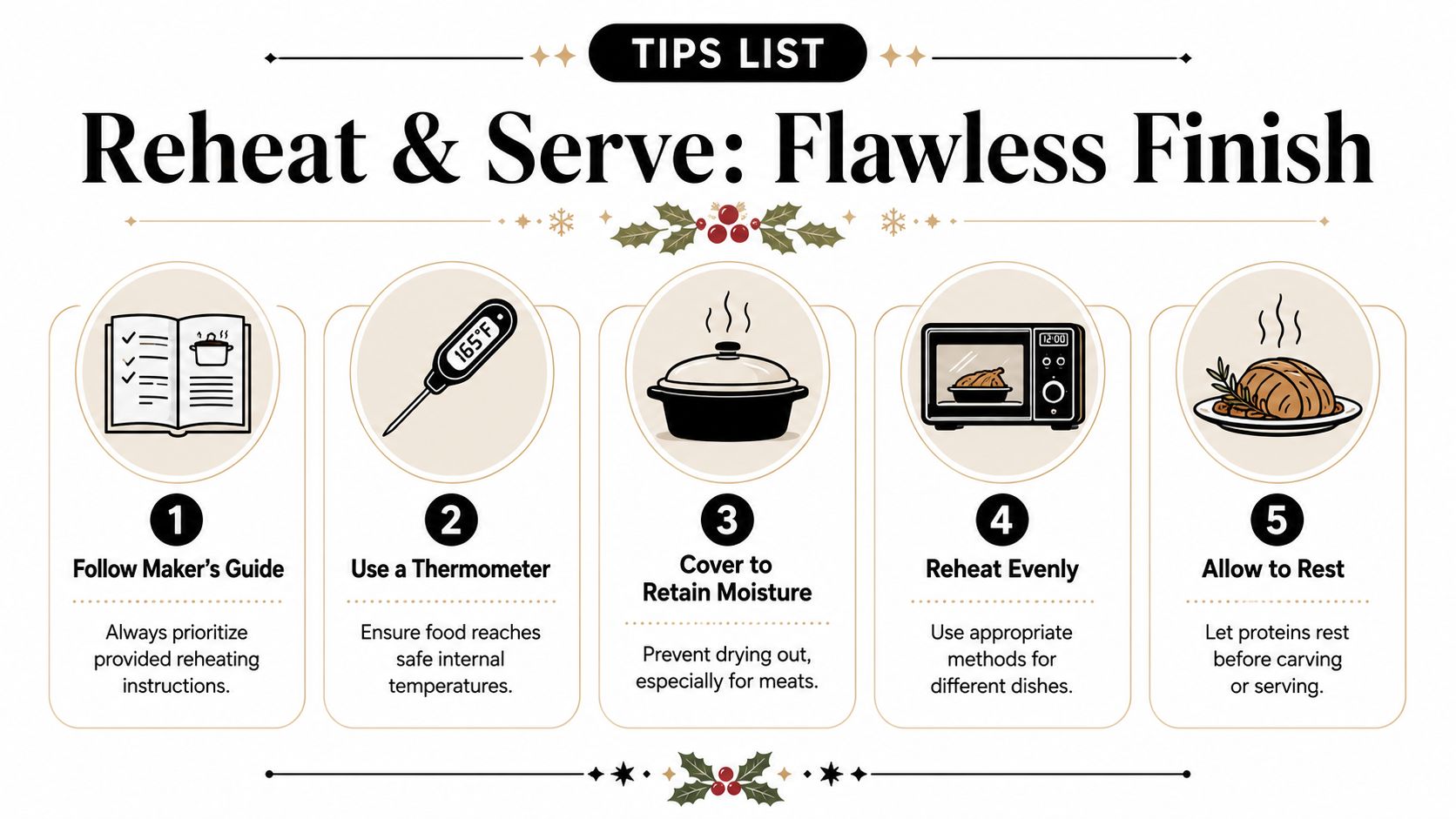
Follow the maker's instructions first. If they've tested the dish, their method wins. If instructions are minimal, use the boring method that works: low heat, covered containers, and enough time.
My default approach looks like this:
- Start with proteins. Turkey, ham, or roast need the longest runway.
- Keep moisture in. Cover meats with foil so they don't dry out.
- Warm sides separately. Mashed potatoes, stuffing, and vegetables don't all reheat at the same speed.
- Heat gravy gently. Use the stovetop if you can, and whisk.
- Build in buffer time. Food that's ready early can usually wait better than food that's late.
This is also where shopping local starts to show its upside in a practical way. People who shifted to shopping local during the pandemic stuck with it, and 79% planned to continue long-term, according to RetailWire's summary of local shopping behavior. That staying power makes sense to me. Direct buying often gives you clearer instructions, faster answers, and food that feels less anonymous.
Serve it like you cooked it
Containers are for transport, not presentation. Move the food to your own platters, bowls, and gravy boats. The second you do that, the whole meal feels intentional.
A few finishing moves matter more than people think:
- Use warm serving dishes if you have them.
- Add one fresh element like chopped herbs, citrus zest, or a small salad.
- Keep the table simple so the food looks abundant.
- Set out sauces last so they stay clean and glossy.
If you like adding one small direct-from-the-maker touch to the table, something like raw honey from Arshot Honey works nicely on a cheese board, biscuit plate, or leftover brunch spread the next day.
The goal isn't to fake that you cooked everything. The goal is to serve it beautifully enough that nobody cares who roasted it.
Your Top Christmas Meal Questions Answered
People usually have the same worries at the end, and the answers are more straightforward than they seem.
Is a Christmas meal to go less special than cooking from scratch?
No. A bland meal is less special. A tense host is less special. A thoughtful meal from a skilled local maker, served on your table with your people, still feels like Christmas.
What if I have guests with allergies or dietary restrictions?
Ask early and ask clearly. Request ingredient details before paying, and confirm how dishes are labeled. Don't leave this for the pickup window.
How do I know if the seller is trustworthy?
Look at communication. Strong sellers answer practical questions directly. That fits with broader consumer behavior too. 96% of consumers say independent retailers provide better and more personalized service, and 70% believe they have more expertise about their products than large chains, according to the Nest State of the Handworker Economy Report.
Should I choose delivery or pickup?
Choose the option with the clearest timing and least stress. Pickup can give you more control. Delivery can be easier if the seller provides a real time window and clear handoff instructions.
Is it worth paying more than a grocery store holiday kit?
Often, yes. You're buying better food, more direct communication, and a meal made by people whose name is attached to it. That's a quality upgrade, not a charitable gesture.
If you want one place to discover and buy directly from independent brands across the US, Loyaltie is a marketplace where you can browse makers without the usual no-middleman guesswork. It's a practical way to find better everyday products and holiday-ready food options from real people who stand behind what they sell.