

The usual advice sounds simple. Buy the priciest canned tuna in olive oil you can find, preferably albacore in extra virgin oil, and you'll get the healthiest, tastiest can. I wouldn't shop that way if you eat tuna most weeks.
You're making two separate decisions. One is the oil surrounding the fish. The other is the species inside the can. Those choices pull in different directions. A costly albacore can taste wonderful on toast and still be the wrong everyday pick, while a plainer skipjack with clean labeling can suit your weekly lunch much better. Read the species first, decide how the oil fits the meal second, and you'll stop paying for the wrong kind of quality.
Table of Contents
- What Canned Tuna in Olive Oil Is
- Label Lines and What They Tell You
- Start With the Packing Medium
- Read Species, Cut, and Weight Together
What Canned Tuna in Olive Oil Is
Open a good can and you'll find cooked tuna loin or large chunks sitting under olive oil. The oil keeps the fish moist, carries flavor across every flake, and works like a dressing that already came with the can. Spoon it over warm toast with lemon and black pepper and it tastes rich and round. Compare that with tuna packed in brine tipped into a green salad, which tastes leaner and sharper.
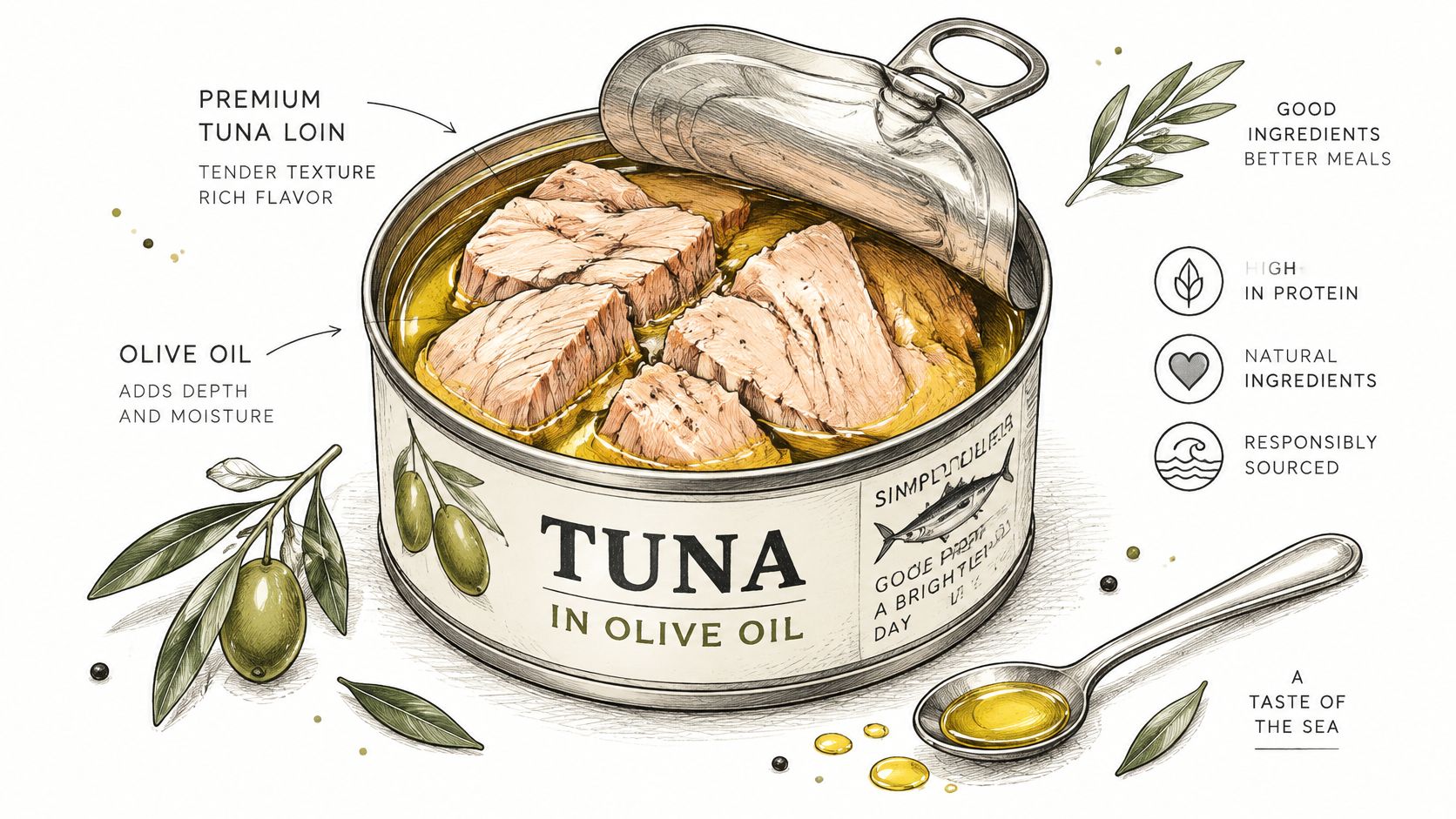
That style is much older than the supermarket shelf suggests. The Food and Agriculture Organization of the United Nations records tuna preserved in oil in 15th-century Andalusia, centuries before modern canning, with industrial canning beginning in the late 19th century in vegetable oil and tuna packed “au naturel,” or in brine, appearing in 1936. The same FAO account describes expensive, high-quality canned tuna as still being packed in olive oil.
Hold onto one distinction. The oil is the packing medium. The species is a separate decision. Once you see those as two lines on the label, the rest of your shopping gets clearer and faster.
How to Read a Can Label in Under a Minute
A can label gives you most of what you need in a handful of lines. Read them in the order you'd naturally turn the can in your hand, and you can judge it before it goes in your basket.
Label Lines and What They Tell You
| Label line | What it tells you | What to check |
|---|---|---|
| Packed in olive oil | Olive oil is the packing medium | Confirm olive oil is named on the panel, not a vague oil |
| Extra virgin olive oil | A specific olive oil grade | Look for the grade on the ingredient list |
| Light tuna or skipjack | Lower-mercury species group | Check the species is named in plain words |
| Albacore or white tuna | Higher-mercury species with firmer flesh | Count servings against FDA guidance |
| Solid pack, chunk or flakes | Texture and cut of the fish | Solid for salads, flakes for spreads |
| Net weight vs drained weight | Total can contents vs fish alone | Compare price per drained ounce |
| Country of processing | Where the can was packed | Ask the maker where the fish was processed |
| Sustainability claim | Vague unless it names method and scope | Ask exactly what the claim covers |
Start With the Packing Medium
Turn to the ingredient and labeling panel instead of trusting the front picture. Under 21 CFR § 161.190, a can packed in olive oil must identify that medium on the label using wording such as “in olive oil” or “packed in olive oil.” That's a real check you can use at the shelf. If the panel says a blended or unnamed oil, you're not buying the same product, whatever the front implies.
Extra virgin works the same way. Those words name a grade, so look for them in the ingredient list rather than relying on a green olive illustration or a Mediterranean scene. A maker who's paying for that grade will usually name it plainly.
Read Species, Cut, and Weight Together
Next, find the species in plain words. Light tuna or skipjack and albacore or white tuna come with different eating frequency guidance, so that one line changes how often the can belongs in your week. Don't let a beautiful oil claim distract you from it.
The cut tells you how the fish will behave once opened. Solid pack holds together in salads and on toast. Chunk flakes into useful pieces for pasta and beans. Flakes blend easily into spreads and sandwiches where a smooth texture helps.
Finally, compare money carefully. Net weight includes the oil. Drained weight tells you how much fish you're really getting. Two cans can share the same shelf price and deliver different amounts of tuna, so compare price per drained ounce when both labels give you that number.
Shelf habit: Species first, oil second, drained weight third. That order stops a handsome front label from making the decision for you.
Country of processing and sustainability wording need the same plain reading. A processing country tells you where the can was packed, not necessarily where the fish was caught. A sustainability claim only means something when it names the fishing method and what it covers. If either line feels vague, that's a question to take directly to the maker before you reorder.
Choosing Light or Albacore for Everyday Eating
Packing oil and fish species are separate choices. For everyday meals, the species matters more to your weekly tuna routine: light tuna generally has less mercury than albacore, while albacore offers a firmer texture and cleaner flavor.
Mercury and Weekly Servings by Tuna Species
| Species | Mean mercury (ppm) | FDA category | Servings per week |
|---|---|---|---|
| Canned light tuna (skipjack) | 0.13 | Best Choice | 2 to 3 |
| Canned albacore (white tuna) | 0.35 | Good Choice | 1, and no other fish that week |
| Yellowfin | Ask the maker for lot test results | Ask the maker which guidance they use | Ask the maker before eating weekly |
FDA/EPA monitoring data report mean mercury concentrations of approximately 0.13 µg/g (ppm) for canned light tuna, which includes skipjack, and 0.35 µg/g for canned albacore or white tuna. The FDA lists canned light tuna as a “Best Choice,” suitable for 2–3 servings per week, and albacore as a higher-mercury “Good Choice.” Albacore carries roughly three times the mercury, so it counts against your weekly fish limit.
If tuna is on your menu twice in a week, the species can change how those meals fit your eating pattern. Light tuna gives you more room for frequent servings; albacore calls for more restraint.
Why the Oil Doesn't Change the Mercury Answer
Olive oil doesn't remove mercury from tuna. Methylmercury is associated primarily with fish tissue, so draining, rinsing, or reheating the fish won't lower the mercury in a serving. Choose the species and serving frequency with that in mind.
Larger, longer-lived tuna generally accumulate more methylmercury over time as they feed. Skipjack are smaller and shorter-lived than albacore, which helps explain why light tuna falls into a different FDA category, regardless of the packing oil.
Yellowfin also appears in olive-oil packs, but its place in your weekly meals should be based on reliable information about that fish. Ask the maker about testing, lot results, and the guidance they recommend. If they can't give a clear answer, choose a can with species information you can use.
The most expensive olive-oil tuna isn't automatically the best everyday choice. For frequent meals, skipjack may be a more practical pick than pricier albacore, especially when the maker shares testing information.
If you're pregnant, might become pregnant, or are choosing tuna for young children, follow the more cautious guidance for your household. Clear species information makes it easier to choose servings that fit that guidance.
Match the species to your weekly serving count before comparing oil grade, cut, or price. Save albacore for meals where its firm texture and clean flavor matter; choose light tuna when tuna is a regular part of the week.
What the Olive Oil Adds to Your Plate
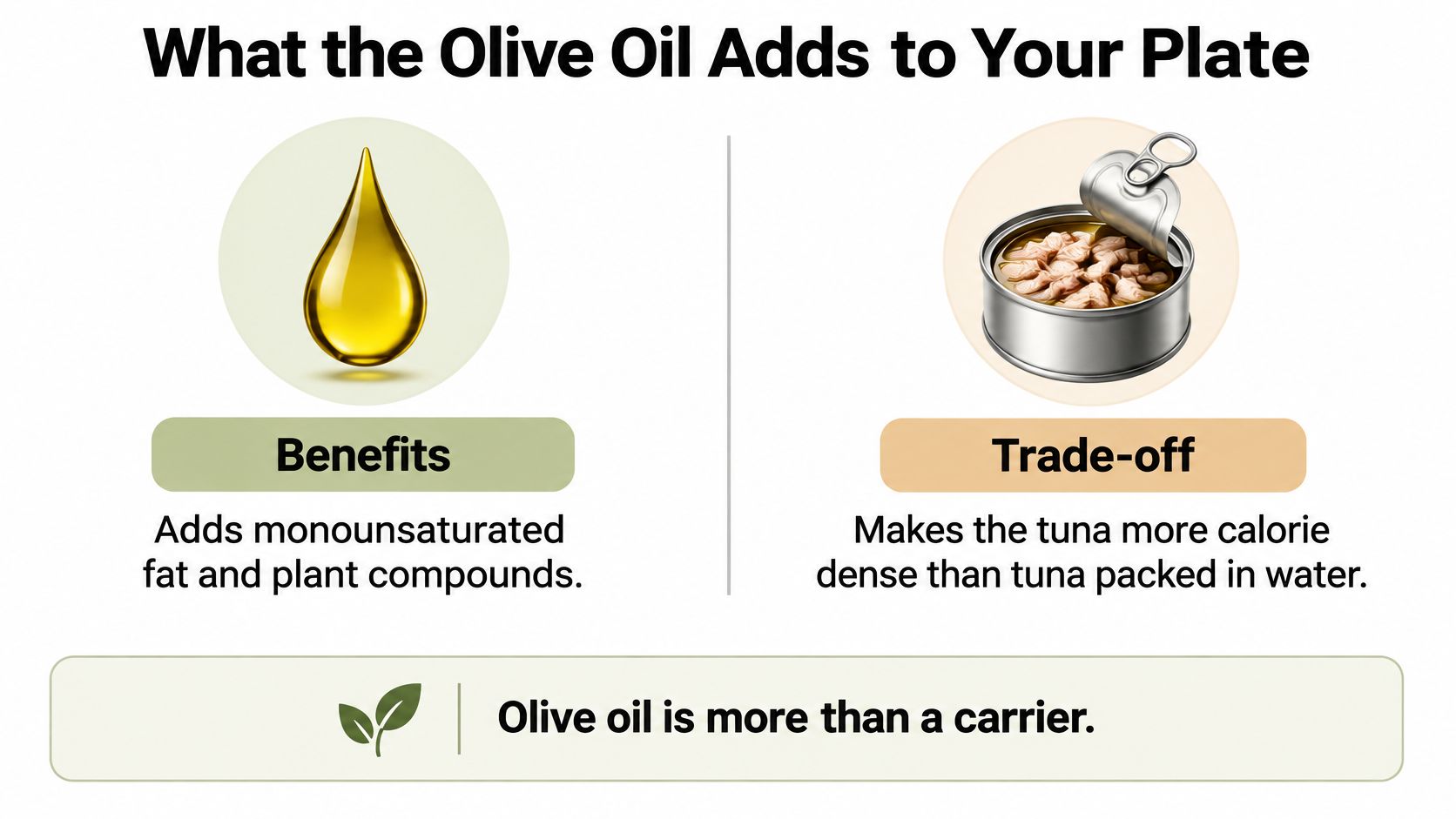
Olive oil adds monounsaturated fat and makes tuna more calorie-dense than water-packed fish. It also rounds out the flavor and gives the flakes a silky texture. The trade-off is practical: more richness and moisture, along with more calories.
The oil can contribute as much to a dish as the fish does. For a fruity note beyond the can, try a cold-pressed extra virgin olive oil made from Palestinian olives.
Drain It or Keep It
Drain tuna for wraps, where excess oil can soak the bread, and keep the oil for pasta, where it coats the noodles. For a salad, save a spoonful and whisk it with lemon juice, mustard, and salt for a quick dressing.
Draining reduces the oil and calories in the finished dish, though it also removes some flavor and moisture. Keeping the oil makes the fish richer, so you may need less mayonnaise or extra dressing.
- For wraps or a lighter plate: Drain the fish, then add back a little oil if the flakes seem dry.
- For pasta or toast: Keep the oil to coat hot pasta or soak into toast.
- For salad dressing: Whisk a spoonful with lemon juice, mustard, and salt.
This short video shows how home cooks use the oil after opening the can.
Moist, flavorful tuna may need less added salt to taste satisfying. Choose how much oil to use based on the dish: drain for wraps and keep it for pasta.
Storing, Prepping and Serving Olive Oil Tuna
Good storage protects the flavor you paid for, and simple prep keeps canned tuna in olive oil from turning into another dry sandwich filling.
How Long Olive Oil Tuna Keeps
| Situation | Where to keep it | How long |
|---|---|---|
| Unopened can | Cool, dry pantry | Until the date printed on the can |
| Opened leftover tuna | Covered container in the fridge | 2 to 3 days |
| Tuna salad with mayonnaise | Covered container in the fridge | 3 to 4 days |
Keep unopened cans in a cool, dry pantry away from the stove. Once you open one, move leftovers out of the can into a covered container and refrigerate them promptly. If the fish smells sharp or off in a way lemon can't explain, don't try to rescue it with herbs.
Turn One Can Into a Meal
- Check the can: Make sure it's sealed and undamaged before you open it.
- Decide on the oil: Drain it into a small jar if you want it for dressings, or leave it in the can for a richer dish.
- Flake gently: Use a fork to break the fish into pieces so the oil coats them without turning everything to mush.
- Season and taste: Add lemon, salt, herbs, or capers, then taste before you serve it.
A bright finishing salt works especially well here. Try a light sprinkle of lemon rosemary finishing sea salt for seafood after the lemon, then taste again before adding more. Olive oil tuna already carries richness, so small amounts go a long way.
Three meals cover most weeknights in my kitchen. Toss tuna with white beans, red onion, parsley, and lemon for a salad that holds up in the fridge. Spoon it over tomato toast with lemon zest and a drizzle of the can oil. Or fold it into warm pasta with capers and a splash of pasta water so the oil becomes a light sauce. When friends are coming and you want those same flavors in bite-size form, you can find quick canapé recipes and adapt the toast idea to smaller pieces.
Warm tuna gently. It's already cooked, so fold it into hot pasta off the boil rather than boiling it hard in the sauce.
Use a spoonful of the oil from the can to soften sliced garlic in a pan before the tuna goes in. The garlic picks up the fish's flavor, the oil doesn't go to waste, and dinner tastes like you planned it all along.
Buying Direct From Independent Makers
Paying more for olive-oil tuna does not guarantee a better everyday can. Treat the fish and the packing oil as separate choices, then look for clear answers about where the fish came from and how it was handled.
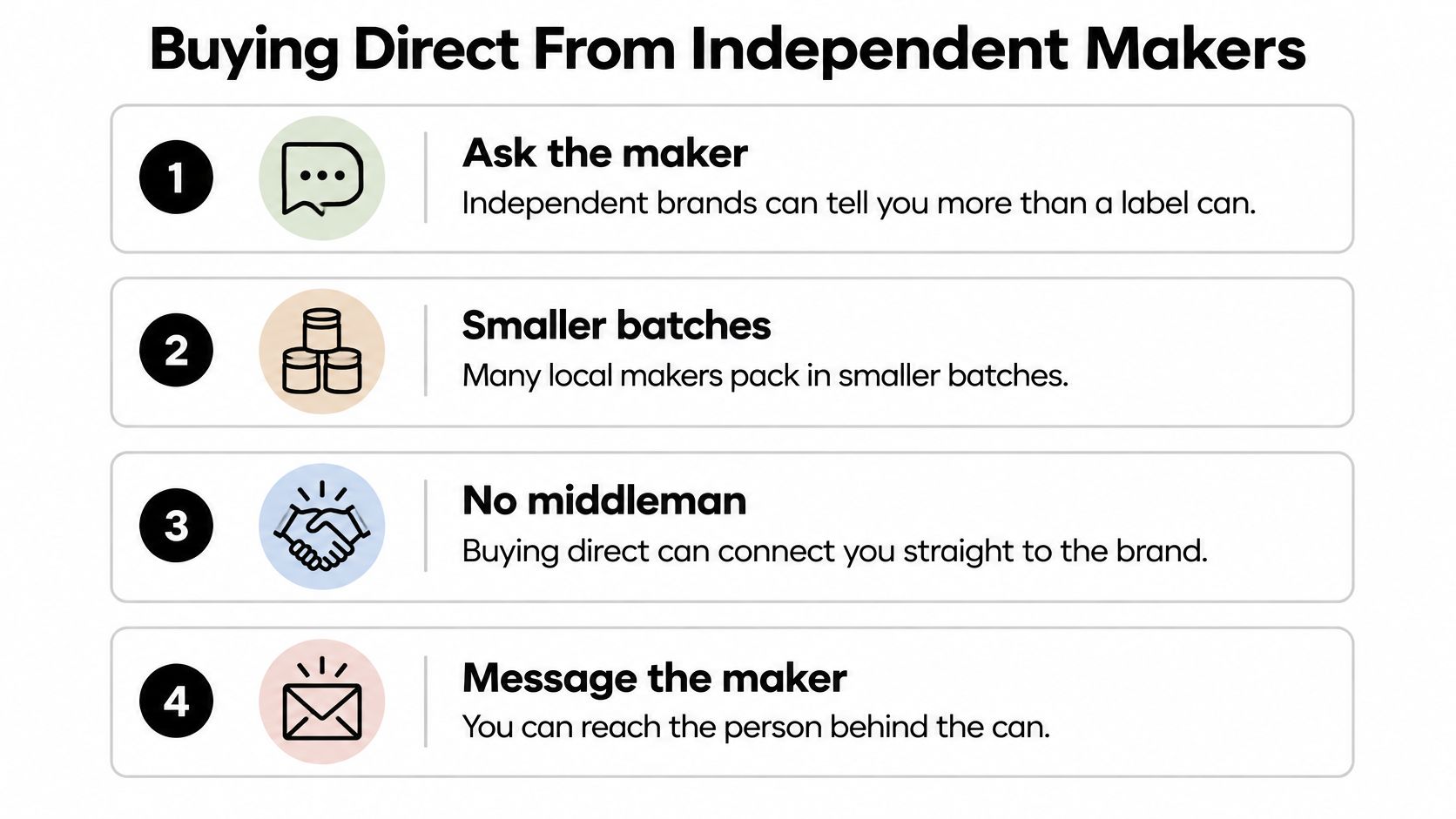
Ask the maker questions the label cannot answer. The answers should be specific enough to help you compare cans, not just repeat phrases like “responsibly sourced.”
Five Questions Worth Asking
- What fishing method caught the fish? Ask whether the maker can name the vessel or fishery, not just the ocean.
- What does the sustainability claim cover? It may refer to the species, fishing method, certification, or processing plant. Ask which.
- How do I read the harvest year and batch code? A useful answer connects the can to a specific lot.
- Where was the fish processed, and where did the oil come from? Oil origin is a separate question. For example, you can ask Evie Olive Oil about its oil.
- What cold-chain records are available? Ask how temperature was controlled from catch through receiving.
Handling matters before canning. Tuna can form histamine if it gets too warm after the catch, so rapid chilling and temperature control are important. Ask whether the maker can describe its records and receiving checks. Heat during processing cannot undo poor handling earlier in the chain.
Judge the Answers by Specificity
Specific answers beat polished but vague claims. Batch-level origin, catch method, and certification status give you more to compare than “responsibly sourced” without an explanation. Ask what each claim covers: a certification might apply to one fishery, not every species a brand sells, and a processing claim may say nothing about how the fish was caught.
A direct conversation can also clarify details about products beyond tuna. For example, Jask Beauty's Eucalyptus & Aloe Bar Soap is described as a 4.8 oz handmade bar with olive oil. The practical habit is the same: read the details and ask the maker what they mean.
If you are serving tuna on toast with wine, Sonoma Valley estate wines offer another example of asking about place and production. Keep the focus on what you can confirm for the meal: the tuna's species, its packing oil, and the maker's answers about sourcing.
Make the Buy in One Minute
Check the species against how often you eat tuna, then confirm that the ingredient panel names olive oil. Choose a can whose maker can answer your sourcing and handling questions clearly. The highest-priced option is not automatically the best everyday pick; a well-described can that suits your usual meals may be the more useful choice.
Loyaltie is a marketplace for buying directly from local and independent makers, with every order backed by Loyaltie. Browse its local and independent food makers to compare product details, then choose a can that fits your kitchen. Start with one and judge the fish and oil on their own merits.