You're standing in the grocery freezer aisle, holding a package with a “local” label and wondering what that tells you. It might name a nearby farm, or it might leave you with no useful detail about where the animal was raised, who processed the meat, or how it'll get to your kitchen.
Buying local meat can give you a more direct line to the person who raised it, with a clearer origin and someone you can ask about how it was handled. But distance alone doesn't tell you whether meat is well raised, properly inspected, safely packed, or reliably delivered. Before you buy, check the details that make a real difference.
Table of Contents
Why Local Meat Is Worth Buying Right Now
A package marked local is a starting point, not a guarantee. The quality upgrade comes from knowing more: which farm raised the animal, what practices the producer uses, and where the meat was processed. When you buy directly from a producer, you can often ask those questions at the source instead of relying on a vague label or a long chain of sellers.
That direct connection can also make it easier to find meat that suits the way you cook. One farm might sell individual steaks and ground beef, while another offers freezer boxes or seasonal cuts. You get a chance to learn what's in the package and how the producer handles orders, rather than guessing from the front of a label.
Local food is already part of the farm economy
Buying local meat isn't a niche idea. The USDA's National Agricultural Statistics Service reported that local food sales in the United States generated $9.0 billion in 2020, with more than 147,000 farms selling through local channels (USDA local food sales data). That total includes meat, but it also includes cheese, milk, wine, jams, and other value-added foods. It's a measure of the broader local-food economy, not meat-only revenue.
For you as a shopper, the useful takeaway is that local producers already sell through several kinds of channels. You may find meat at a farm store, farmers' market, restaurant, institution, or through an intermediary. The right option depends on how you shop and what you want to ask before placing an order.
Judge the product, not the label
A shorter trip to your kitchen can be convenient, but “local” doesn't answer every important question. Ask who raised the animal, which facility processed it, whether the product is fresh or frozen, and what happens if your order can't be filled as planned.
That's the point of this guide: help you find a seller whose products and practices make sense to you, check the information that matters, and choose a buying option you'll use. Buy local meat for a clearer connection to its source, then do the homework that turns that connection into confidence.
Where Local Meat Is Sold and How Each Channel Works
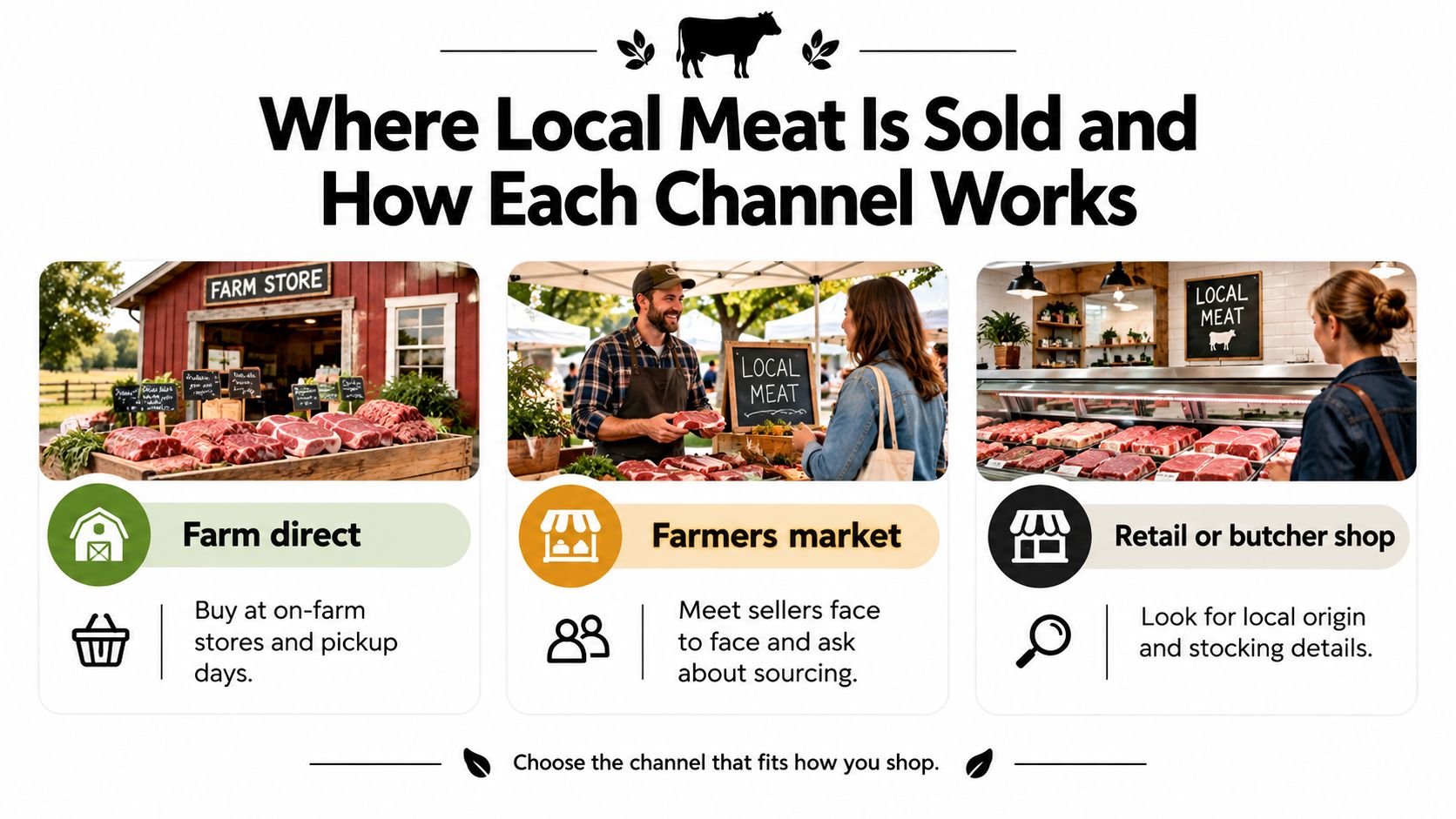
You can buy from local producers in person or online, and each channel has a different trade-off. Farm pickup puts you closest to the source. A farmers' market lets you meet several sellers in one stop. An online marketplace can make browsing and ordering easier when you don't want to coordinate a separate trip for each farm.
Farm direct and farmers' markets
At a farm store or pickup day, you can ask the producer how the animals are raised and what's available. You may also get a better sense of how the farm operates, though access and pickup times vary by seller. If a farm requires advance ordering, check its pickup schedule before planning a trip.
Farmers' markets make comparison easier. You can meet multiple producers, ask how their meat is raised and processed, and see what cuts are available that day. A conversation at the stall won't replace checking labels and handling details, but it can quickly reveal whether a seller answers questions clearly.
If you've arranged an order for pickup, knowing how curbside pickup works can help you understand how collection may fit into your errands. For a different use of locally sourced beef, Ojas Glow's Tallow Body Serum is a tallow-based body serum made with grass-fed beef tallow and organic mango butter.
Online orders and retail counters
Direct-to-consumer livestock sales expanded in dollar value between 2012 and 2017. USDA Census of Agriculture data reported that sales rose from more than $352 million to more than $588 million, even as the number of farms using the channel fell to about 65,000. Direct beef sales reached more than $206 million in 2017 (Farm Progress on local meat sales). That history shows why it's worth looking beyond the grocery aisle: some producers have built direct ordering into how they sell.
Online local marketplaces make it possible to browse several independent brands and local makers in one place, then buy directly from the maker. Loyaltie is one such marketplace, where people discover and buy directly from independent brands in the US, with orders backed by Loyaltie. Retail shops and butcher counters are another option, but ask which farms they stock and whether the origin is listed for each cut.
Reading Labels and Inspection Marks Before You Order
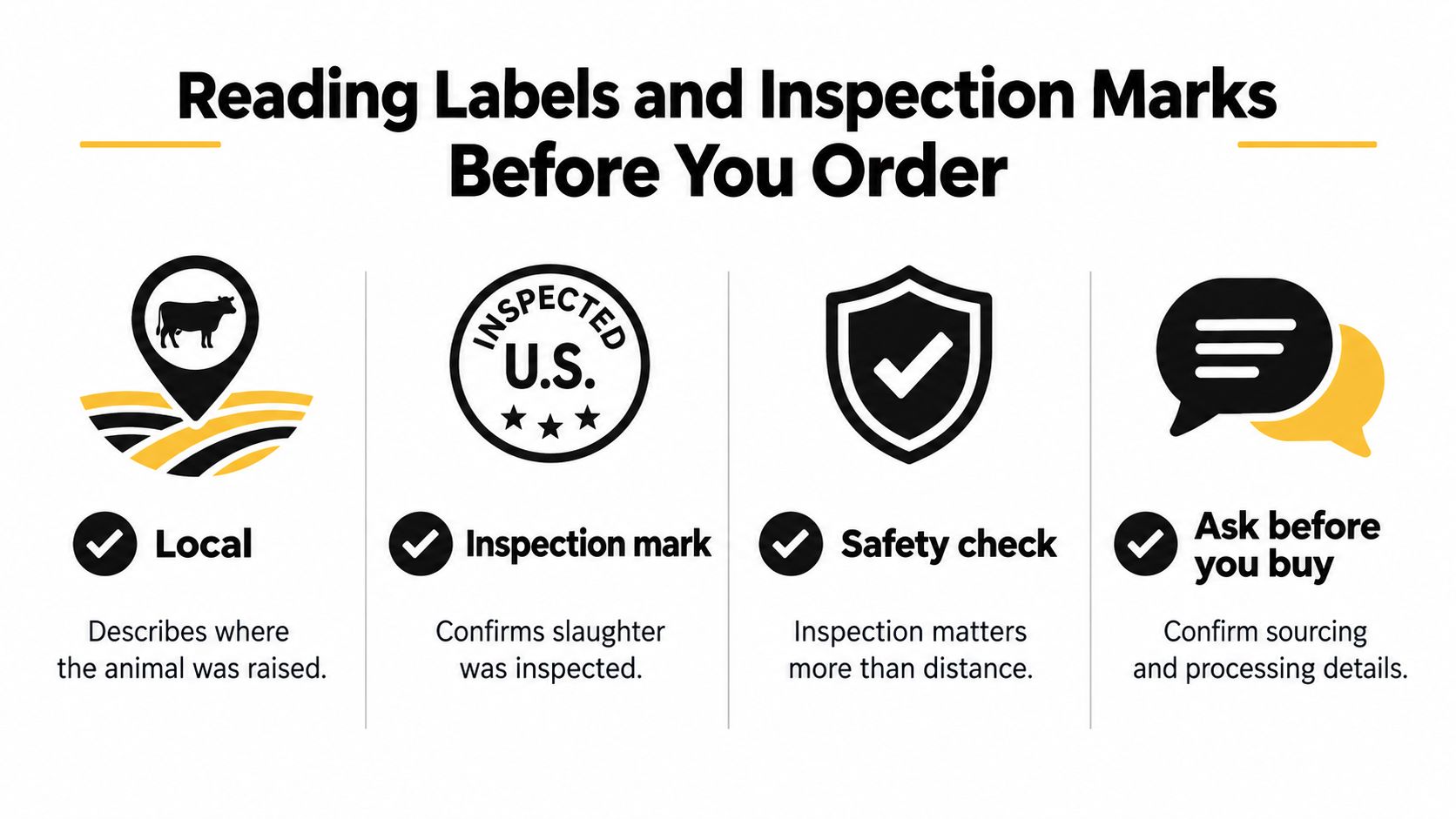
“Local” tells you about geographic origin. It doesn't tell you whether the meat was slaughtered and processed under the inspection pathway required for the sale. Before you order, look for an inspection mark on the package or in the seller's product details, and ask for the establishment number if it isn't shown.
Match inspection status to how the meat is sold
USDA-inspected meat can be sold across state lines, including through shipped orders. Meat processed under a state inspection program may be sold only within that state, but it can still be sold directly to household consumers through farmers' markets, farm stands, and similar local channels (USDA guidance on inspection requirements).
That distinction matters most when a seller ships your order. If you're buying from a farm in another state, ask whether the meat is federally inspected and how that status appears on the label. If you're buying locally for pickup, ask which inspection program applies and where the meat was processed.
Ask these questions before paying
A clear seller should be able to tell you:
- Who processed the meat? Get the facility name, and ask for its establishment number if you can't find it on the label.
- When was it processed? Ask for the processing date or the best available information about the product's batch.
- How will I receive it? Confirm whether the order ships or is picked up, and ask how the seller keeps it cold during handoff.
- Can this order legally be sold where I live? Check the inspection pathway, especially if the meat crosses state lines.
A tidy product listing that names the farm but says nothing about processing leaves you with an important gap. Don't treat vague sourcing details as a reason to assume the meat is unsafe, but do ask for the information you need before ordering.
Practical rule: Check the inspection pathway for the way you're buying. A local pickup and an interstate shipment don't necessarily follow the same sales rules.
Choosing the Right Buying Option for Your Household
The right way to buy depends on your routine, not on which channel sounds most committed to local food. If you enjoy meeting farmers and can make the trip, farm pickup or a farmers' market may suit you. If convenience and a clear order record matter more, an online marketplace or a butcher counter with dependable ordering may be easier to stick with.
| Buying Option | Best For | What to Ask First |
|---|---|---|
| Farm store or pickup day | Seeing the source and asking the producer directly | What's available, how pickup works, and whether there's a minimum order |
| Farmers' market | Comparing sellers and cuts in one trip | Which farm raised the meat, where it was processed, and whether the cut is fresh or frozen |
| Online local marketplace | Browsing from home and keeping an order record | Where the seller is located, how delivery or pickup works, and how to reorder |
| Retail shop or butcher | Buying from a counter that fits your regular errands | Which cuts are local, which farms supply them, and how often the selection changes |
Match the order to your habits
Before buying a bulk box, check your freezer space and confirm what cuts it contains. A large quantity can be useful if you cook through it, but it's a poor fit if you don't have room or don't enjoy the cuts included. For a first purchase, a smaller order gives you a chance to assess the meat and the seller's fulfillment before committing to more.
Pickup flexibility matters, too. Ask whether the farm has set collection times, whether a market seller takes advance orders, and what happens if you miss the window. If you're ordering online, check whether the listing explains shipping or local delivery, the expected handoff, and how you can contact the seller with a question.
A marketplace like Loyaltie gives you a place to browse and buy from independent brands and local makers, with a straightforward sign-in and account flow and orders backed by the marketplace. That can suit you if you want to shop online and keep the buying process organized. It won't replace visiting a farm if seeing the operation matters to you. Pick the channel that makes it easiest to ask questions, receive the order safely, and buy the cuts you'll cook.
Cuts, Pack Sizes, and Storage Logistics
Choose cuts around the meals you make, not around a package that looks like a bargain. Ground meat and roasts are flexible choices for everyday cooking. Steaks and chops are easy to plan around a specific meal. A bulk box can stock your freezer, but only if you've checked its contents and know you'll use them.
Pack size changes how you portion and store an order. Individual packages make it easier to thaw only what you need, while larger cuts and mixed boxes may suit households with room to store them. Ask how the meat is packaged, whether each package is labeled with the cut, and whether the box includes substitutions or a fixed selection.
Plan the handoff before the meat arrives
Fresh and frozen meat need different handling. Arrange a delivery window when you or someone you trust can receive the order, and move refrigerated meat into the fridge promptly. Don't leave a box unattended for a long stretch without knowing how it's packed or whether it's meant to arrive frozen.
Keep refrigerated meat at or below 4 °C (40 °F) during storage and delivery. Frozen meat should stay at or below −18 °C (0 °F) to preserve its frozen state. Ask the seller whether the order is arriving refrigerated or frozen, how it's insulated, and what to do if it arrives warmer than expected.
Buy for the season and your freezer
Availability can shift with the season, the processing schedule, and the cuts a producer has ready. If you're hoping for a particular steak or roast, ask when it may be available rather than assuming every cut will be stocked year-round. For a freezer order, confirm the approximate mix before checkout and make sure you have a plan for labeling and using the packages.
Once the meat is stored, note which cuts your household reaches for and which ones linger. That simple check makes your next order more useful and reduces the odds of buying a box that doesn't fit your cooking routine. For a ready-to-eat option, Route 66 Beef Jerky's original savory beef jerky is listed as a product with a soy sauce marinade. Treat it as a separate pantry choice, not a substitute for checking storage instructions on fresh or frozen meat.
Evaluating Farmers and Sellers Before You Buy
A short drive doesn't automatically mean lower emissions, better animal care, or safer handling. One comparison found that reducing beef's travel distance from 2,253 km to 161 km cut emissions by only 0.28 kg CO2e per kilogram, less than 1% of beef's total footprint (comparative life-cycle findings on beef and other meats). That's a good reason to treat distance as one detail, not the whole standard.
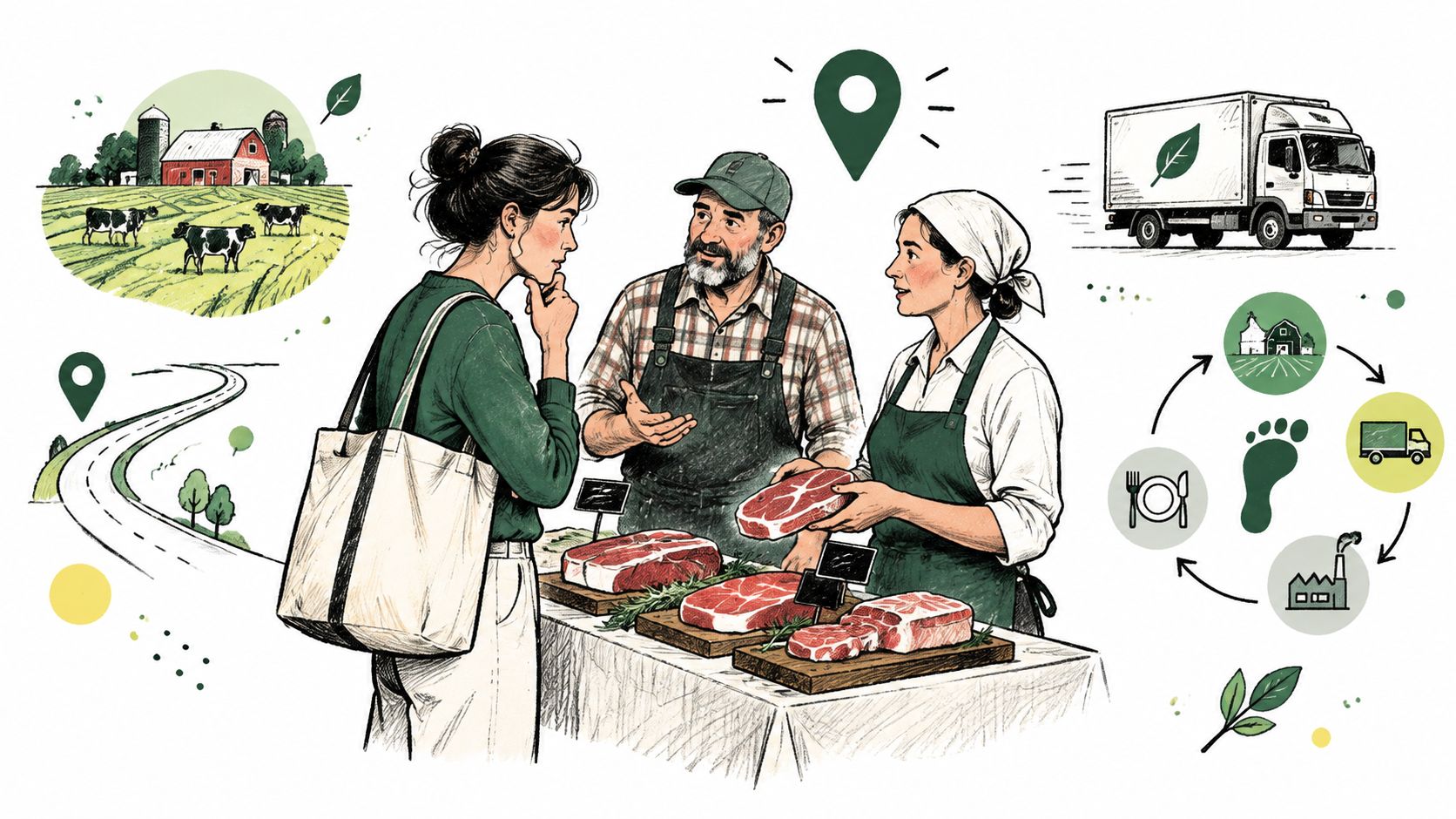
Ask the farmer how animals are raised, what they're fed, and whether they graze or spend time in a feedlot. Ask how the producer thinks about animal welfare and which processor handles the meat. You don't need every seller to use the same system, but you should be able to understand the one they use and decide whether it fits your priorities.
Look for answers you can act on
A seller's explanation should be specific enough to help you compare products. “Raised locally” doesn't answer how the animals were fed or where processing took place. Ask questions such as:
- How are the animals raised? Ask about grazing, feed, and the producer's approach to animal care.
- Where is the meat processed? Confirm the facility and how the product is handled after processing.
- What does this cut include? Check the packaging, portion size, and whether the order is fresh or frozen.
- What happens if you can't fill my order? Ask whether you'll receive a substitution, a refund, or a new pickup date.
- How can I place the same order again? Find out whether the seller lists availability or takes requests for future batches.
Some producers sell packaged retail cuts for individual shoppers, while others offer larger quantities for freezers or food-service customers. Their available formats depend on how the meat is processed and sold, so ask what you're ordering instead of relying on a general description.
A local marketplace can help you compare sellers' descriptions and contact them before placing an order. You can also explore a producer's own details, such as J&C Farm, and use the same questions you'd ask at a market stall. Your goal isn't to reward a nearby address. It's to choose a producer who can explain the product, answer practical questions, and deliver what you ordered.
If you're comparing the basic path from farm to package, this video offers another look at the subject.
Your Next Step Toward Better Local Meat
Make your first order a manageable one. Choose a buying channel that fits your week, identify the producer and processor, and check the inspection information before you pay. Then pick cuts and pack sizes that match your meals and freezer space, and confirm how the order will be kept cold until you receive it.
You don't need to know everything about a farm before you try its meat. You do need a seller who can answer straightforward questions about raising, processing, packaging, and fulfillment. If the answers are hard to get before a purchase, consider that a useful sign to keep looking.
A farmers' market is an easy place to start if you'd like to talk to producers face to face. Walk up, ask where the meat was raised and processed, and find out which cuts are available. If you'd rather browse online, look for clear seller details and a practical way to ask questions before ordering.
Once you find a seller whose meat, practices, and ordering process work for you, make a note of what you bought and how it went. You'll have a better starting point for your next order, and you can adjust the cuts or quantity based on what your household enjoyed. The best local meat purchase is one you understand, receive safely, and want to cook again.
Loyaltie is a marketplace where you can discover and buy directly from independent brands and local makers across the US. Browse local food options, check the seller details, and visit Loyaltie to find a source for your next order.