


You're probably here because you want better everyday products, not another cart full of things that look handmade and arrive feeling mass-made. That frustration is real, and it's exactly why learning how to buy handmade goods online matters now. The upside is simple, better coffee, skincare, food, supplements, pet products, and gifts from people who make them, with fewer middlemen and a lot more accountability.
Table of Contents
Why Your Last Handmade Purchase Probably Wasn't
You know the feeling. The listing promised handmade, the photos looked warm and human, and the package that showed up felt strangely generic. Maybe the item was fine, but it didn't feel like it had been touched by a real maker's hands in any meaningful way.
That's not you being picky. The category has gotten slippery. A product can be handmade, hand-altered, hand-designed, handcrafted, repurposed, or upcycled, and those labels don't all mean the same thing. Amazon Handmade itself lays out those distinctions, which is a clue that the word “handmade” now covers a very wide range of reality, not just objects built one by one by a maker you can trace Amazon Handmade.
Why the label stopped being enough
The bigger problem is that most marketplace listings use the word as a vibe, not a verification method. A seller can use soft lighting, earthy copy, and a few well-placed raw-material photos, and suddenly the item feels local even when it isn't. That's why the trust gap is so annoying, especially in categories where provenance matters, like skincare, supplements, coffee, and food.
Practical rule: if a listing only tells you the product is handmade, but not how, by whom, or from what materials, treat it like an open question.
Buying directly from real independent brands changes the experience fast. You get clearer ingredients, more specific process notes, and a better sense of whether the person behind the product stands behind it. That matters when you're trying to upgrade something you use every day, not just collect another decorative object.
The shift is also bigger than one disappointing order. Online buying of craft and handmade goods moved from niche to mainstream, with craft purchases rising from 5% of buyers in 2006 to 33% by 2020, while total craft sales grew from £883 million in 2006 to over £3 billion in 2019 Crafts Council report. When a category grows that much, weak labeling and sloppy merchandising follow right behind.
Where to Find Real Independent Brands and Local Makers
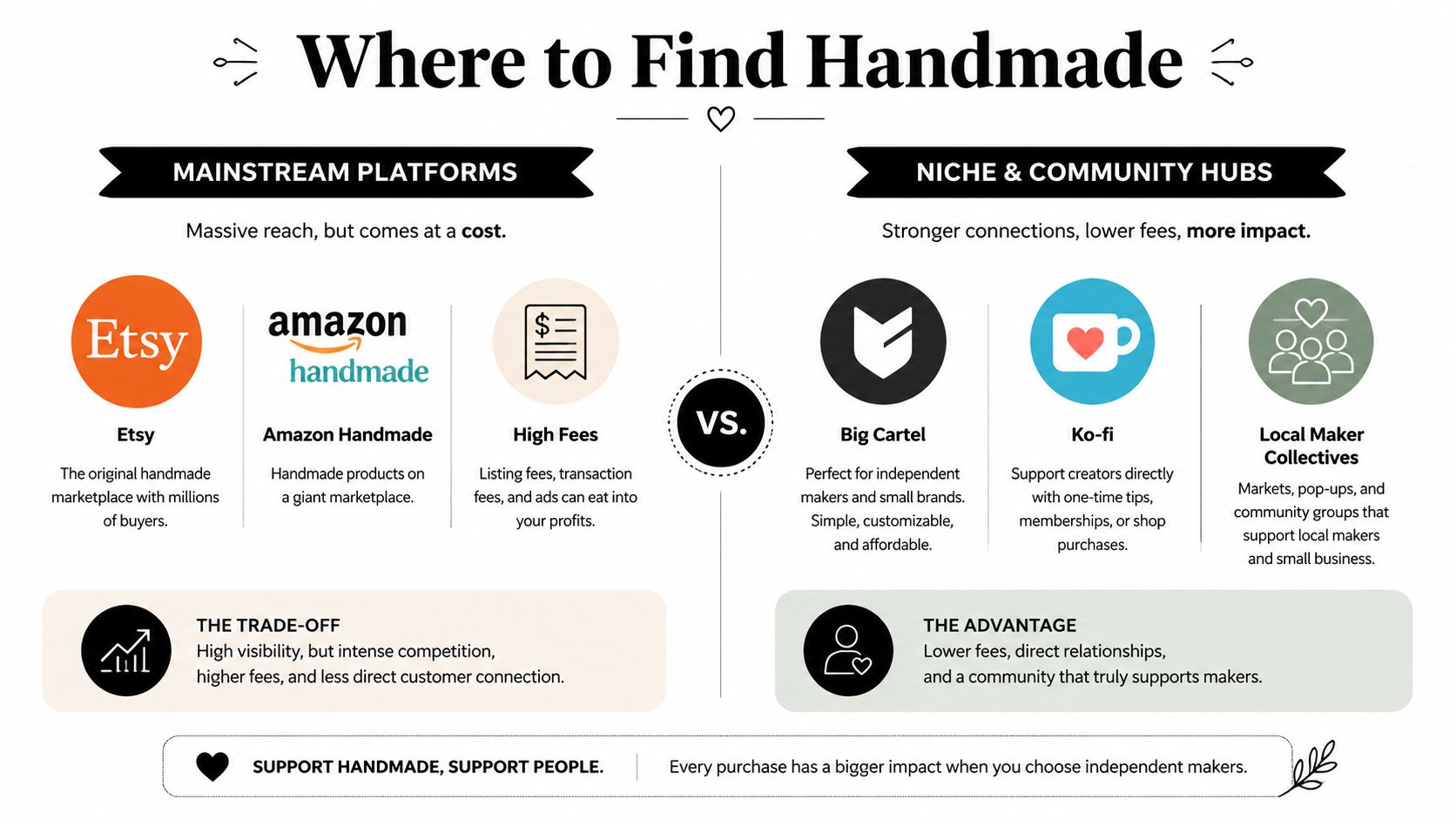
Start with channels that let you verify who made the item. Big marketplaces still have value, but scale makes sorting the genuine makers from the resellers harder. Etsy had more than 8 million sellers, 95 million buyers, and $12.6 billion in gross merchandise sales last year, which shows why it draws serious demand and why so much noise can sit between you and an accountable maker NetChoice on Etsy.
Shop where the maker is visible
Use direct-to-consumer brand sites, curated local marketplaces, and community-led discovery hubs first. Those channels usually give you clearer seller stories, more origin detail, and less of the generic marketplace blur that turns handmade shopping into guesswork.
Loyaltie fits that approach. It is a marketplace where people discover and buy directly from independent brands in the US, without a middleman getting between you and the maker relationship. If you want a cleaner starting point, browse Loyaltie's local marketplace.
Match the channel to the product. A small-batch coffee roaster often does best on its own site. A clean skincare formulator usually gives you stronger ingredient detail on a direct storefront. A grass-fed tallow producer should be able to explain sourcing without making you sort through vague brand copy. A supplement maker should clearly state what it makes itself and what it merely resells.
If you want a concrete example of how authenticity gets judged in a narrow craft category, the guide to buying Chikankari for modern wardrobes is a useful reminder that the question is usually not whether the piece looks good, but whether you can tell who made it and how.
How to Tell If a Product Is Handmade
The quickest way to separate real handmade products from clever marketing is to stop reading listings like ads and start reading them like evidence. Look for specifics that a factory-style reseller usually will not bother with. Real makers tend to talk about process, materials, batches, and the choices they made along the way.
Read for proof, not poetry
A serious product page should answer basic questions without hiding behind vibe language. Who made it. Where it was made. What materials were used. Whether the item is made to order, produced in batches, or altered from an existing base item. If those details are missing, the handmade claim is weak.
The same goes for photos. Multiple angles, close-ups of seams, texture, and small irregularities help. Stock-looking images, repeated poses, or photos that feel too polished and too uniform can be a red flag. So can descriptions that say “natural,” “clean,” or “authentic” without saying what any of those words mean in practice.
Simple test: if you cannot tell what makes the object different from a mass-produced version, the seller has not shown you enough.
Health-conscious buyers should be even more demanding. In skincare, food, and supplements, provenance and process are not decorative details, they are part of the product itself. If a balm, tea blend, or supplement formula matters to your body, you want to know where the ingredients came from and how much of the making happened in-house.
Red flags that deserve your attention
- Vague material language: If the seller will not name the exact materials or ingredients, assume the listing is thin.
- Too many unrelated items: A profile selling candles, phone cases, pet toys, and wall art can be a reseller hub, not a maker's studio.
- Suspiciously low price for complex work: If a product takes real labor, unusually cheap pricing can signal shortcuts or outsourced production.
- One story, zero specifics: A maker bio that sounds heartfelt but says nothing concrete is not enough.
For a concrete example of what a direct product page can look like, see this macrame plant hanger listing. Even if you are shopping outside home decor, the same pattern applies, clear naming, specific materials, and enough detail to make the making process visible.

Vetting Makers Before You Click Buy
Once a product looks promising, don't stop at the pretty page. Read the reviews like you're checking a contractor, not picking a favorite candle scent. You're looking for evidence that the maker delivers what they claim, consistently, and that buyers got what they expected.
Read the reviews for substance
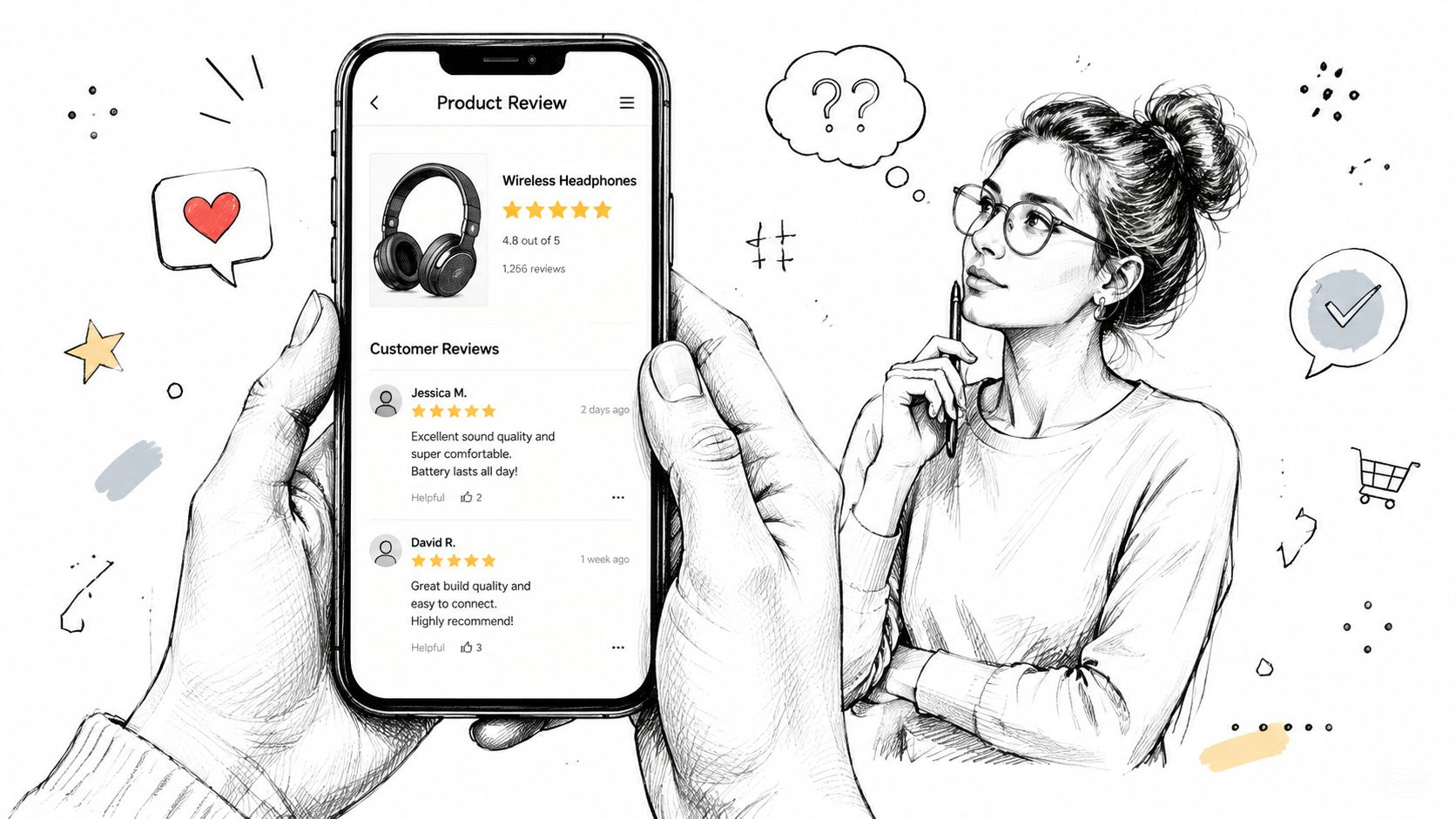
Star ratings matter less than the details inside the reviews. Good feedback usually mentions texture, scent, fit, durability, packaging, or whether the item matched the listing photos. Weak feedback repeats generic praise and says almost nothing useful about the product itself.
You also want to notice patterns. A few overly polished reviews posted in a tight window can be less useful than a smaller number of specific, mixed, detailed comments. Consistency matters more than hype.
For product categories with ingredient claims, check whether the maker explains certifications clearly. If a skincare maker says something is organic, ask whether they say organic for the whole formula, specific inputs, or just one ingredient. If a food maker says grass-fed, look for sourcing transparency rather than assuming the label tells the whole story.
A grass-fed tallow balm is a good example of how to evaluate a listing. You want to know where the tallow came from, whether the maker explains the rendering process, whether reviews mention texture and scent consistency, and whether the return policy is spelled out before you order.
Use the listing as a credibility test
- Shipping language: Clear processing times are a good sign. Vague timelines usually mean the maker is guessing or overwhelmed.
- Photo consistency: Product photos should look like the same batch, not a mix of random sources.
- Guarantees and returns: If the maker stands behind the work, the policy should be easy to find and read.
- Answer speed: A seller who replies clearly to messages usually handles issues better after the sale too.
Payment Security and Shipping What to Expect
Buying directly from independent brands feels more personal than buying from a giant marketplace, and that is a plus. It also means you need to look hard at checkout, delivery, and return rules before you commit. A great product with a messy payment setup is still a bad buy.
Protect yourself at checkout
Use secure checkout methods that give you recourse if something goes wrong. Credit card protection and trusted payment processors are the basic standard. Be much more cautious if a seller pushes direct bank transfer or any payment method that leaves you with no practical dispute path.
When you buy through a curated marketplace, you also buy some confidence in the middle. Loyaltie backs every order, which matters when you want direct access to makers without giving up peace of mind. For sellers and buyers who care about the fine print, the platform's terms and conditions set expectations around the transaction.
Shipping is where a lot of first-time handmade shoppers get impatient for the wrong reason. Made-to-order items can take longer because someone is making them, packing them, and sending them out rather than pulling them off a shelf. Read processing time separately from delivery time, and do not confuse the two.
Practical rule: if the product is made after you order it, slower shipping is normal, but unclear shipping is not.
Know the policy before you buy
Returns can be simple for shelf-stable goods and more limited for custom, perishable, or personal-use items. That is normal. What is not normal is a maker hiding the policy until after checkout. The good ones are direct about what can be returned, what can be exchanged, and what cannot.
For everyday items you reorder often, regular delivery or a buy-on-a-plan setup can save you from running out of things you already trust. That works especially well for coffee, pantry staples, skincare, and supplements, where the goal is consistency more than novelty.
The same logistics show up in thoughtful gift buying, too. A product like Sympathy Gift Box, Candle & Soothing Tea, Keepsake Comfort Gift, Bereavement Condolence Care Package, 1 Box | Glowsip by Loyaltie is described as a quiet comfort box that pairs a calming candle with soothing tea and a meaningful keepsake, which is the kind of straightforward product language that helps you know what you are sending.

Building Relationships with Makers You Love
The payoff isn't just a nicer object in your kitchen or bathroom. It's finding a maker whose work keeps being good, whose style fits your life, and whose products you can trust enough to reorder. That's the difference between browsing and building a better buying habit.
Buy like a regular, not a random shopper
When you buy directly from the maker, your feedback reaches the person who can improve the product. Mention what you liked, what you'd change, and how the item performed after use. Makers who listen will often sharpen a formula, refine a roast, or adjust a scent because customers told them the truth.
That relationship is also what makes local discovery worth your time. You learn who makes the best coffee for your mornings, which skincare formula doesn't irritate your skin, and which pet product you can keep coming back to without second-guessing it. The product gets better for you because the relationship gets clearer.
Loyaltie is built around that kind of buying, where people discover nearby businesses, independent makers, growers, and producers, then come back when they've found something worth sticking with. Straightforward sign-in and account creation make repeat buying less annoying, and a buy-on-a-plan setup makes it easier to turn a good first order into a routine you can keep.
Do the small things that help good makers win
- Leave specific reviews: Talk about texture, taste, scent, packaging, and how the product held up.
- Share the product name, not just the vibe: Tell friends exactly what you bought so they can find the same maker.
- Ask for what you need: If you want a tweak, say it clearly and politely.
- Reorder on purpose: Don't let a good maker disappear into your memory when the bottle runs out.
Buying handmade goods online gets a lot better once you stop treating it like a treasure hunt and start treating it like relationship building. You'll spend less time guessing and more time finding products you want to use again and again.
If you want a simpler way to find and reorder from independent brands without sorting through endless marketplace noise, go to Loyaltie and start browsing makers that sell directly. It's a practical way to buy handmade goods online, with more trust, less friction, and a clearer path to the products you'll keep coming back for.