
Saving on groceries doesn't mean filling your cart with the cheapest mass-produced option and accepting worse ingredients, stale products, or meals you don't enjoy. The strongest approach combines a flexible food plan, price-per-unit checks, selective bulk buying, seasonal timing, and direct purchases from independent brands and local makers.
That matters because food prices can stay high even after broader inflation cools. In the OECD, annual inflation averaged 5.2% in 2024, while food inflation was still 4.4% in January 2025. The same OECD release reported headline inflation of 4.7% in December 2024 and January 2025, so lowering waste and choosing better-value products can make a meaningful difference when grocery costs remain stubbornly high. OECD consumer price data
The best ways to save on groceries aren't limited to coupons and loyalty points. You can buy better food for less by checking what you already own, comparing the cost per ounce formula explained, and choosing products made closer to you. Loyaltie gives you a way to discover and buy directly from independent brands across the US while comparing quality, ingredients, and total cost.
Table of Contents
1. Buy Directly from Local Food Makers and Skip the Markup
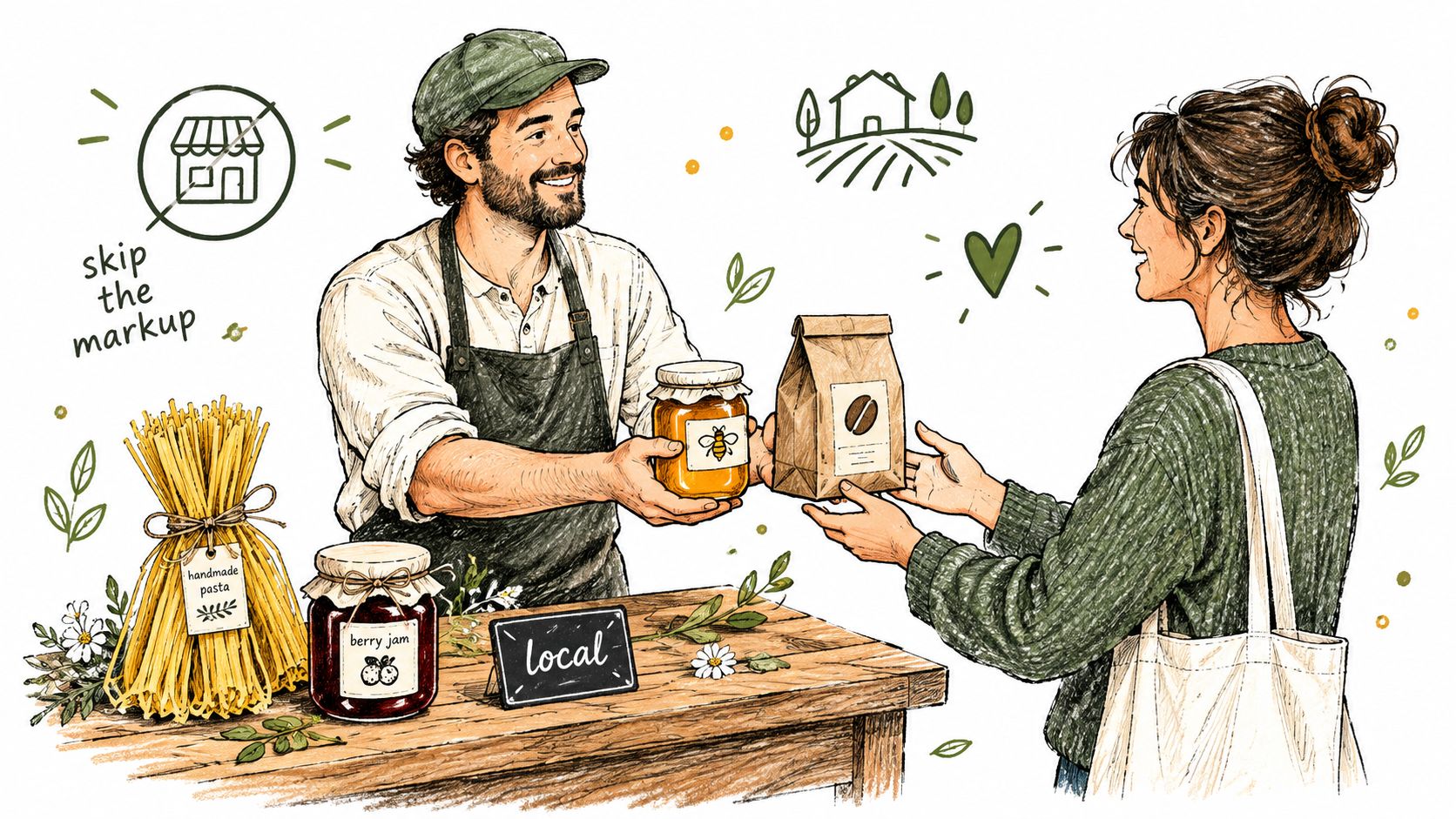
Buying directly can improve both freshness and value, but don't assume every local product costs less automatically. Compare the price per ounce, pound, serving, or item with what you'd normally buy at the grocery store. A direct purchase makes the most sense when you're getting a product you already use, not adding an extra item because the story sounds appealing.
Coffee, honey, pasta, spices, jam, baking mixes, and butter are practical starting points. A local roaster may offer fresher beans than a supermarket shelf, while a regional honey producer can sell without the extra layers created by distribution and retail placement. Independent grocers already represent 33% of US grocery sales, according to Grocery Dive, so local and independent food channels are a substantial part of the market, not a novelty.
Make direct buying work for your budget
Start with one category and test a maker's product against your usual purchase. Ask about larger sizes, combined orders, or a regular delivery arrangement if you know you'll use the product consistently. Don't commit to a large order until you've checked taste, storage life, and how quickly your household goes through it.
Loyaltie can help you find independent brands and producers without searching across dozens of disconnected websites. For pet wellness purchases, you can also browse PetScy's supplement lineup and compare the product details with your current routine.
2. Buy Seasonal and Local Produce When Prices Are Lowest
Seasonal produce gives you two advantages at once, better flavor and fewer logistics costs built into the price. Produce grown nearby during its natural harvest window doesn't need the same long-distance transport, extended cold storage, or artificial ripening as out-of-season alternatives.
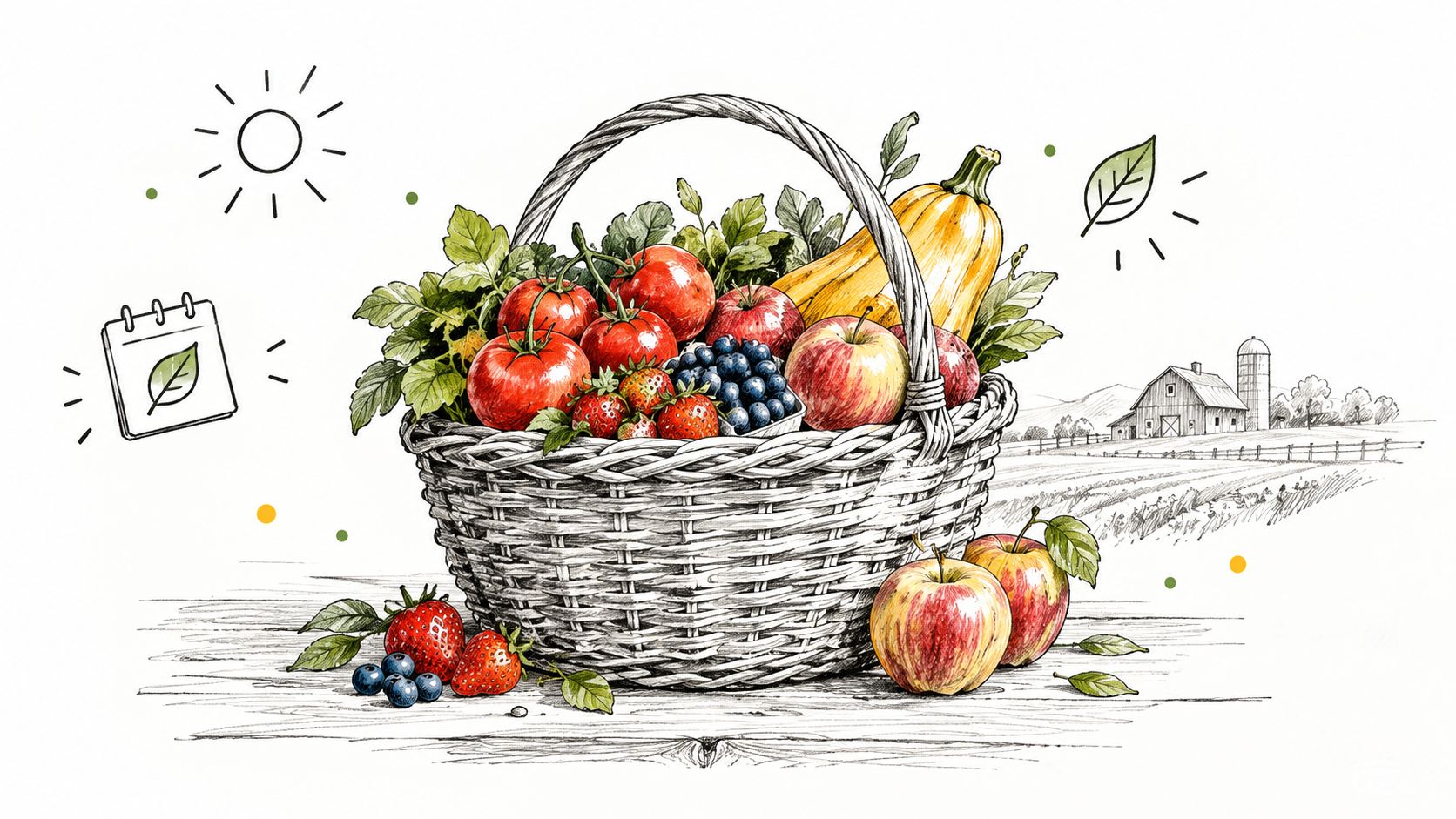
Your shopping list should change with the calendar. Buy berries when local growers have abundant supply, choose root vegetables and winter squash during their strong harvest period, and look for nearby apples rather than paying for fruit transported from far away. The exact savings will vary by region and harvest conditions, so judge the deal by the current unit price instead of relying on a fixed percentage.
Turn abundance into future meals
Seasonal buying works best when you have a plan for the extra food. Freeze berries, blanch vegetables, cook tomato sauce, or portion fruit for smoothies. Preserving only saves money if you use what you preserve, so label containers and keep older portions visible.
Farmers markets, local growers, and direct-order platforms are useful places to compare current availability. Loyaltie can help you discover local producers selling at their own prices, while a flexible meal plan lets you build meals around what looks fresh and affordable this week.
Practical rule: Buy seasonal produce in the amount you can eat, freeze, cook, or preserve before it spoils.
3. Buy Bulk Staples Directly from Independent Producers
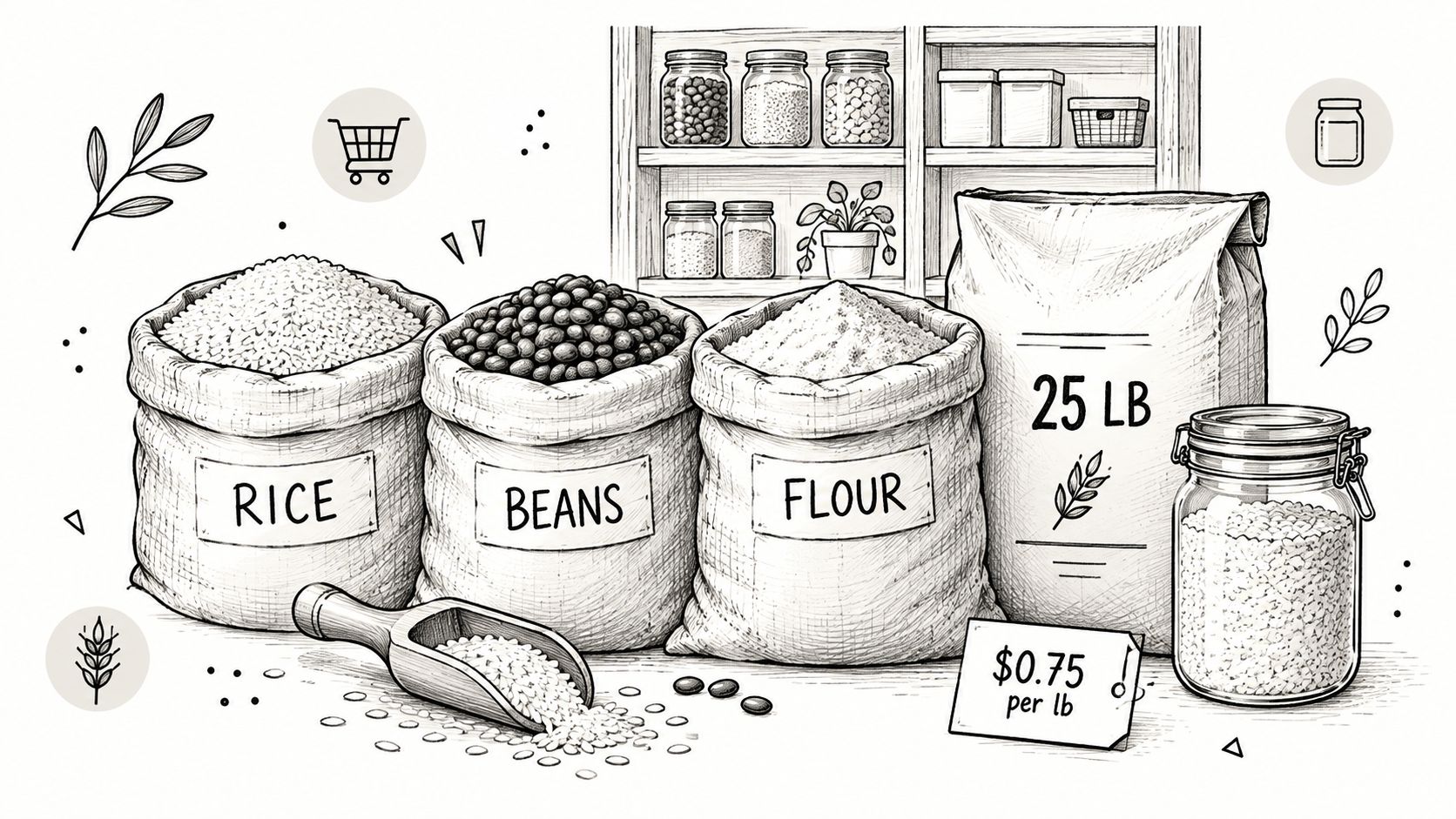
Bulk buying can lower the cost of rice, beans, flour, grains, nuts, and other staples, but only when you use the full quantity. A large bag that sits in a humid cupboard or becomes stale is not a bargain. Your real price includes the portion you consume, not the discount printed on the package.
Independent mills, nut roasters, grain suppliers, and cooperatives may offer larger quantities with less retail packaging. Compare the producer's per-pound price with grocery-store options, then check delivery costs and storage requirements before ordering. A direct bulk order can be especially practical for a household that cooks frequently or for several people who can split the purchase.
Start with one dependable staple
Choose something you already buy often, such as flour, rice, coffee, beans, or nuts. Store it in airtight containers, write the purchase date on the label, and keep a simple note of how long the quantity lasts. That record tells you whether the next larger order will save money or create waste.
You might also test a specialized pantry alternative such as Lupin Flakes from Chefskiss, but compare serving cost and actual use before replacing a familiar staple.
Split large orders with family or friends when the seller permits it. That lowers the storage burden and gives you access to producer pricing without forcing your household to consume more than it needs.
4. Skip Branded Products and Buy from Independent Makers of the Same Category
The familiar label on a cereal box or granola bag can represent advertising, packaging, distributor costs, and retail placement, not necessarily better food. Private-label products are already a strong value alternative. The Private Label Manufacturers Association says US shoppers saved about $35 billion in 2025 by choosing store brands over national brands in regular grocery shopping.
Independent makers give you another option between mass-market branding and expensive specialty retail. Compare the ingredient list, serving size, allergen information, and price per unit. A local granola maker may use simpler packaging and sell through a direct channel, while an independent pasta producer may offer better texture or fresher production without the same national marketing costs.
Test quality before changing your whole pantry
Buy a smaller package first. Cook or taste it in the way you normally would, then compare how satisfying it is and how quickly your household uses it. A cheaper product isn't better value if you need more of it to enjoy the meal or if nobody finishes it.
Build a short rotation of makers you trust. You might use one for granola, another for pasta, and a third for coffee or snacks. Loyaltie is designed to help you discover and buy directly from independent brands in the US, so you can evaluate products by ingredients, freshness, maker information, and unit cost, rather than by shelf visibility alone.
5. Buy Wellness and Beauty Products Directly from Makers Instead of Retail
Skincare, supplements, and wellness products can inflate a household budget because shoppers often compare bottle prices instead of usable quantities and formulation details. Buying directly from a maker can remove a retail layer, but direct access doesn't make every product a good value. Check the amount in the container, suggested serving or usage, ingredient transparency, shipping cost, and return policy.
Start with products you already use consistently. A fragrance-free moisturizer, daily supplement, soap, or body-care item is easier to evaluate than a collection of impulse purchases. Look for independent formulators who explain their ingredients and sourcing clearly, then try one product before ordering a larger quantity.
Keep quality in the calculation
The cheapest serum isn't a saving if it irritates your skin. The least expensive supplement isn't a smart purchase if you don't trust its labeling or can't use the full container. Compare what the product does for you, how often you use it, and whether it helps replace several less effective purchases.
For a direct-buying option, explore this fragrance-free skincare set from Finally All Natural. You can also reduce waste with a product such as the Midnight Oasis Essentials soap saver, which helps you use soap slivers instead of throwing them away.
Set a reorder reminder only after you know your consumption pattern. Regular delivery should match actual use, not encourage you to accumulate products in a drawer.
6. Join or Buy from Food Cooperatives and Buying Clubs
A food cooperative or buying club can make bulk purchasing practical for people who don't have room to store large quantities alone. Members combine demand, place coordinated orders, and divide products from farms, mills, and other producers. That model can give you access to direct pricing while spreading storage, pickup, and ordering responsibilities across the group.
Before joining, calculate the full cost. Include membership fees, pickup time, transport, minimum order requirements, and any work contribution. Don't assume a cooperative saves money because it uses wholesale language. It has to fit the way your household shops.
Choose a group that matches your routine
Online ordering can reduce unnecessary trips, while shared pickup can make a group worthwhile for nearby households. Ask whether you can split cases, how the group handles substitutions, and what happens when produce arrives damaged or a producer can't fill an order.
Worker-owned organizations such as Park Slope Food Coop in Brooklyn show how cooperative grocery models can operate through member participation. You don't need to copy that structure to benefit from the principle. A few households can coordinate a grain, produce, or pantry order and divide it according to actual use.
A cooperative only saves money when the fee, travel, time, and waste stay below the value of the discount.
Use Loyaltie alongside a cooperative when you want individual maker pricing or a product that the group doesn't carry. That gives you more choice without requiring every purchase to follow the same channel.
7. Buy Pet Products Directly from Independent Makers and Formulators
Pet food and treats deserve the same quality-and-cost review as human groceries. Compare the ingredient list, nutritional information, package size, feeding guidance, shipping terms, and price per serving. A larger bag isn't automatically cheaper if your pet won't tolerate the food or if the product goes stale before you finish it.
Independent pet-food makers, treat formulators, and supplement producers may offer direct access to the people who make and formulate their products. That can make it easier to ask about sourcing, production, storage, and appropriate use. Look for clear information instead of relying on lifestyle language or celebrity endorsements.
Change one product at a time
Transition new food gradually according to the maker's guidance and observe your pet's digestion, appetite, energy, coat, and stool. If your pet has a medical condition, ask a veterinarian before changing food or adding supplements. Lower price is never a reason to ignore a health response.
Regular delivery can work well for food or treats your pet reliably uses, but set the schedule only after tracking consumption. Ask about larger-order pricing if you have multiple pets, then verify that the savings won't lead to excess inventory.
The same principle applies to toys, grooming supplies, and household pet products. Choose durable items that get used instead of buying a rotating pile of inexpensive products that break or go untouched.
8. Buy Imperfect or Surplus Produce from Local Growers at Deep Discounts
A crooked squash, blemished apple, or oversized zucchini can be just as useful in a soup, sauce, smoothie, crumble, or stir-fry as a cosmetically perfect version. Local growers may also have surplus after a market day or a harvest that exceeds current orders. Ask directly. The best deal may not appear on a printed sign.
Buy imperfect produce with a job already assigned. Turn soft tomatoes into sauce, chop irregular peppers for the freezer, bake bruised apples, or grate surplus zucchini. This approach prevents the common mistake of buying a bargain box and then discovering that you don't have time to prepare it.
Ask about seconds before you leave
Build relationships with growers whose produce you already enjoy. Ask whether they sell seconds, end-of-day stock, or larger quantities for preserving. Sign up for availability notices if the grower offers them, and keep a few flexible recipes ready for sudden surplus.
Use Loyaltie to find local growers and makers who can sell directly to you. Direct buying can shorten the path from harvest to kitchen, but you still need to inspect produce, understand how soon it should be used, and buy only what your household can handle.
This video offers a visual example of how surplus produce can be redirected into useful meals rather than wasted.
9. Buy Coffee, Tea, and Specialty Beverages Directly from Independent Roasters and Makers
Coffee is an easy category to overspend on because you can pay for the drink at a café, the retail package, or a direct order from the roaster. Buying direct won't automatically make coffee cheap, but it can give you fresher beans and a clearer connection between your payment and the product itself. Compare the price per pound or ounce, shipping, roast date, and how much you brew.
Start with one or two bags from a local roaster. Try a light, medium, or dark roast based on what you already enjoy, then adjust your grind and brew method before deciding the coffee isn't right. Freshly ground beans can make a noticeable difference, so a reliable grinder may improve the value of every bag you buy.
Match the order to your consumption
Don't order a large quantity because the per-pound price looks attractive if the beans will lose quality before you use them. Ask the roaster about sourcing, roast timing, storage, and the best quantity for your household. A regular delivery plan can make sense once you know your weekly consumption, but it should prevent emergency café purchases, not create a cupboard full of coffee.
Try single-origin Papua New Guinea coffee from Pops Coffee Company as a direct-buying comparison. If your daily coffee habit is pushing up your spending, these ways to avoid wasting money on daily coffee can help you reduce waste alongside your product choice.
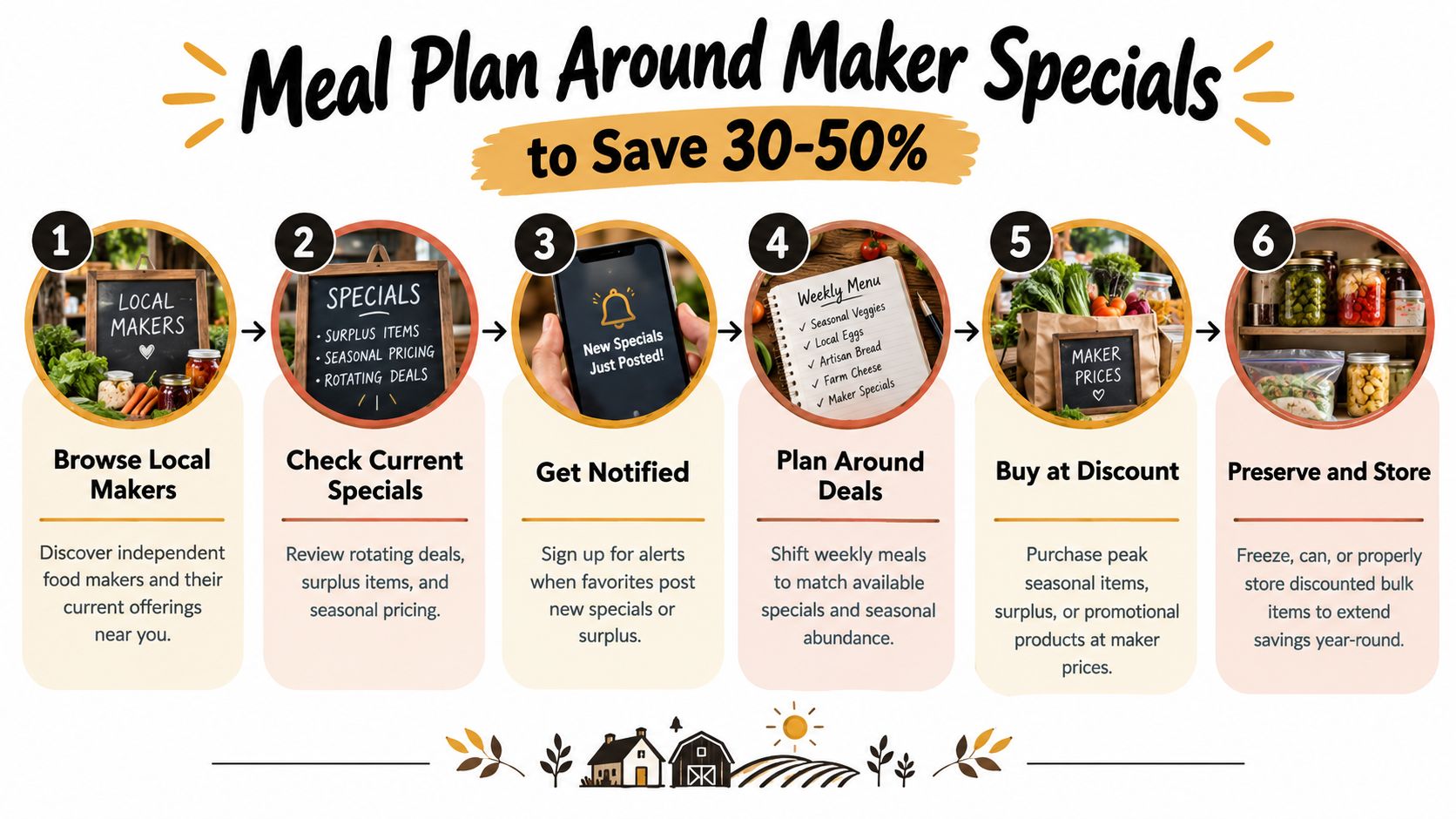
10. Meal Plan Around Sales and Specials from Local Makers, Not the Other Way Around
A rigid meal plan can force you to buy ingredients at full price. Use a flexible structure instead. First check current specials, seasonal availability, surplus offers, and products nearing the end of their preferred selling window. Then choose meals that use those purchases.
This doesn't mean buying every discounted item. A deal saves money only when you can use it, store it, or preserve it. Write down what you already have, set a weekly limit, and choose a few adaptable meals such as pasta with vegetables, grain bowls, soups, roasted produce, omelets, or freezer-friendly sauces.
Use a simple weekly process
- Scan offers: Check independent makers, growers, and your regular stores before creating the final list.
- Choose anchor ingredients: Pick the sale-priced produce, pantry staple, protein, or maker product that will shape several meals.
- Check your inventory: Remove duplicates and confirm you have the storage space and supporting ingredients.
- Compare unit costs: Review the price per ounce, pound, serving, or item before buying.
- Plan flexible meals: Make substitutions easy so one unavailable ingredient doesn't force a full-price purchase.
- Preserve only usable surplus: Freeze, cook, or store discounted abundance while it's still in good condition.
Follow favorite makers through Loyaltie or their own channels so you can see current offers without making unnecessary trips. This approach saves per week, not just per item, because it accounts for time, transportation, impulse purchases, and spoilage.
10 Grocery-Saving Strategies Compared
| Strategy | 🔄 Implementation Complexity | ⚡ Resource Requirements | ⭐📊 Expected Outcomes | 💡 Ideal Use Cases | ⭐ Key Advantages |
|---|---|---|---|---|---|
| Buy Directly from Local Food Makers and Skip the Markup | Medium, requires discovering & contacting makers | Low–Medium, time to find makers; occasional bulk storage | High, fresher products, ~20–30% savings | Regular staples (coffee, honey, pantry items) | Direct pricing, transparent sourcing, stronger maker relationships |
| Buy Seasonal and Local Produce When Prices Are Lowest | Medium, learn local seasons and timing | Low, visits to markets; preservation tools optional | High, 30–50% savings, better flavor/nutrition | Fresh produce in harvest season; preserving/preserving projects | Peak flavor, lower transport costs, environmental efficiency |
| Buy Bulk Staples Directly from Independent Producers | Medium, arranging bulk orders and delivery | High, upfront cost and home storage space | Very high, 40–60% lower per-pound costs | Households or groups with steady staple use; co-buying | Wholesale pricing, less packaging, access to specialty varieties |
| Skip Branded Products and Buy from Independent Makers | Low, trial-and-error to find favorites | Low, modest research and sampling | Moderate, 20–40% savings; often better ingredients | Packaged categories (granola, pasta, cereal) | Lower marketing markup, better ingredient transparency |
| Buy Wellness and Beauty Products Directly from Makers | Medium, research formulators and test products | Medium, time to vet, may buy samples | High, ~50% or more savings; ingredient transparency | Skincare, supplements, routines needing regular purchases | Access to formulation details, customization, higher-quality ingredients |
| Join or Buy from Food Cooperatives and Buying Clubs | Medium–High, membership and participation required | Medium, membership fees, occasional shared storage | Consistent, 20–40% savings and access to specialty items | Regular bulk buyers, community-focused shoppers | Member pricing, collective buying power, educational benefits |
| Buy Pet Products Directly from Independent Makers | Low–Medium, find makers and transition pet diets | Low–Medium, initial vetting and gradual diet change | High, 30–50% savings; fresher, better ingredients | Pet owners seeking improved nutrition and lower monthly costs | Customization, nutrition transparency, direct maker support |
| Buy Imperfect or Surplus Produce at Deep Discounts | Low, ask farmers or sign up for surplus lists | Low–Medium, quick pickup and preserving supplies | Very high, often 50%+ discounts; reduces waste | Cooking, preserving, price-sensitive households | Deep discounts, reduces food waste, freshest local produce |
| Buy Coffee, Tea, and Specialty Beverages Directly from Roasters | Low–Medium, try roasters and adjust brewing | Medium, grind/brew equipment and subscriptions | High, 30–50% savings; much fresher taste | Daily beverage drinkers and quality-focused consumers | Fresher beans/tea, micro-batch access, stronger flavor profiles |
| Meal Plan Around Sales and Specials from Local Makers | High, requires flexible planning and active monitoring | Medium, time to monitor deals; preservation ability helpful | Variable, potential 30–50% savings when timed well | Flexible cooks, budget-conscious households open to variety | Maximizes rotating discounts, encourages seasonal eating, reduces waste |
Turn the Savings Into a Repeatable Routine
The best ways to save on groceries work because they become decisions you repeat, not heroic shopping trips you can't maintain. Start each week by setting a grocery limit and checking your refrigerator, freezer, and pantry. Build your list from what needs using first, then scan seasonal produce and maker offers for the meals you can make with those ingredients.
Use price per unit as your common language. Compare the grocery-store package with the independent maker's package, but include shipping, delivery fees, storage, preparation time, and likely waste. A larger bag, a multi-store route, or a discounted surplus box may look cheaper at checkout and cost more by the end of the week if you can't use it.
Food waste is one of the clearest places to recover money. The UN Environment Programme estimated that households accounted for 60% of the 1.05 billion tonnes of food wasted globally in 2022, and the average person wasted 79 kilograms that year. Those figures are reported in the UNEP-related summary. You don't need to eliminate every scrap to benefit. Cook what is close to spoiling, freeze realistic portions, and stop buying quantities that exceed your household's habits.
Private-label products can also be useful, particularly for basic ingredients where branding adds little value. PLMA reported that US private-label grocery and nonfood products reached $236.3 billion in annual dollar sales in 2023, with unit share at 20.7% and dollar share at 18.9%. PLMA's private-label report shows how widely shoppers use alternatives to national brands, but you should still compare ingredients and quality rather than switching blindly.
Set aside part of your budget for direct buying from trusted independent brands. That could mean coffee from a local roaster, seasonal produce from a grower, pantry staples from a mill, skincare from a formulator, or pet products from a maker who provides clear ingredient information. Direct buying is most valuable when it gives you a product you enjoy, use consistently, and can purchase at a sensible total cost.
Choose one category this week. Track what you paid, how long it lasted, how much you used, and whether the quality justified the purchase. Then use that information to decide whether to reorder, change makers, buy a larger quantity, or return to a grocery-store option. A quality-first budget isn't about paying more for a story. It's about making sure every dollar buys food and products that earn their place in your home.
Loyaltie is a marketplace where you can discover and buy directly from independent brands, local makers, growers, and producers across the US. Visit Loyaltie this week, choose one category such as coffee, produce, pantry staples, wellness, or pet care, and compare a direct-buying option with what you usually pay.