
You're comparing grocery apps at the end of a long day. One has the olive oil you always buy, another promises a convenient delivery window, and a local coffee maker has just posted a fresh roast. You don't need one store to win every category. You need the right place for each part of your basket.
That's the useful way to think about the best online grocery stores: big retailers are often the practical choice for routine staples, while independent brands and local makers can offer a noticeable upgrade in coffee, food, skincare, wellness, supplements, and pet products. The trick is to compare what you'll receive, not just the price or the promise on the app.
| Shopping option | Best for | Watch out for |
|---|---|---|
| Large generalist retailers | Pantry basics, familiar brands, routine orders | Stock changes, substitutions, fees |
| Specialty grocers | Focused selections and dietary-specific finds | Narrower range, delivery availability |
| Independent sellers and local marketplaces | Distinctive products, ingredients, and producer details | Check delivery terms, labeling, and availability |
Table of Contents
Why Your Grocery Cart Has Changed for Good
Your routine may already involve more than one kind of shopping. You might get milk and rice from a major retailer, order coffee from a roaster whose beans you like, and pick up honey from a producer who can tell you where it came from. That isn't indecision. It's a more useful way to shop than expecting one app to be equally good at everything.
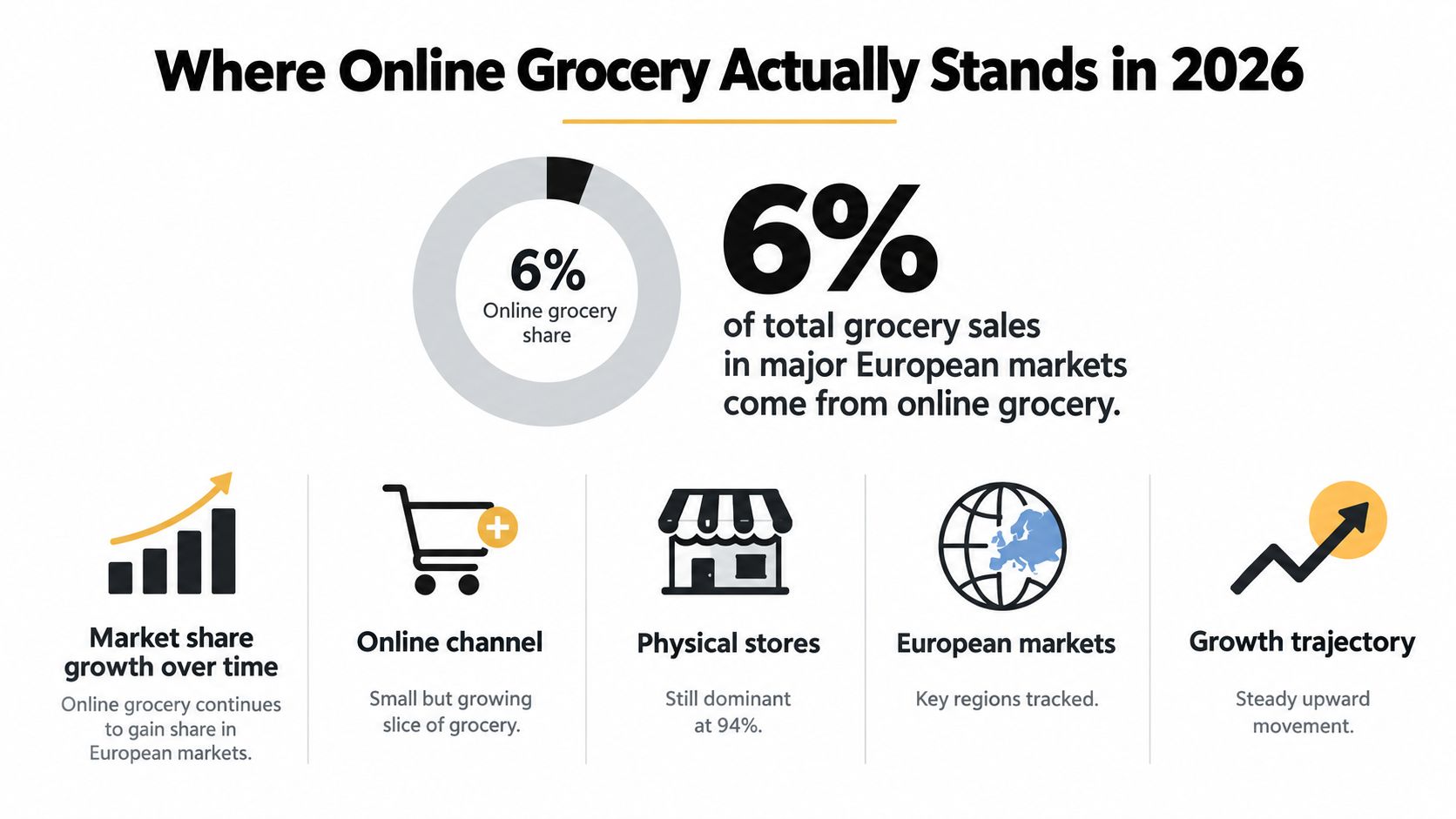
Online grocery became a durable part of mainstream retail, not just a temporary response to closed stores. McKinsey's 2024 European grocery research found that online sales remained at approximately 6% of total grocery sales, with adoption varying substantially by country. That's a meaningful benchmark: online ordering has a steady place in grocery, but physical supermarkets still matter. McKinsey's European grocery research
For you, that means the best online option is usually the one that fits the job. A large retailer may be easier for common pantry items and predictable household basics. A dedicated seller may be the better choice when you care about a coffee's roast, a skincare formula's ingredients, or a producer's approach to growing food.
Shop the basket, not the slogan
There's a real difference between buying a familiar product quickly and discovering something better. For everyday items, speed and a reliable restock may be enough. For products you use on your skin, feed your family, or give to a pet, you may want to know more about the maker, ingredients, and origin.
That doesn't make every independent product a better buy by default. It gives you a reason to compare more than brand recognition. Read the label, check the quantity, and see whether the seller gives you useful details about the product rather than relying on polished packaging.
A practical rule: Keep routine purchases simple. Spend your attention where the product's ingredients, origin, or maker could change your decision.
A thoughtful grocery mix doesn't require replacing your usual store. Start with the categories where you want a better fit, then buy the rest wherever it's easiest. That approach gives you convenience for the ordinary stuff and room to find products with more character where it matters.
Where Online Grocery Stands in 2026
Online grocery is established, yet it remains one part of a larger retail routine. As noted above, McKinsey's 2024 European research found online sales holding at approximately 6% of total grocery sales, while the broader U.S. e-commerce market kept growing at a pace grocery has not matched. Don't treat overall e-commerce as a measure of grocery penetration, because the two describe different things. The takeaway is simple: digital shopping is substantial, but food moves online slower than almost anything else you buy.
That difficulty shows up in familiar ways. Perishables need careful handling. Somebody has to decide what happens when your item is out of stock. Delivery options depend on whether the retailer can fulfill orders near your address. Large chains connect online ordering to established stores and fulfillment networks, which is why they handle routine stock-up trips well. Independent sellers compete on different ground: distinctive products, direct producer relationships, and clear information about who made what you're buying.
Convenience depends on the operation behind the app
A smooth interface can't guarantee your items are on the shelf when the order gets picked. Local stock, delivery setup, and handling practices matter as much as the screen you order from. Two shoppers using the same service can walk away with opposite experiences.
"Online grocery" doesn't describe one uniform service either. One store handles your full weekly order. Another wins on quick delivery. A direct seller is the right call for a product you refuse to replace with a generic substitute. Check delivery coverage and pickup availability for your address before you build a routine around any single store.
The infographic above covers a European-market figure, not a forecast and not a claim that every country shares the same online share. Digital ordering belongs in your mix. Physical grocery infrastructure isn't going anywhere, so plan around both.
Five Criteria That Actually Predict a Good Order
A grocery app can look polished and still make shopping harder than it needs to be. Judge a service by what happens from search to delivery, not just by the size of its catalog or a low starting price.
Compare the details that affect your order
Price and fee transparency. Check the total before you place the order. A low product price matters less if delivery costs, minimums, or other fees change the final amount. Compare the same basket where possible, including the items you use.
Delivery and pickup flexibility. A retailer may be convenient in one neighborhood and inconvenient in another. Check whether you can get an order at a useful time, pick it up, or buy directly from a seller who ships to your address. Don't assume the delivery promise shown before checkout will fit your schedule.
Selection depth in your real categories. A huge general catalog isn't helpful if the filters make it difficult to find what you need. Look for useful product details, sensible categories, and search tools that narrow results by dietary needs or product type.
Freshness and substitutions. Pay attention to how a store handles unavailable items. Can you say no to replacements, set preferences, or request a refund? If you're buying produce, ingredients for a specific recipe, or a product with a strict dietary requirement, a substitute can change the whole order.
Access to independent and local sellers. If provenance and maker details matter, look for a store or marketplace that makes those details easy to find. A direct seller should help you understand what the product is and who made it, not leave you to guess.
Baymard's usability research evaluates grocery sites and apps across the purchasing journey, including product search, delivery-slot selection, delivery instructions, and substitute settings. Its work offers a useful way to judge whether a grocery service helps you find, compare, and order items without unnecessary friction. Baymard's online grocery usability research
| Channel type | Price and fees | Delivery and pickup | Selection depth | Freshness and substitutions | Independent and local access |
|---|---|---|---|---|---|
| Large generalist retailers | Often useful for comparing routine staples; check total fees | Can connect online ordering with stores or delivery networks | Broad for everyday needs | Policies and stock reliability vary by retailer and location | Usually not the main focus |
| Specialty grocers | Compare prices against your usual basket | Depends on coverage and seller setup | Stronger in focused categories | Check product handling and replacement choices | May feature distinctive or regional products |
| Independent-seller marketplaces | Compare product value and shipping with care | Depends on each seller and marketplace | Varied across makers and categories | Review product details and seller policies | Direct access is the main appeal |
Use the table as a starting point, not a universal scorecard. Your best choice depends on what's in the basket and what you're unwilling to compromise on.
How to Read Labels So You Buy Better Anywhere
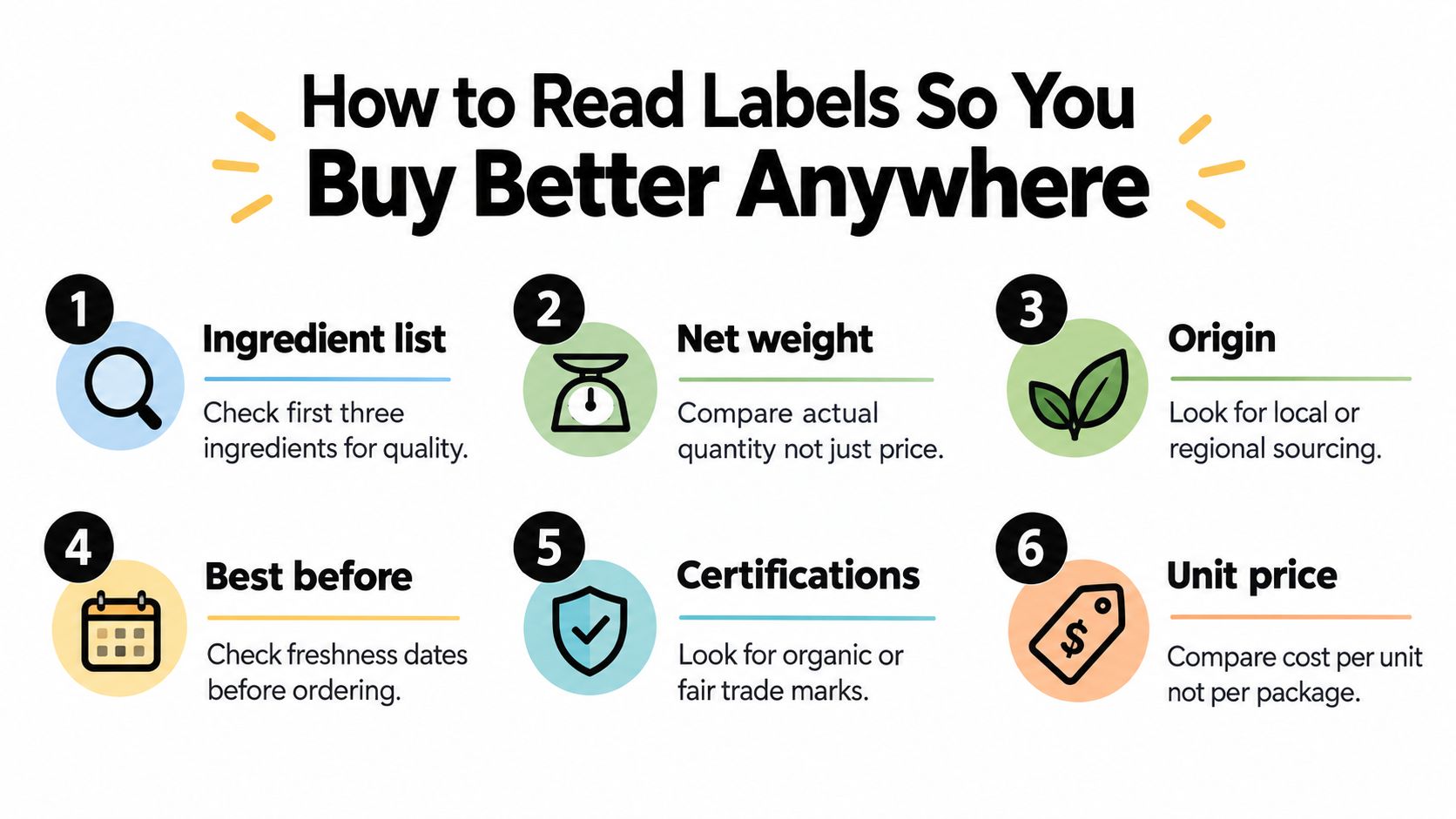
A local maker can offer a distinctive product, but the package still needs to tell you what you're buying. Reading labels is a practical habit whether you're shopping through a large retailer, a specialty store, or directly from an independent brand.
For skincare, start with the basics
U.S. cosmetics labels must state the product's identity, net quantity, the responsible business and its place of business, and ingredients in descending order of predominance. Applicable warnings must be prominent and conspicuous. The FDA also says cosmetic labels must be truthful and not misleading, while manufacturers remain responsible for product safety and proper labeling. Cosmetics generally aren't preapproved by the FDA before sale. FDA's summary of cosmetics labeling requirements
Use those details as a first checkpoint. Check who is responsible for the product, how much you get, and which ingredients appear first. Ingredient order won't tell you everything about how a formula feels or works, but it's more useful than judging a jar by its design or broad marketing language.
For supplements, inspect the panel and the contact details
Dietary supplements generally need a Supplement Facts panel, serving information, ingredient details, other ingredients, net quantity, and the name and place of business of the manufacturer, packer, or distributor. Labels must also provide a domestic address or phone number for reporting serious adverse events. The FDA doesn't test supplements before they reach consumers, so clear labeling is important, but it isn't proof that a product suits you.
When a food or supplement product raises allergy questions, label-reading is only part of the job. For practical guidance on reducing accidental allergen contact in the kitchen, see this resource on cross-contact prevention for baking. It's especially relevant if a product will be used in food prepared for someone with an allergy.
Keep the checklist simple: confirm the product identity, look at the quantity, read the ingredients and warnings, and make sure you can identify the responsible business. If something important isn't clear, ask the maker before buying.
The Hidden Cost Behind the Headline Basket
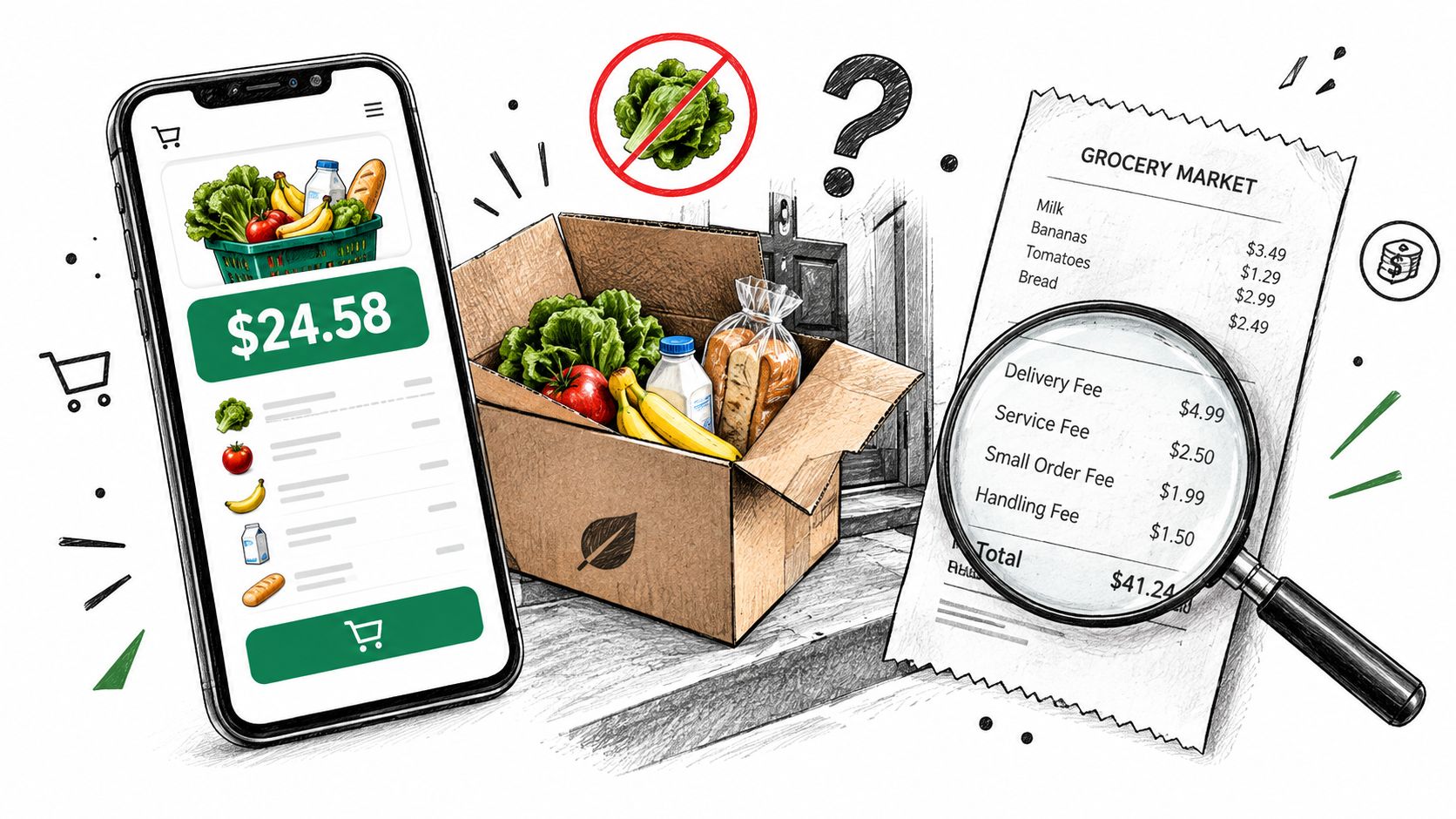
The lowest total on your screen isn't automatically the best deal. A basket can look inexpensive before a product disappears during picking, a replacement arrives that you don't want, or fees change what you pay at checkout.
A 2025 Progressive Grocer survey found that 40% of online grocery users cited out-of-stock items, 33% cited excessive fees, and 28% cited dissatisfaction with substitutions. At the same time, 69% of recent users said they were very or completely satisfied. Those findings can coexist: a person can like the convenience overall and still run into a real problem with a particular order. Progressive Grocer's 2025 shopper survey
Look beyond the number at checkout
A substitution can be more than a minor inconvenience. If you chose a particular ingredient because of its flavor, dietary fit, or quality, a replacement may leave you with a product you won't use. That can turn an apparently cheap order into wasted food, another shopping trip, or a fresh reorder.
Fees deserve the same scrutiny. Compare the final total rather than the price you saw while browsing. If a seller charges separately for delivery, include that cost in your comparison. If you're placing a smaller order for a distinctive product, ask yourself whether the product's value is worth the delivery arrangement.
Compare the order you'll actually use: Consider product quality, substitutions, freshness, fees, and the time you'll spend fixing a problem.
This matters most for products where the exact item counts. For everyday staples, a replacement may be perfectly acceptable. For dietary-specific food, a particular skincare formula, or a pet product your animal tolerates well, it may not be.
Make a quick mental check before checkout: Will I accept the likely substitute? Is the total clear? If this item arrives in poor condition, do I know how the seller handles it? The right choice isn't always the lowest number. It's the order that gives you the items you wanted with the least waste and hassle.
Mixing Big Retailers With Local Makers Without the Headache
You don't have to choose between a big retailer and local sellers. A sensible split lets you buy routine products where they're convenient and look for independent makers when you want something more specific, distinctive, or transparent.
PwC's 2025 survey of consumers across 28 markets found that 44% were willing to pay more for locally produced food, while 56% would choose cheaper products made outside their country. The same research found that the average global respondent used about 3.6 food-shopping channels, rising to 4.0 among people prioritizing health or climate concerns. That's a useful reminder that shoppers often mix sources rather than declaring one channel the winner. PwC's Voice of the Consumer survey
Put each category where it makes sense
Use a large retailer for products where familiarity, easy restocking, or a broad everyday selection matters most. For products where you want specific ingredients, a clear maker story, or more visible sourcing, compare independent sellers. A local granola maker, for example, may tell you what sweetener it uses and which nuts go into the mix. That information helps you decide whether the product fits your taste and priorities.
Organic claims need a closer look, too. USDA standards define organic production and generally require verification by a USDA-accredited certifying agent before products can be labeled USDA organic, subject to limited exemptions. A very small operation with annual gross organic sales of $5,000 or less is exempt from certification, but it must still follow applicable organic regulations. USDA's organic certification exemption fact sheet and USDA's organic standards
That means the absence of a USDA seal doesn't automatically answer the question. Ask the maker what the organic claim applies to, which practices it follows, and whether it qualifies for an exemption. Clear answers are more useful than guessing from the package.
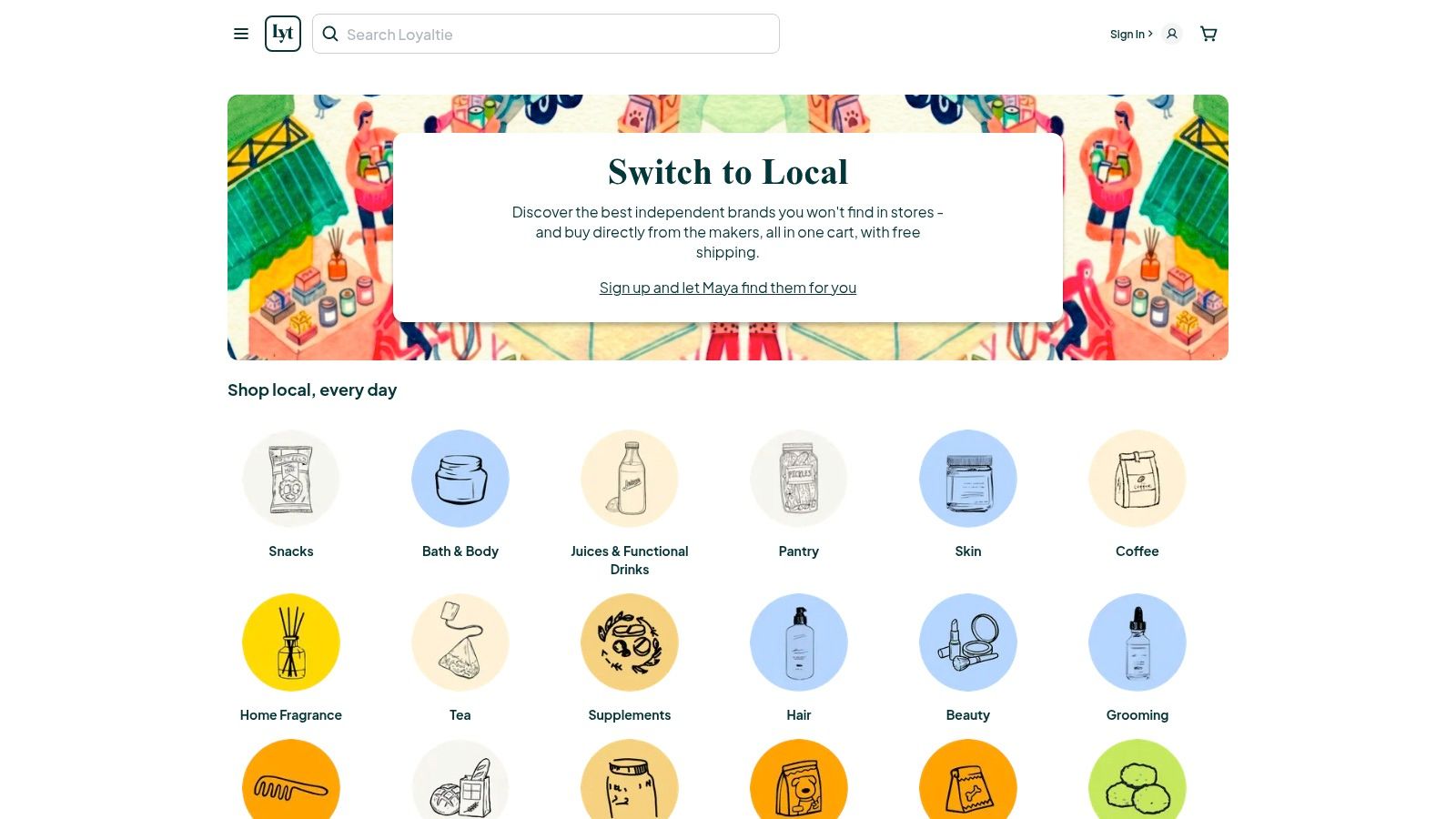
A low-friction way to discover local products is to start with one category you buy often. Search by product, read the maker's details, compare the package and delivery terms, then try one item instead of rebuilding your whole routine. For a fresh produce example, you can browse a microgreens variety box with arugula, broccoli, pea, and sunflower shoots. Marketplaces such as Loyaltie let shoppers discover and buy directly from independent brands, growers, and producers.
Building Your Personal Grocery Stack
Build your grocery routine around the way you shop, not a ranking that assumes every household has the same needs. Use a large retailer for familiar pantry basics, household essentials, and predictable items you're happy to reorder. Try a specialty grocer when you need a focused selection or dietary-specific product. Buy directly from an independent maker when the ingredients, maker, or origin make a meaningful difference to you.
A simple decision rule helps: if you'd happily accept a close substitute, prioritize convenience. If a product's identity matters, compare the label and seller before ordering. That's a good fit for products such as coffee, granola, honey, skincare, supplements, and pet food.
For a practical start, keep your regular grocery order as it is and choose one or two categories to explore from a maker. You might try a locally produced food item or a coffee whose roast details are clearly described. If you're looking for a pantry staple with a specific character, compare your usual option with stone-ground yellow corn grits from an independent seller.
Keep the products that earn a place in your routine. Reorder what you enjoy, and leave the rest of your basket with the retailer that already works for you.
Loyaltie is a marketplace where you can discover and buy directly from independent brands, local makers, growers, and producers across the U.S. Browse Loyaltie to compare distinctive everyday products and find makers whose ingredients, sourcing, and products fit what you want to bring home.