
You're probably here because you want one simple thing. A gold chain you can wear all the time without babying it, and without paying solid-gold money.
That's a familiar spot. A lot of people buy a cheap plated necklace, love it for a week, then watch it fade, darken, or rub off at the clasp. Then they swing the other way, look at solid gold, and feel that sting of “I love it, but not at that price.” A 14k gold filled chain often lands right in the middle, where the piece still feels special, still looks like real gold, and still makes sense for everyday life.
I see this especially with shoppers who want one necklace to do a lot. Something that works with a T-shirt, a button-down, a dress, or a pendant you never take off. It might be a simple chain, or it might be a piece with a personal touch, like this turquoise howlite bracelet from an independent maker where the appeal is the same: you want a piece that feels intentional, not disposable.
A good gold filled chain isn't a fallback. It's often the smart choice for people who wear their jewelry instead of storing it in a box.
Table of Contents
Your Search for Beautiful Lasting Jewelry Ends Here
The sweet spot in jewelry is harder to find than it should be. You want warmth, shine, and that easy polished look gold gives you. You also want a chain that holds up when life gets busy, when you sweat a little, forget to take it off once in a while, or wear it on repeat for months.
That's why so many people end up circling back to 14k gold filled. It solves a practical problem. You get a piece that looks and feels much closer to fine jewelry than throwaway fashion pieces, but without asking you to treat every outing like a high-stakes event.
Why this choice feels better over time
A good chain should make your mornings easier. You reach for it without thinking, it layers well, it works alone, and it still looks good after regular wear. That's a different experience from owning jewelry that always feels a little temporary.
A 14k gold filled chain makes sense when you want jewelry to live with you, not just visit your outfit.
Independent makers are often especially good at this category because they tend to think through the practical details. How the clasp feels. Whether the links are delicate or sturdy. Whether the chain is meant for solo wear or for a pendant you already own. Those little decisions shape whether you end up loving the piece a year from now.
What shoppers usually want to know
Most buyers aren't confused about whether gold is pretty. They're trying to answer more practical questions:
- Will it stay nice with daily wear
- Can I wear it while I sweat
- Will it work with my charm or pendant
- How do I know if a maker is using the term correctly
Those are the right questions. A lasting piece isn't just about color. It's about construction, use, and honesty from the seller.
What Gold Filled Actually Means for Your Jewelry
Gold filled has a specific meaning in jewelry. It doesn't mean “gold tone,” and it doesn't mean a quick surface coating.
The simple version
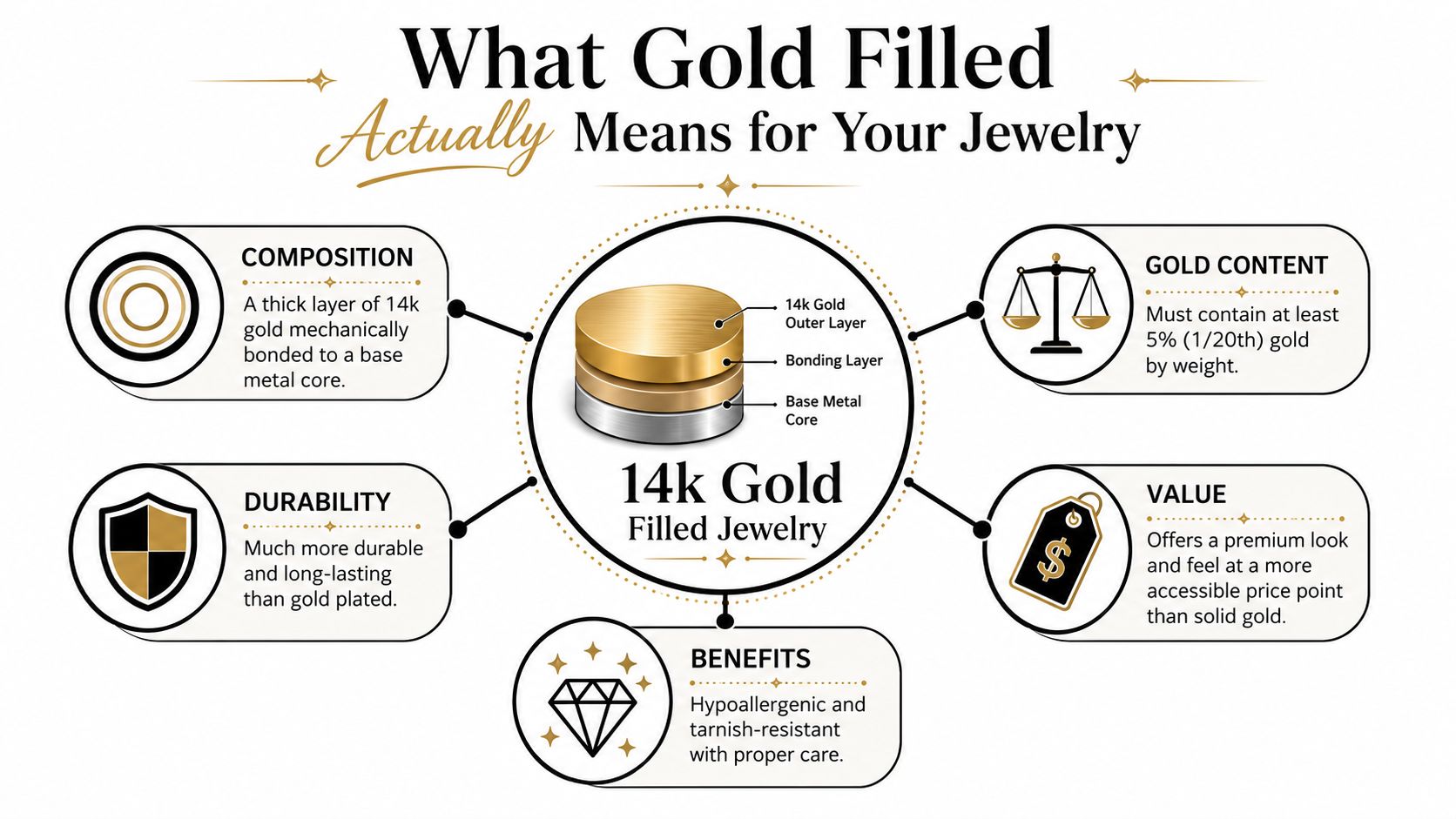
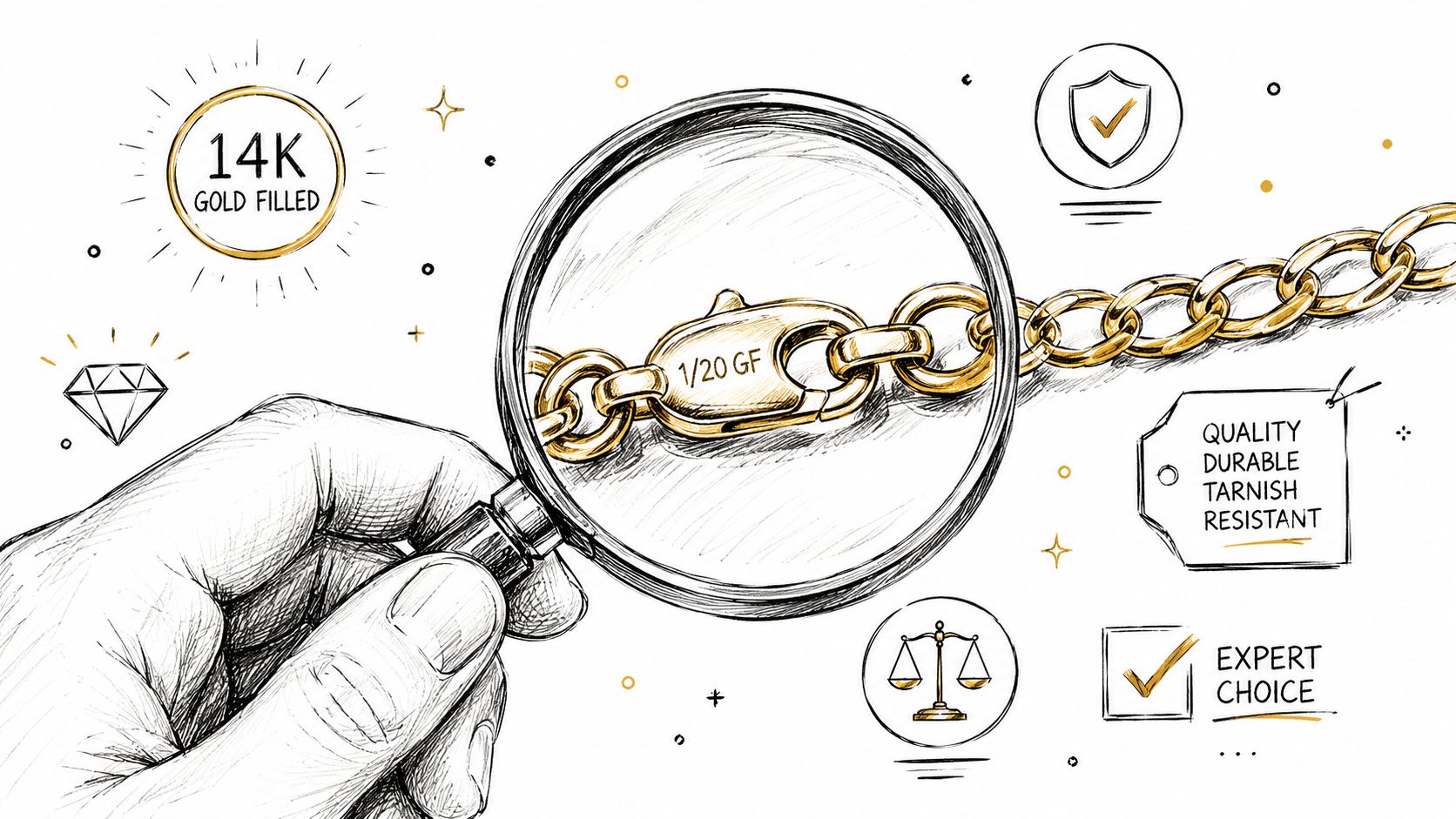
In the U.S. jewelry market, 14k gold-filled is a layered material that must contain 5% gold by weight, which is the same as 1/20 gold, and the outer gold layer must be 12 karat or higher. You'll often see it stamped 14/20 GF or 12/20 GF on the piece or findings, as explained in this guide on what gold filled means from Halstead.
That definition matters because it tells you this is a regulated construction standard, not just a marketing phrase. A 14k gold filled chain is made by mechanically bonding a substantial layer of gold to a base metal core, commonly brass. The result is very different from jewelry where the gold layer is extremely thin.
Gold plating is closer to a surface finish. Gold filled is closer to a built structure with a real gold exterior that has meaningful substance to it.
Why the stamp matters
When you see 14/20 GF, the stamp is doing two jobs.
- It tells you the gold quality. The 14k part means the gold layer itself is 58.3% pure gold.
- It tells you the construction. The 1/20 part signals that the gold makes up 5% of the item's total weight.
That's why a gold filled chain sits in its own category. It uses far less precious metal than solid gold, but much more than plated jewelry. For many people, that balance is exactly the point.
Practical rule: If a seller says “gold filled,” you should be able to find a clear description of the material and usually a stamp like 14/20 GF on the chain or components.
If you want a plain-English primer on the benefits of gold filled jewelry, that resource is useful because it helps translate jewelry terms into buyer language.
And while it has nothing to do with jewelry construction, I like the same standard in other categories too: clear, factual descriptions from real makers. A good example is Sea Moss Gel, Wildcrafted St. Lucia Gold Sea Moss & Real Mango, Mineral-Rich Daily Blend, 16 oz Jar | MYS Wellness Blends by Loyaltie, which is described as a wildcrafted St. Lucia gold sea moss gel blended with real mango for a smooth daily boost you can add to smoothies, teas, or take by spoon.
Gold Filled Gold Plated or Solid Gold
If you're deciding between these three, the right answer depends less on status and more on how you'll wear the piece.
A quick side by side view
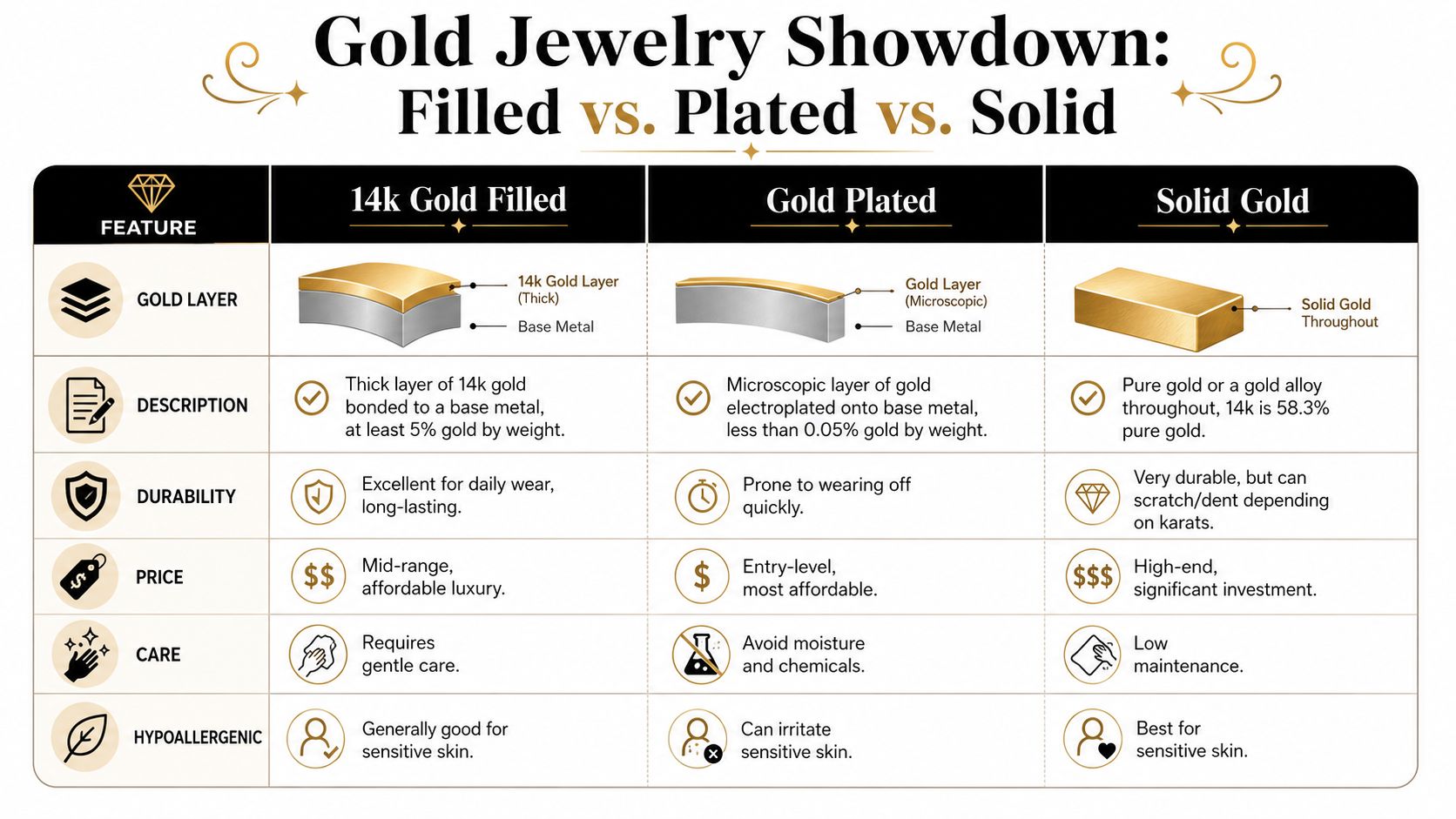
| Type | What it is | Best for | Watch out for |
|---|---|---|---|
| 14k Gold Filled | A real gold outer layer mechanically bonded to a core metal | Everyday wear, better long-term value than plated | Still needs sensible care, especially around harsh chemicals |
| Gold Plated | A very thin gold surface over base metal | Trend pieces, occasional wear | The finish can wear away faster |
| Solid Gold | Gold alloy throughout the piece | Long-term fine jewelry ownership | Higher cost, and some gold alloys can still scratch with wear |
A useful technical point here is that a gold filled chain relies on a continuous, mechanically bonded gold layer. The 14k gold layer is 58.3% pure gold, and the brass core helps keep the chain from being overly soft, which is one reason this construction can work so well for everyday jewelry, as discussed in this Pricescope thread on gold-filled chains.
That hybrid structure is easy to overlook, but it matters. You're getting the look and surface behavior of real 14k gold, paired with a core that adds rigidity.
Which one makes sense for real life
Gold plated jewelry can look nice at first. The problem is expectations. Many people buy it hoping it will behave like fine jewelry, then get frustrated when the finish dulls or wears in high-contact areas.
Solid gold is the dream material for many shoppers, and for good reason. It's gold all the way through. But if your goal is an everyday chain that gives you a real gold look without requiring the budget leap of solid gold, gold filled often lands in the most practical place.
Here's the easiest way I'd frame it for a customer standing at the jewelry counter:
- Choose plated if you want a lower-commitment piece for occasional use.
- Choose gold filled if you want an everyday necklace that feels like a real upgrade.
- Choose solid gold if you want the highest-end ownership experience and you're comfortable paying for that material all the way through.
Gold filled isn't “pretend gold.” It's a specific jewelry category built for people who want durability, real gold at the surface, and a more approachable buy-in than solid gold.
One more point that often gets missed. Metal type is only part of durability. A chain can be made of a better material and still be the wrong design for the job. Link style, clasp quality, and how much tension the chain sees all affect whether it lasts.
Keeping Your Gold Filled Chain Looking New
A lot of care advice is too vague to be useful. “Treat it gently” doesn't help much when you want to know if your necklace can survive a workout, a beach day, or your skincare routine.
What daily wear really means
A 14k gold filled chain is made for regular wear, but it still has limits. Repeated exposure to chlorine, saltwater, perfumes, and lotions can shorten how long it keeps that fresh, bright look, as noted in this care guide comparing gold fill and solid gold.
That doesn't mean you need to panic every time it gets damp. It means the pattern matters more than the occasional moment.
Here's the practical version:
- Shower once by accident. Usually not the end of the world.
- Wear it into chlorinated pools often. That's a habit worth breaking.
- Put perfume straight onto the chain. Skip that.
- Layer it over lotion that hasn't absorbed yet. Better to wait a minute.
Sweat falls into the same category. Normal daily wear is one thing. Heavy sweat, left sitting on the chain repeatedly, is another. If you work out in your jewelry, wiping it down afterward is a smart move.
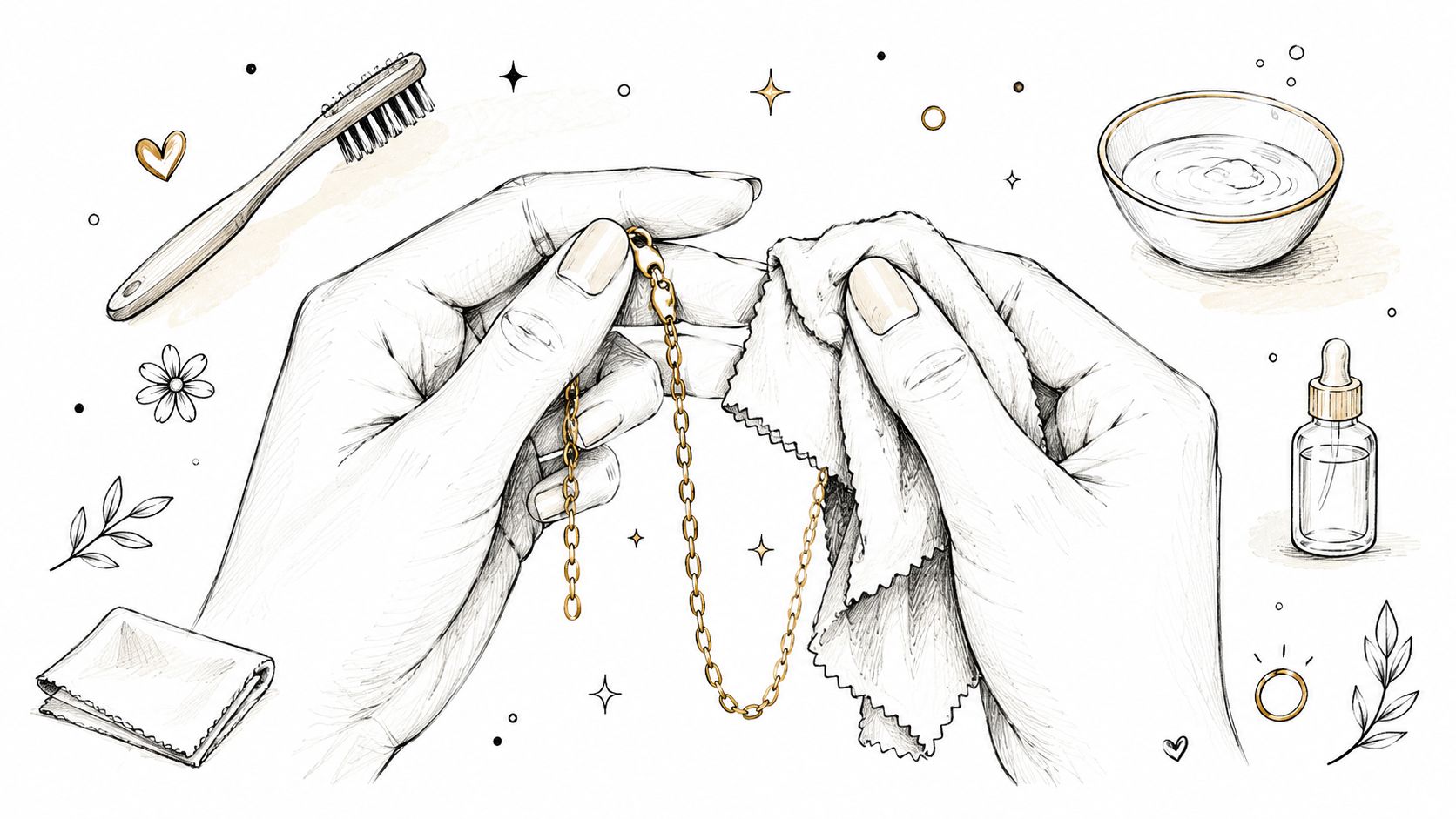
A simple care routine
You don't need a complicated kit. Most of the time, gentle care is enough.
- Wipe it after wear if it has picked up sweat, skincare, or body oils.
- Wash it gently with mild soap and water when it looks dull.
- Dry it fully before putting it back on or storing it.
- Store it separately so it doesn't tangle or rub against harder pieces.
A soft cloth goes a long way. The goal is to remove buildup, not scrub aggressively.
Here's a useful visual if you like seeing the process before doing it yourself.
What to avoid if you want the chain to age well
If you want a gold filled chain to stay beautiful for years, think less about “water” in the abstract and more about repeated contact with harsh stuff.
That includes:
- Pool chemicals
- Saltwater
- Sprayed fragrance
- Lotions and creams sitting on the metal
- Rough friction from charms, clasps, or stacked pieces rubbing in the same spot
If you wear the chain as permanent-style jewelry, lifestyle matters even more. Someone who swims often, uses a lot of skincare on the neck and chest, or wears a pendant that constantly slides on one point of the chain may see aging sooner than someone wearing the same chain more gently.
How to Choose a Quality Gold Filled Chain
A good purchase starts with the right questions. Not just “Is it gold filled?” but “Is it made well for how I'll wear it?”
What to check before you buy
The first thing I'd look for is a clear material description. A trustworthy seller usually tells you whether the piece is 14/20 GF, whether the findings match, and what kind of clasp is used.
Then I'd look at how the maker talks about wear. Sellers who know their product well don't promise magic. They explain what the chain does well, how to care for it, and what kind of use it suits best.
A few smart checkpoints:
- Look for material clarity. Terms like 14k gold filled or 14/20 GF should be used precisely, not mixed loosely with “gold” or “gold tone.”
- Ask about all components. A chain can be gold filled while a jump ring or clasp is something else.
- Read the photos closely. Good product images usually show link shape, clasp size, and overall feel.
A chain description that's specific about materials, care, and construction is often a better sign than a description that only says “luxury” over and over.
Independent makers often do this well because they're close to the product. They know why they chose that link, that clasp, or that gauge. That kind of direct product knowledge helps you buy with less guesswork.
Picking the right chain for a pendant
One of the biggest buying mistakes is assuming “gold filled” automatically means “strong enough for anything.” It doesn't.
Buyers often worry about whether a chain can handle a heavier pendant, and that's the right instinct. Mechanical strength depends on more than karat content. Chain style, link thickness, and the way the pendant moves all matter.
Use this simple guide:
| Use case | What usually works well |
|---|---|
| Solo everyday wear | A lighter, more delicate chain can be a good fit |
| Small charm | Choose a chain with enough body that the charm doesn't overpower it |
| Heavier pendant | Go thicker, sturdier, and pay attention to the clasp |
| Frequent on and off | Prioritize a secure clasp and links that won't twist easily |
A visual clue helps here. Compare it to something made for regular use where hardware matters, like this cotton canvas dog collar with lavender and gold hardware. Different product, same idea. Materials matter, but hardware and intended use matter too.
If you're buying from an independent maker, ask one direct question before ordering: “Would you put this chain with a pendant of this size for daily wear?” A good maker will give you a real answer, not just the answer that closes the sale.
For Makers Selling Your Gold Filled Jewelry on Loyaltie
If you make jewelry, clear wording is one of the fastest ways to earn trust. Customers don't just want pretty photos. They want to know what they're buying, how it wears, and whether it fits their life.
Clear product descriptions build trust
Start with plain language. Say the piece is 14k gold filled. Say whether the clasp and findings match. Say whether you recommend it for solo wear, a small charm, or a heavier pendant. That kind of detail helps the right customer say yes.
Your product page should also set care expectations without sounding defensive. A short note about avoiding chlorine, saltwater, fragrance, and lotions tells shoppers you understand long-term ownership, not just first impressions.
A strong listing usually includes:
- Material specifics that remove doubt
- Use guidance such as everyday chain, layering chain, or better for light pendants
- Care instructions that feel realistic
- Close-up photos of links, clasp, and finish
If you sell through a marketplace, keep the explanation just as direct there. Seller resources on Loyaltie can help makers organize listings, policies, and storefront details in one place. That's useful when you want customers to buy directly from the maker with no middleman confusion.
A printed care card is worth including too. It turns a product description into something the customer can use after the package arrives.
The Smart Choice for Everyday Gold Jewelry
A 14k gold filled chain works best when you see it for what it is. Not a shortcut. Not a disposable trend piece. A thoughtful middle path between plated jewelry that often disappoints and solid gold that asks much more of your budget.
For everyday wear, that's a strong place to be. You get real gold at the surface, better durability than plating, and a piece that can still feel personal and lasting when you choose the right style and care for it well.
That's also why buying from independent brands and local makers makes so much sense here. You can find chains made with more intention, clearer descriptions, and better guidance about how the piece will live with you.
If you want to discover jewelry and other everyday goods made by real people across the U.S., Loyaltie is a marketplace where people discover and buy directly from the best independent brands in the US.