
You're probably holding a 1 lb ground turkey pack because it felt like the sensible choice. Fast protein, easy dinner, maybe a healthier swap for beef. Then dinnertime hits, and it's easy to end up with the same result: pale crumbles, a pan full of liquid, and a meal that feels more dutiful than delicious.
That's fixable.
Ground turkey is one of those ingredients that gets judged for problems that usually come down to technique, not the meat itself. Once you know how to brown it properly, season it at the right time, and track it correctly after cooking, that one pound starts working a lot harder for you. It turns into tacos that don't taste flat, bowls that keep you full, and leftovers you want to eat again.
Table of Contents
Beyond the Basics with Ground Turkey
You get home with a pound of ground turkey, and dinner can go one of two ways. It can turn into a dry, forgettable skillet, or it can become the kind of protein you keep in regular rotation because it cooks fast, takes seasoning well, and fits your goals without much fuss.
A lot of that comes down to expectations. Ground turkey is not hard to cook well, but it does ask for a little more attention than ground beef. It is leaner, milder, and less forgiving if you rush it. The upside is control. You can keep it light, build in more flavor, and portion it in a way that makes meal planning easier.
That last part matters more than many cooks realize. If you track protein, calories, or serving sizes, 1 lb ground turkey is useful only if you pay attention to the raw versus cooked difference. The package gives you one set of numbers, but your pan changes the weight and the portion size. Most recipes skip that distinction, and that is where macro tracking gets sloppy.
Where it gets better fast
The first upgrade is simple. Treat ground turkey like a real centerpiece, not filler.
Use enough heat to build color. Add a little fat if the blend is very lean. I like starting with a spoonful of rosemary-infused organic olive oil when I want a quick skillet to taste more finished without adding extra ingredients later.
Good cookware helps here too, especially if your current pan runs cool or holds moisture. If you are replacing old pieces, this NZ buyer's guide for pots and kettles is a practical place to compare options.
Ground turkey tastes best when you stop trying to hide it in a recipe and let it brown.
What this ingredient does well
A single pound earns its place in a busy kitchen for a few practical reasons:
- Fast cooking: It goes from package to dinner quickly and usually needs only one pan.
- Flexible portions: You can split one pound across lunch bowls, lettuce wraps, pasta sauce, or stuffed vegetables.
- Mild flavor: It works with herbs, chiles, garlic, soy sauce, tomato, curry paste, or taco seasoning.
- Useful for tracking: It is easier to portion than many proteins, especially if you weigh it cooked and account for moisture loss.
That last trade-off is easy to miss. As turkey cooks, water renders out and the meat weighs less, so the nutrition per ounce of cooked meat is more concentrated than the raw package label suggests. Get that part right, and ground turkey becomes one of the easiest proteins to cook and track with confidence.
The Secret to Perfectly Cooked Ground Turkey
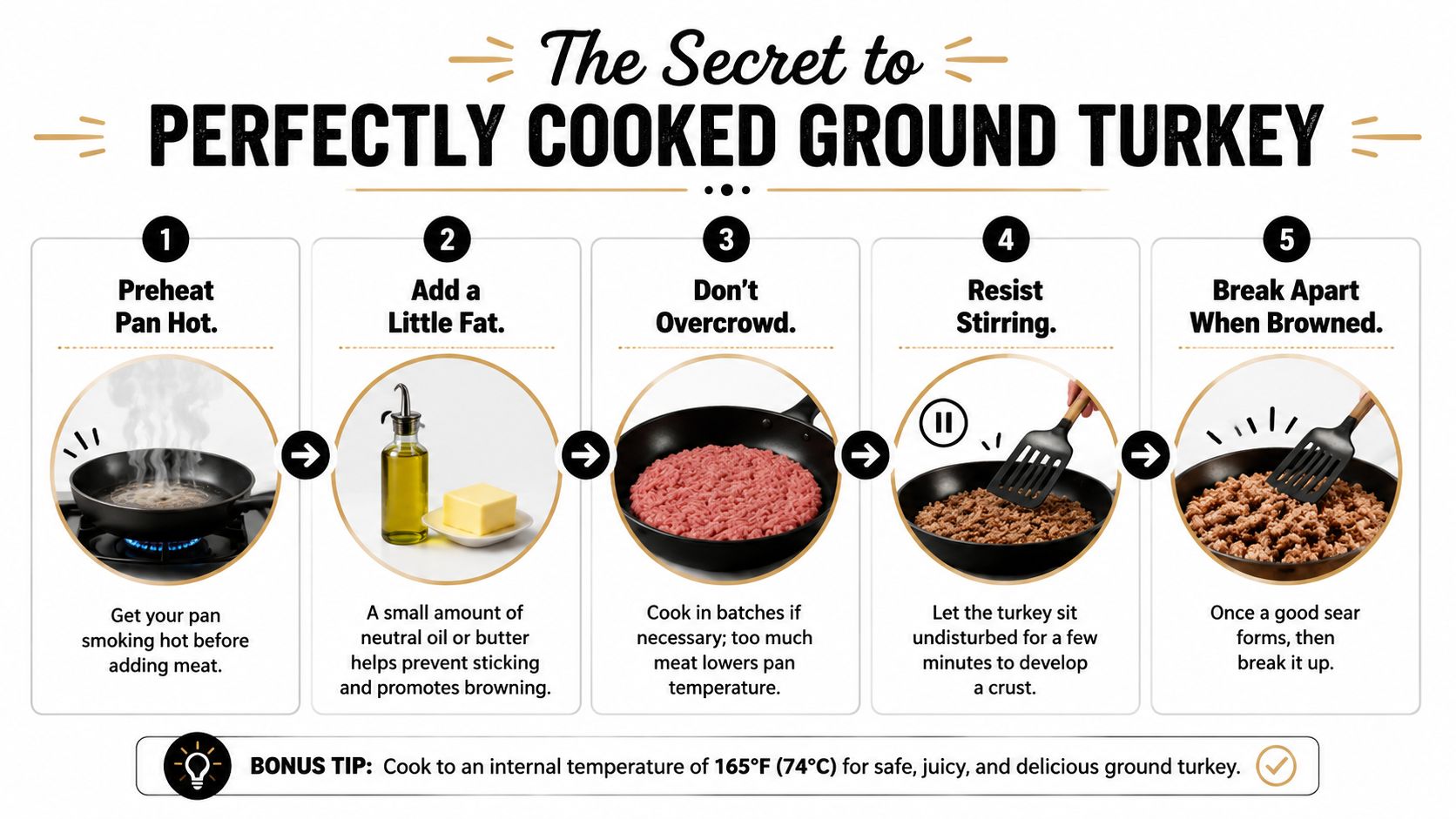
Dinner gets easier once you stop treating ground turkey like beef. It has less built-in forgiveness, so pan habits matter more. A hot skillet, enough surface contact, and a little patience give you browned, savory crumbles instead of pale, damp meat.
The main mistake is stirring too soon. Ground turkey gives off moisture fast. If you break it up right away or crowd it into a cool pan, that moisture collects in the skillet and the meat steams before it can brown. That is what creates the soft, slightly gummy texture people blame on the turkey itself.
According to The Cookful's ground turkey method, let the meat cook undisturbed first so it can caramelize, then break it up and finish cooking with occasional stirring. Their method also notes the food safety target of 165°F for 15 seconds for ground poultry.
The method that fixes it
I use this routine when I want good color and clean crumbles:
- Preheat the skillet well. The pan should be fully hot before the turkey goes in.
- Add a little fat if the meat is very lean. That helps browning and keeps the first contact from sticking. If your cookware struggles to hold heat, this practical NZ buyer's guide for pots and kettles is useful for comparing materials.
- Press the turkey into an even layer. More contact with the pan means better browning.
- Leave it alone until the underside colors. Give it time to form real browning before you touch it.
- Break it up and season in stages. Once you have some color, crumble it, add seasonings, and cook until no pink remains.
A simple pan check helps. If you see a lot of liquid pooling before the meat has any browned spots, the heat was too low or the turkey was moved too early.
Seasoning timing matters too. I add salt-free spice blends after the first browned layer forms, not at the start. Garlic, onion, and dried herbs taste better that way, and they are less likely to scorch in a hot skillet. A salt-free all purpose seasoning blend with garlic and onion works especially well because it keeps the turkey flexible for bowls, tacos, pasta sauce, or egg scrambles.
For a breakfast-for-dinner plate, browned turkey is also good next to GLUTEN FREE PANCAKE & WAFFLE MIX | Really Great Food by Loyaltie. The soft texture of the pancakes balances the crisp edges you get from properly browned turkey.
One trade-off matters for anyone tracking macros closely. The better you brown turkey, the more moisture it loses, and the lighter it weighs after cooking. The protein and calories do not disappear. They are packed into fewer ounces. That is why a carefully cooked pound can look smaller in the pan than expected and still deliver the full nutrition from the raw package. Use temperature for doneness, then weigh the cooked portion if accuracy matters.
Understanding Ground Turkey Nutrition
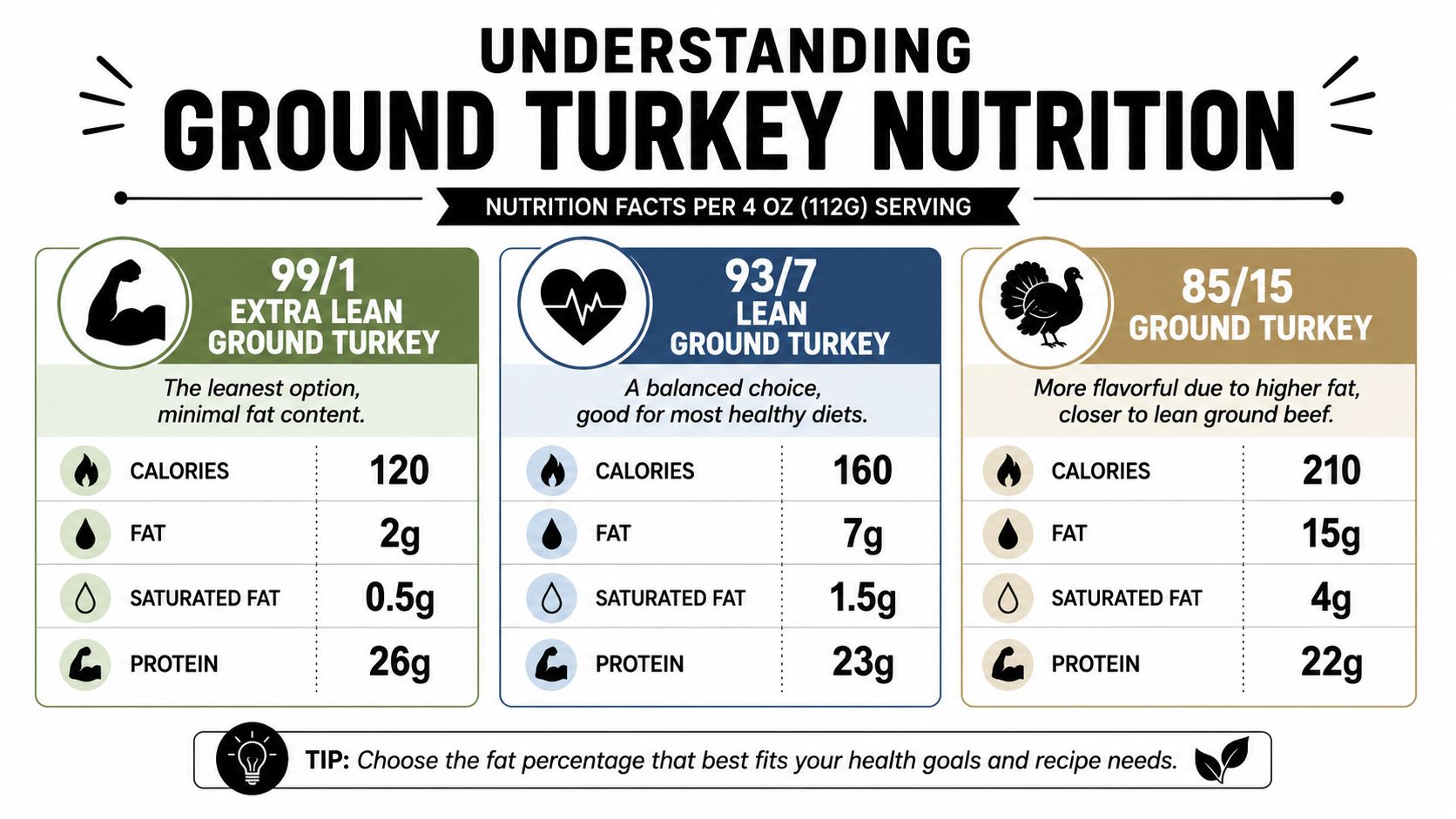
You cook a pound of turkey, spoon out what looks like a sensible serving, log four ounces, and move on. That entry can be wrong by a lot if you do not match raw weight to raw nutrition or cooked weight to cooked nutrition.
That raw-versus-cooked split is the part many nutrition guides skip, and it matters more than the exact spice blend or recipe if you track calories and protein closely.
What 1 lb looks like on paper
A one-pound package gives you a starting point, not the final numbers on your plate. As noted earlier, a raw pound of ground turkey provides a substantial amount of protein and calories before cooking. Canadian Turkey also lists cooked ground turkey at 196 calories per 100 grams, 28 grams of protein, and 8.7 grams of fat, and notes that raw lean ground turkey products such as Jennie-O Lean Ground Turkey and Perdue 93% Lean deliver 22 grams of protein and 170 calories per 4 oz (112 g) serving. Canadian Turkey nutrition facts
Those numbers can all be true at once because they are describing different states of the meat. Raw turkey still holds its water. Cooked turkey has lost part of that moisture, so the nutrition is packed into less weight.
The raw versus cooked mistake
Analysts at Greenland Medical explain that ground turkey loses moisture during cooking, which makes the cooked meat more calorie-dense ounce for ounce. Their example shows how a raw serving and a cooked serving that weigh the same can log very differently in a food tracker. Greenland Medical's overview of ground turkey nutrition
I see this mistake most often with meal prep. Someone cooks the full pound, weighs out a cooked portion, then logs the raw entry from the package label. The portion looks smaller after browning, so it feels lighter nutritionally too. It is not. Water left the pan. The protein and calories stayed with the meat.
Here is the clean way to track it:
| Measure | What it tells you |
|---|---|
| Raw package weight | Best if you divide and log the turkey before cooking |
| Cooked portion on your plate | Best if you weigh the finished meat and use a cooked database entry |
| Mixing raw entries with cooked weights | The fastest way to miscount calories and protein |
FatSecret's USDA entry for cooked ground turkey shows how concentrated those numbers become after cooking, including approximately 1066 calories per cooked pound and 124.1 grams of protein per pound, with 235 calories and 27 grams of protein per 100 grams. FatSecret's cooked ground turkey entry
One practical tip helps if you build bowls often. Keep your turkey, rice or rice swap, and toppings in the same measurement system. If you use a cooked weight for turkey, use the cooked amount for the rest of the bowl too. A high-protein base like lupin flakes as a rice or breadcrumb swap is easier to track accurately when the whole meal is measured the same way.
Pick one method and stick to it. Portion and log the raw pound before it hits the pan, or weigh the cooked meat and log cooked entries only. Consistency is what keeps your macro math honest.
Quick and Easy Meal Ideas for Your Pound of Turkey
Once the turkey is browned properly, dinner gets easier. You don't need a long recipe. You just need a direction.
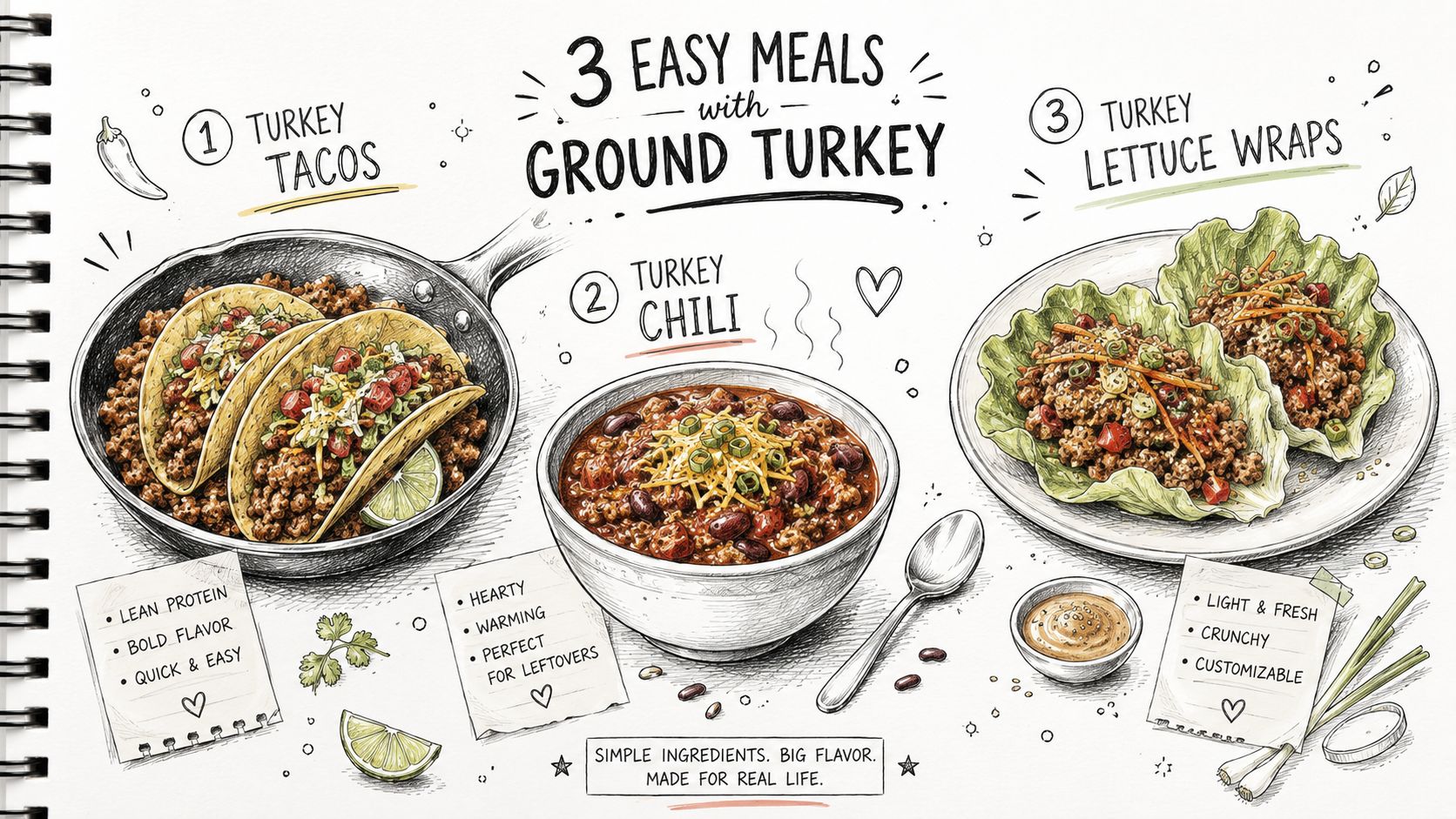
Three dinners that don't feel repetitive
The first is lettuce wraps. Brown the turkey hard, then toss it with garlic, ginger, and something salty-savory from your pantry. Spoon it into cold lettuce leaves and top with crunch. This works best when the meat has real color, because the wrap itself is cool and light.
The second is a simple weeknight red sauce. Turkey takes tomato well, especially if you let the meat brown before adding sauce. Stir it into crushed tomatoes with onion and herbs, then simmer until it thickens. Spoon it over pasta, roasted vegetables, or even toast if that's the night you're having.
The third is a rice skillet or bowl. Ground turkey, cooked rice, chopped vegetables, and one strong seasoning profile. Cumin and chile for a taco bowl. Soy, garlic, and sesame for a fast stir-fry feel. If you want a low-net-carb pantry swap with more texture, Lupin Flakes can fit nicely in bowls or as a breadcrumb-style extender in patties.
The best 1 lb ground turkey meals don't try to do too much. They pick one flavor direction and commit to it.
How to stretch one pound without watering it down
One pound can feed more people than you think if you build around texture instead of bulk.
- Go crisp, not soupy: Browned edges make a smaller amount of meat feel more substantial.
- Add vegetables with intent: Finely chopped mushrooms, onions, or peppers work best when cooked until they lose moisture first.
- Use contrast: Cold lettuce, hot rice, crunchy toppings, creamy yogurt, sharp herbs. That contrast makes the meal feel complete.
If you want to see another quick way to turn browned turkey into a fast dinner, this video is a useful place to steal ideas from:
A good pound of turkey should solve dinner at least once, and often twice. That's where it starts feeling like a staple instead of a fallback.
Smart Storage and Food Safety Tips
You cook a pound of turkey for lunches, log the raw weight in your tracker, then portion the cooked meat the next day and wonder why the numbers look off. That mismatch usually starts before the container goes into the fridge. Ground turkey loses water as it cooks, so the weight changes even though the protein and fat are still there.
That matters for storage because meal prep only works if the portions stay both safe and accurate.
Handle it like poultry from the start
Keep raw ground turkey away from salad greens, fruit, sauces, and anything else that will not be cooked. If you transfer it out of the package, use a plate or board that can go straight to the sink, then wash hands, tools, and counters well before touching anything else.
Cook ground turkey to 165°F, as noted earlier in the article. Color is a poor guide with poultry, especially once it has been mixed, seasoned, or browned in small crumbles.
A few habits make a real difference:
- Thaw in the fridge: Slow thawing gives you better texture and keeps the meat out of the temperature danger zone.
- Portion after cooking if you track macros by serving: Weigh the cooked batch, then divide by the number of portions. That gives you a more honest calorie and protein count than assuming raw and cooked weights match.
- Cool leftovers promptly: Get the turkey into shallow containers once dinner is over so it chills faster.
- Freeze flat: A flattened bag or thin container defrosts more evenly and takes up less space.
If you track nutrition closely, pick one system and stay consistent. Log the turkey as raw before cooking, or weigh and log it as cooked after cooking. Mixing the two is where people accidentally undercount or overcount a meal.
I also like to label containers with both the date and whether the weight is raw or cooked. It sounds fussy for about a week. Then it saves time every single time you open the fridge.
When reheating, add a spoonful of water, broth, or sauce, cover loosely, and heat just until hot. That keeps the meat moist instead of tight and crumbly.
Where to Find Better Ground Turkey
A lot of home cooks blame turkey when dinner turns out dry or bland. The package is often the actual problem. One pound from a busy butcher counter can cook up juicy and savory, while a bargain tray with too much purge in the bottom often browns poorly and tastes flat even with good seasoning.
Why the source changes the meal
Better ground turkey usually gives you three things right away: a cleaner grind, more consistent fat content, and labeling that tells you what you are buying. That last part matters more than many nutrition guides admit. If you track protein, calories, or portion size, vague packaging makes it harder to know whether your numbers are based on raw weight, cooked weight, breast-only meat, or a mix of light and dark meat.
Buying from independent brands or local producers can help because you can often get clearer answers about the grind and the ratio. Ask simple questions. Is it all breast, or a blend? Is the lean percentage listed? Is the one-pound pack a tight one-pound portion, or does it include extra liquid in the tray? Those details affect both flavor and macro tracking once the turkey hits the pan and loses moisture.
There's also clear shopper momentum behind buying closer to home. A U.S. Chamber of Commerce summary on post-pandemic local shopping reports that 56% of shoppers are currently buying locally sourced products and 75% plan to do so more over the next year, with many discovering smaller brands online.

Marketplaces such as Loyaltie can make that search easier by helping shoppers find independent brands in one place. For everyday cooks, that means more options beyond the standard supermarket tray, and a better chance of finding turkey that cooks well and gives you clearer nutrition information from package to plate.