
1 cup of liquid egg whites equals about 243 grams and roughly 7 to 8 large egg whites. That standard raw serving provides approximately 126 calories and 26.5 to 26.9 grams of protein, but the numbers change when you measure cooked whites instead.
You're standing at the counter with a recipe open, a carton in the refrigerator, and just enough patience for one reliable answer. The conversion matters because “a cup” can mean volume in a mixing bowl, weight on a kitchen scale, or a cooked portion that has already lost water. Get that first measurement right, and the rest of the recipe, from a breakfast scramble to a meringue, becomes much easier to control.
The other detail worth paying attention to is where those whites come from. A standardized carton can save time, but sourcing still affects what you're buying, how much processing sits between you and the ingredient, and whether you can identify the producer. For everyday staples, I prefer products with a real maker behind them, not just an anonymous label.
Table of Contents
The Quick Conversion You Need Right Now
Two tools give you a dependable answer: a standard measuring cup filled level, or a kitchen scale set to 243 grams. Use the cup when a recipe is written in American volume measurements. Use the scale when you need repeatable results for baking, meal prep, or a formula built around precise ratios.
For a measuring cup, pour in raw liquid whites until the surface is level. Avoid estimating from a partially filled carton. On a scale, place a bowl on the platform, tare it, and add the whites until the display reaches the target weight.
The conversion reference in Food Nutrify's egg white guide also helps with shopping: 1 cup represents roughly the whites from 7 to 8 large eggs. Shell eggs introduce variation because large eggs do not all yield exactly the same amount, and separating them takes more time than opening a carton. Still, that range is practical when planning a batch or deciding how many eggs to buy.
Practical rule: Measure egg whites in the form named by the recipe. Raw liquid whites and cooked whites do not occupy the same volume.
Volume and weight are close substitutes only when the ingredient and method are consistent. For meringue, foam-based desserts, or any recipe where structure depends on ratios, weighing is the safer choice. For a scramble, cup measurement is usually sufficient.
Sourcing adds a separate decision. A carton offers speed and predictable handling, while shell eggs from an independent local producer may give you clearer information about who made the product and how it was handled. Whichever route you choose, record whether the whites were measured raw or cooked. That note keeps later nutrition calculations tied to the amount you used.
Nutrition Facts and Macro Breakdown
A standard 1-cup serving of raw egg whites weighs about 243 grams and provides roughly 126 calories, 26.5 to 26.9 grams of protein, about 0.4 grams of fat, and approximately 1.7 to 1.8 grams of carbohydrates, as noted earlier in the nutrition reference. About 91% of the calories come from protein, giving egg whites a concentrated, low-fat role in everyday cooking.
That profile suits scrambles, pancakes, baked dishes, and foams. Egg whites can raise the protein content of a meal without adding the fat found in the yolk, although they do not replace the yolk's broader nutritional contribution.
The numbers beyond protein
A cup also contains around 403 milligrams of sodium and about 396 milligrams of potassium. Those electrolytes matter when you are comparing egg whites with other protein ingredients, but packaged products can vary. Check the nutrition label on your carton rather than treating a generic entry as an exact match.
The trade-off is nutritional narrowness. Egg whites are efficient for adding protein, while whole eggs provide a wider mix of nutrients. Use them as a targeted ingredient when that suits the dish, not as an automatic substitute for every part of the egg.
The measuring routine benefits from dependable kitchen equipment. The Ceramic Coffee Mug, Glossy White, Lead & BPA-Free, Dishwasher & Microwave Safe, 11 oz | Northwoods Brew by Loyaltie is described as lead and BPA-free, microwave-safe, and dishwasher-safe. It can hold a small bowl or mixing tool during repeated prep, while the scale handles the actual measurement. A sturdy, washable mug keeps that routine practical, especially when you are working with carefully sourced eggs from an independent local producer.
The Raw Versus Cooked Measurement Gap
The most common mistake with egg white nutrition isn't the conversion from eggs to cups. It's recording a cooked cup as though it were a raw cup.
A raw cup is listed at roughly 126 calories and 26.5 grams of protein, while a cup of cooked egg whites can be around 85 calories and 17.7 grams of protein, based on the comparison in FatSecret's USDA egg white entry. Cooking changes the amount of water and the volume occupied by the whites, so the same measuring cup no longer represents the same starting quantity.
That doesn't mean cooking removes protein in a simple, predictable proportion. It means you're comparing two different forms of the ingredient. A meal-prep container filled with cooked whites may have started with a different raw volume, and a recipe that says “one cup” may not tell you which state it expects.
Why the structure changes
Egg white is an aqueous protein solution containing functional proteins including ovalbumin, ovotransferrin, ovomucoid, lysozyme, and ovomucin, as described in the technical overview of chicken egg white properties. The water supports dispersion, while the proteins form structure when heated or whipped. That's why the ingredient can foam, gel, bind, and set in very different ways.
For tracking, choose one system and stay consistent:
- Raw carton method: weigh or measure the whites before cooking, then log the raw amount.
- Cooked batch method: cook the entire batch, weigh the finished food, and divide it into portions from that batch.
- Recipe method: follow the state named by the recipe, especially for baking.
If poaching is part of your routine, these poached egg troubleshooting tips can help with handling and setting. For baking projects that use eggs alongside other ingredients, keep your measurement notes with the recipe, such as this gluten-free banana cinnamon sugar cookie mix.
Choosing Between Shell Eggs and Liquid Alternatives
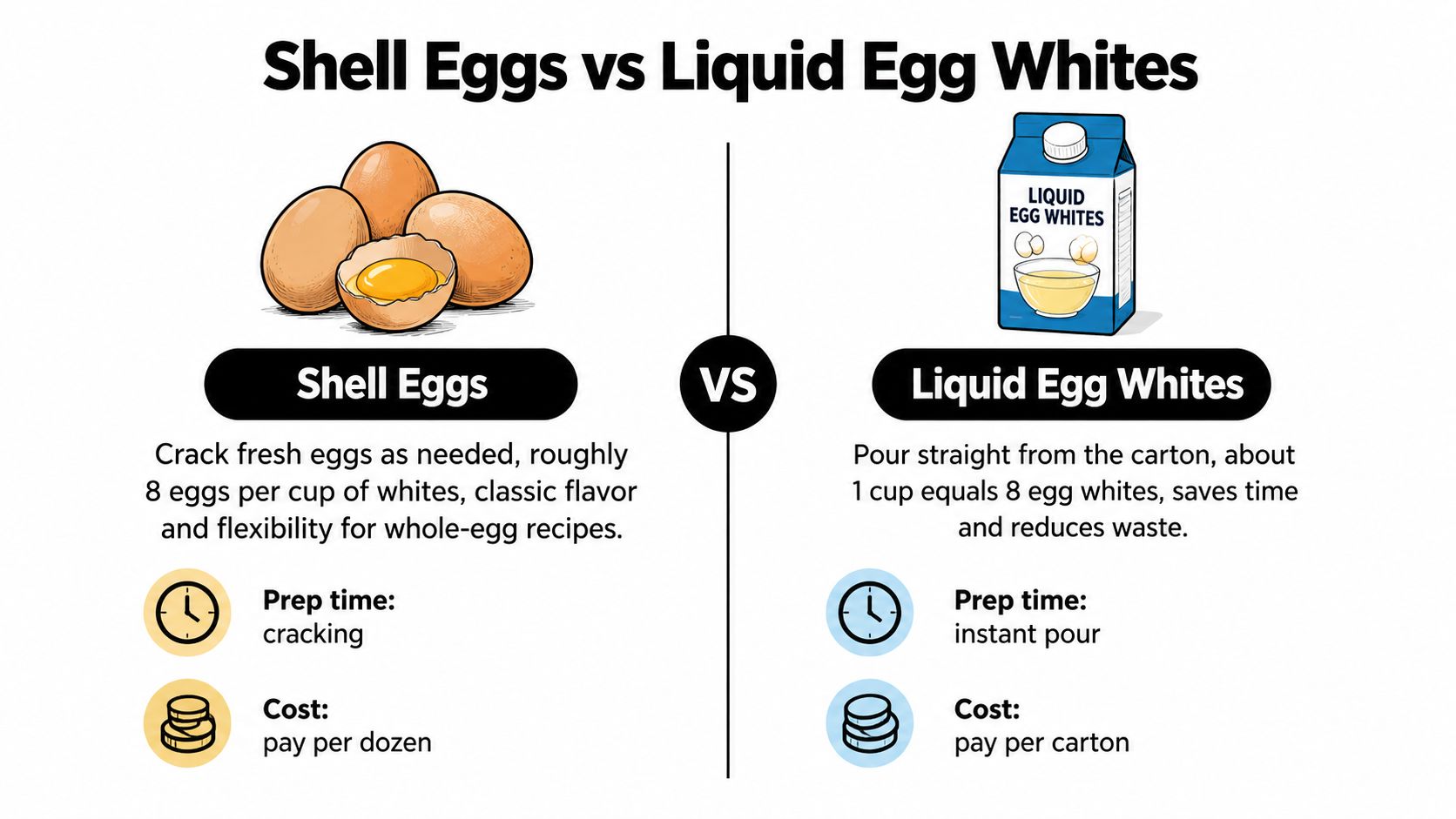
Shell eggs give you flexibility. You can use the whole egg, save the yolks for curd or custard, and separate only what you need. The downside is hands-on work, variable yield, and a bowl of leftover yolks that needs a plan.
Liquid egg whites solve the workflow problem. They pour directly into a measuring cup, make repeated batches easier to standardize, and reduce the shell waste created when you only need whites. Food-service kitchens value that consistency, and home cooks notice it when they make the same breakfast several mornings in a row.
The trade-offs that actually matter
| Shell eggs | Liquid egg whites |
|---|---|
| Crack and separate as needed | Pour the measured amount |
| Useful when you also want yolks | Efficient when you only want whites |
| Yield varies between eggs | Easier to standardize |
| Requires shell disposal | Less shell handling |
Read the ingredient panel before choosing a carton. Some liquid products contain stabilizers or other additions, while others keep the formula simpler. The right choice depends on whether your priority is a short ingredient list, speed, consistent portions, or the versatility of a whole egg.
A larger liquid format can make sense for frequent meal prep, but storage space and freshness still matter. For a product example from outside the US market, you can review Vitamin Planet's liquid egg white listing to see how a packaged option is presented.
Storage and Whipping Techniques for Best Results
Egg whites are forgiving in a scramble and demanding in a meringue. Storage and preparation determine which version you get.
Keep liquid whites refrigerated according to the package directions and use a clean measuring cup each time. If you separate shell eggs yourself, transfer the whites to a covered container rather than leaving them exposed in the refrigerator. Label the container with the separation date so you're not relying on memory.
For longer storage, freezing can be useful, but portion the whites before freezing. Small containers or measured freezer portions thaw more predictably than one large frozen block. Thaw them in the refrigerator, not on the counter, and stir gently before measuring.
Whipping for volume
A clean bowl is essential. Any trace of yolk, grease, or oily residue can interfere with foam formation. Stainless steel or glass bowls are dependable choices because they're easy to inspect and clean thoroughly.
Bring separated whites toward room temperature before whipping if the recipe allows. Start at a moderate speed, then increase it as the foam develops. Add sugar gradually for meringue rather than dumping it in at the beginning, and stop at the stage the recipe calls for.
- Soft peaks: The peak bends over when you lift the whisk.
- Stiff peaks: The peak stands upright and holds its shape.
- Over-whipped whites: The mixture looks dry or grainy and may begin to separate.
A useful kitchen test: Lift the whisk and look at the peak. If it stands cleanly without looking dry, stop before the foam loses its smooth texture.
Simple Recipe Ideas Using One Cup
One cup is a useful base because it's large enough for a family-style preparation but still easy to divide into individual portions. I use it differently depending on whether I'm cooking breakfast, baking, or clearing out vegetables from the crisper.
For a fast savory meal, whisk the whites with pepper, herbs, and a small amount of salt, then cook them gently in a nonstick pan. Add spinach, mushrooms, roasted peppers, or leftover cooked vegetables near the end so the mixture stays tender instead of turning rubbery.
Easy ways to use the same measure
- Fluffy omelet: Whip the whites briefly, fold in chopped herbs, and cook over moderate heat. A little cheese or sautéed mushroom adds richness without changing the basic structure.
- Protein pancakes: Blend the cup with oats, pumpkin puree, cinnamon, and baking powder, then cook small pancakes in a lightly oiled skillet. Smaller pancakes flip more cleanly than one oversized round.
- Savory frittata: Combine the whites with cooked vegetables and herbs, pour into an oven-safe pan, and finish until just set.
- Meringue: Use a clean bowl, add sugar gradually, and whip to stiff peaks before shaping and baking. A scale is especially useful when the recipe depends on a precise white-to-sugar ratio.
- Baked breakfast cups: Pour the mixture over chopped vegetables in muffin wells and bake until set, then refrigerate portions for later.
For a quick flavor shortcut, Everything Bagel Egg Seasoning Blend can add garlic, onion, sesame, and crunch to omelets or breakfast cups. Add it carefully because seasoning blends can make the sodium total less predictable.
The key is gentle heat. Egg white proteins set quickly, and high heat can squeeze out moisture. Pull savory dishes when they're just set, since residual heat continues cooking them at the table.
Why Sourcing Matters for Quality Ingredients
A carton can be convenient and still be a commodity. The label may tell you the nutrition panel and ingredients, but it may tell you little about the producer, handling choices, or how far the product traveled before reaching your refrigerator.
That's where independent brands and local makers can offer a quality upgrade. The appeal isn't charity. It's the possibility of buying from people who pay close attention to ingredients, processing, and the product they want their name attached to. You still need to read the label, but you have a clearer starting point when the maker is visible.
Look past the front label
For egg whites, check:
- Ingredients: See whether the product contains only egg whites or includes additional ingredients.
- Handling details: Follow the stated refrigeration and use guidance.
- Producer identity: Look for a named company or farm rather than a vague store-brand description.
- Product purpose: A carton designed for cooking may behave differently from one intended for a specific food-service application.
- Sodium: Compare labels if sodium matters to your diet, since database values can vary.
Independent sourcing doesn't guarantee that every product will suit you. A local carton may cost more, have limited distribution, or require more planning. But mass production isn't the only path to consistency, and a lower shelf price doesn't automatically mean better value if you dislike the flavor, formulation, or lack of transparency.
The same logic applies beyond eggs. Coffee, skincare, supplements, pet products, and pantry foods all reward closer attention to who made the item and what went into it. Once you start reading for the producer instead of only the category name, “better” becomes a practical standard rather than a marketing promise.
Discovering Independent Local Makers
Buying directly from the maker changes the shopping question. Instead of asking which anonymous product is cheapest, you can ask who produced it, what the ingredient list says, and whether the brand fits the way you shop.
Online discovery helps local producers reach you even when you aren't standing at a farmers market. The useful model combines digital convenience with a real business behind the product. You browse online, compare details, and buy directly from an independent brand without adding unnecessary layers between you and the source.
A better way to evaluate a maker
Start with the product page, then look for the practical information you'd want in a grocery aisle:
- Clear identity: You should be able to tell who makes or sells the product.
- Useful description: The listing should explain what the item is without hiding behind vague wellness language.
- Direct purchase path: You should know whether you're buying from the maker or through an opaque reseller.
- Category depth: A marketplace becomes more useful when it covers everyday needs, from food and coffee to wellness and pet products.
Profiles can also help you understand the person behind a food brand. Fundl's bakery profile is a useful example of the kind of maker story that gives a product more context than packaging alone.
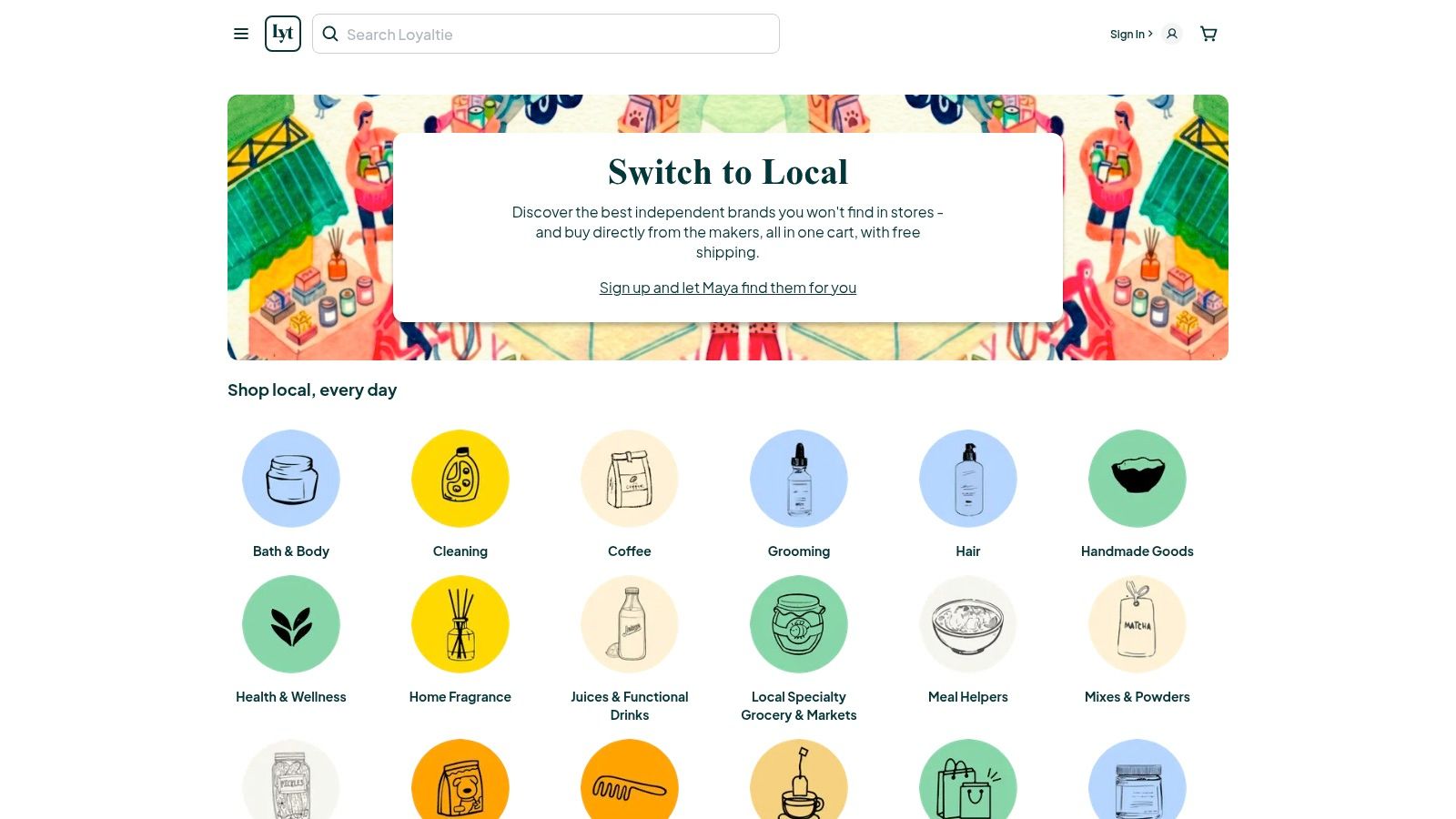
Loyaltie is a marketplace where people discover and buy directly from independent brands in the US. You can use that approach for food and also for adjacent routines, such as grain-free protein burger buns, where ingredients and preparation details matter as much as convenience.
The Rise of Private Labels and Local Trust
Private labels have moved beyond the idea of being merely cheaper substitutes. A nationally representative FMI survey of 1,495 US grocery shoppers found that private brands are staples in American households, with a margin of error of plus or minus 2.5 percentage points at the 95% confidence level. The findings support a broader shopping pattern, people are more willing to evaluate everyday products on what they deliver rather than on a familiar national name. FMI's research summary provides the survey context.
NIQ reported that 49% of US consumers say they're likely buying more private-label products than ever before, a signal that shoppers are actively reconsidering mainstream packaged goods. NIQ's 2025 US private-label outlook connects that behavior to a changing relationship between branded and private-label products.
Trust still has a human side
Price matters, but it isn't the only reason people switch. Shoppers often want clearer information, a more distinctive product, and confidence that a real operator stands behind the listing. That's especially relevant for food, wellness, skincare, and supplements, where vague descriptions create doubt.
Research commissioned by Faire found that 67% of consumers trust local businesses more than online-only companies, while 96% start their research online regardless of where they ultimately buy, according to Faire's published research announcement. Those findings fit the marketplace model well. You can discover a product online, then choose a seller with a visible local or independent presence.
That's the quality upgrade: more context before purchase, not a guilt trip after it.
The Impact of Small Independent Brands
Independent brands can matter because they often bring sharper attention to ordinary categories. A maker that sells food, coffee, wellness products, or pet supplies has to give you a reason to choose its item over a familiar national label. That pressure can produce better focus on flavor, ingredients, packaging, and the customer experience.
McKinsey found that independent brands with less than $100 million in sales represented 13% of the US food and beverage market in 2021, yet contributed 15% of category growth from 2021 to 2023. The same analysis projected that they would account for 35% of category growth by 2025, as reported in McKinsey's State of Food and Beverage analysis. That's a disproportionate contribution relative to their market share.
Choose on product merit
The best reason to buy from an independent maker is straightforward: the product works better for you. Maybe the ingredients are easier to understand. Maybe the coffee is fresher, the seasoning tastes more balanced, or the maker answers questions that a mass-market label leaves open.
You still need to compare storage, handling, price, and availability. Independent doesn't mean flawless, and direct buying doesn't remove the need to read labels. It does give you more ways to find products made with visible choices rather than defaulting to whatever happens to occupy the most shelf space.
If you want to replace anonymous pantry staples with products made by identifiable independent brands, visit Loyaltie to discover and buy directly from makers across the US. Browse food, coffee, wellness, skincare, supplements, and other everyday categories, then choose products based on the ingredients and people behind them.